Simultaneous elections offer big benefits, but experts urge policy reforms
Among the key reforms needed were the introduction of fixed election dates and guaranteed campaign space for state-level issues.


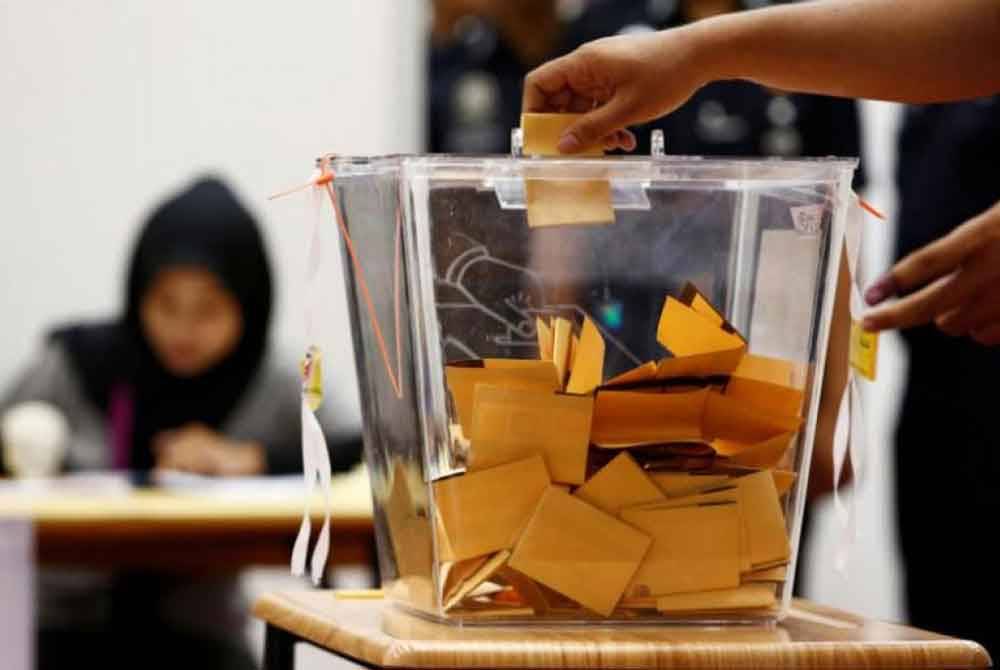
SHAH ALAM – The move to hold Malaysia’s general and state elections simultaneously should be accompanied by policy reforms to ensure local democracy remains meaningful and effective.
Political analyst Mujibu Abd Muis said among the key reforms needed were the introduction of fixed election dates and guaranteed campaign space for state-level issues.
“Overall, simultaneous elections bring major benefits in terms of cost, convenience and efficiency. But they also risk weakening focus on state issues and the spirit of federalism.
“If we want to implement it, it must come with policy reforms, fixed election dates and clear campaign space for states, so that local democracy remains relevant,” he said.
Earlier, DAP secretary-general Anthony Loke reiterated his party’s support for holding the general and state elections together. Parti Amanah Negara has also maintained its support, citing cost savings and administrative efficiency.
Mujibu explained that simultaneous elections offered clear practical benefits to both the public and the government, but also posed risks to democratic quality and state-level accountability.
“From a practical standpoint, simultaneous polls could significantly reduce national costs. The Election Commission (EC) estimated that the 2023 state elections across six states cost around RM420 million, an amount that could be cut almost by half if elections were held together,” he added.
He said such coordination would reduce repeated disruptions to public administration, security and economic activity, since citizens and institutions would only go through one election cycle within the period.
The move would also make voting easier for outstation voters, who would only need to return home once.
Politically, simultaneous elections could promote medium-term stability, as both federal and state governments would share the same mandate period, enabling more effective alignment of economic and social policies.
However, Mujibu cautioned that simultaneous elections might cause state-level issues to be drowned out by national campaigns, with voters casting ballots based on federal sentiments rather than local government performance.
“It also benefits larger parties with national machinery, making it harder for independent candidates to stand out.
“From a democratic perspective, this could reduce accountability, since state governments would no longer be evaluated separately,” he said.
He also noted possible technical and legal challenges, as the dissolution dates of state assemblies were not uniform.
Reflecting on past elections, Mujibu pointed out that the 15th General Election and the 2023 state polls demonstrated how voter fatigue can affect turnout when elections were held separately.
“Official EC data shows a 74.13 per cent turnout for GE15, while turnout for the six state elections dropped slightly to between 70 per cent and 73 per cent,” he said.
By state, turnout was 73.9 per cent in Kedah, 72 per cent in Selangor, 70.6 per cent in Penang, 68.4 per cent in Negeri Sembilan, 70 per cent in Kelantan, and 73 per cent in Terengganu.
He said the three-to-five per cent decline suggested that some groups, especially outstation, young and urban voters, did not return to vote twice.
However, states like Kelantan and Terengganu maintained high turnout, reflecting strong party mobilisation and core supporter enthusiasm, particularly for Pas.
“The risk of voters refusing to return twice is real, but not universal.
“In a maturing political landscape, parties that can sustain fresh narratives, issue-based campaigns and effective mobilisation can still attract strong voter participation, even if elections are held separately,” he said.
Meanwhile, Associate Professor Dr Mashitah Mohd Udin from Universiti Utara Malaysia agreed that holding elections concurrently would save costs, streamline logistics and potentially boost voter turnout.
However, she warned that the move could shift campaign attention to national issues, sidelining state matters.
Mashitah also expressed concern that smaller parties might struggle with limited resources to campaign effectively at both federal and state levels simultaneously.
“While holding separate elections can be logistically challenging, it also gives voters a clearer, more objective opportunity to evaluate their state governments,” she added.
Download Sinar Daily application.Click Here!