Behind all the glitz and glamour of APEC, security officers decry poor treatment
An Yu-shin, head of the National Police Union’s operations support division, said the treatment of officers was “worse than that of prisoners.”



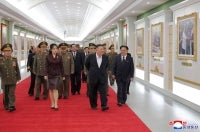
SHAH ALAM – The 2025 Asia-Pacific Economic Cooperation (APEC) Economic Leaders’ Meeting in Gyeongju wrapped up last week with a display of cultural pride and diplomatic finesse.
From the Lahan Select Hotel gala featuring a medley performance by G-Dragon to sessions led by President Lee Jae-Myung urging unity and innovation, South Korea projected itself as both modern and mindful of tradition.
The two-day event, held on Oct 31 and Nov 1, brought together leaders from 21 member economies including United States President Donald Trump and China’s President Xi Jinping.
The summit highlighted cooperation in trade, investment, and artificial intelligence, with Lee describing it as “an inflection point for the global trade order.”
However, far from the glimmering lights of the main stage, the nation’s security personnel endured harsh conditions.

According to The Korea Herald, roughly 19,000 officers were deployed daily in and around the ancient city to secure the global event. Their union later revealed that many slept on bare floors and survived on cold meals.
An Yu-shin, head of the National Police Union’s operations support division, said the treatment of officers was “worse than that of prisoners.”
“Some so-called rest areas had glass-walled bathrooms with no privacy, others were mouldy or overcrowded. The meals were cold, poorly prepared and in some cases, officers got nothing at all,” he said.
He added that despite working from early morning to late at night, “only the narrowest portion of that time was recognised as paid work,” calling it an issue of “basic respect.”
In a written response, the National Police Agency admitted there were “limitations” in arranging accommodation due to Gyeongju’s restricted lodging capacity within the Bomun Tourist Complex.
It also explained that the original central dining hall at the Gyeongju Gymnasium had been reassigned for summit use days before the event.
“We regret that some officers experienced discomfort despite prior efforts,” the agency stated, adding that an internal review would be launched to avoid recurrence.
Prime Minister Kim Min-seok has since ordered the Interior Ministry and the police agency to conduct a full fact-finding investigation.
“I express deep regret that some officers faced such conditions despite prior assurances of proper preparation. I express my appreciation to all officers who fulfilled their duties under difficult circumstances,” he said in a statement.
The issue has since drawn public attention to the broader conversation about welfare and working conditions for frontline officers during large-scale national events.
Download Sinar Daily application.Click Here!