Why the brain thinks we can drive after drinking
Psychologists say this sense of assurance, shaped by overconfidence, optimism bias and social pressure, is often misplaced and, in many cases, already compromised by alcohol.
NATASYA AZHARI

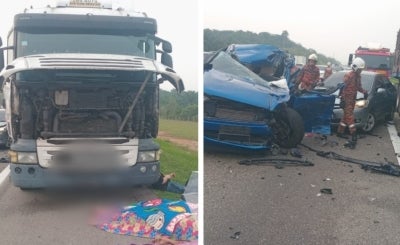
SHAH ALAM – Even after a few drinks, many drivers remain convinced they can get home safely.
Most do not get behind the wheel intending to take a risk—they do so because they believe there is none.
Psychologists say this sense of assurance, shaped by overconfidence, optimism bias and social pressure, is often misplaced and, in many cases, already compromised by alcohol.
Sultan Idris Education University counselling psychologist Associate Professor Dr Fauziah Mohd Saad said cognitive biases play a powerful role in this false confidence.
“Cognitive biases such as overconfidence, optimism bias (‘nothing will happen to me’) and the illusion of control lead individuals to overestimate their driving ability,” she said.
Alcohol further impairs judgment, while repeated risky behaviour without consequences reinforces the belief that it is safe, said Dr Fauziah.
“If someone drives drunk without consequences, it reinforces the belief that the behaviour is safe,” she added.
She noted that younger drivers are particularly vulnerable due to developmental and psychological factors.
“They have higher sensation-seeking tendencies, underdeveloped risk evaluation and stronger peer influence,” she said, highlighting the combined effects of brain development and social pressure on behaviour.
Malaysian Mental Health Association president and consultant psychiatrist Prof Datuk Dr Andrew Mohanraj said drivers often misjudge their level of impairment.
“There is a mismatch between subjective confidence and objective ability. People tend to believe that bad outcomes are more likely to happen to others than to themselves,” he said.
Over time, he said this false confidence can solidify, as the brain encodes unpunished risky behaviour as success rather than near failure.
“Social dynamics also play a key role. When everyone has been drinking, there is a diffusion of responsibility and no one steps in to stop it.
“Brain development further compounds the problem, particularly among younger drivers. The prefrontal cortex, which governs judgment and impulse control, matures later than the limbic system, which drives reward and thrill-seeking.
This creates a high-reward, low-control profile,” he explained.
International Islamic University Malaysia child and adolescent psychiatrist Dr Rozanizam Zakaria from said drivers often rely on how they feel rather than their actual level of impairment.
“Feeling ‘okay’ is not the same as being safe to drive. People rely on how they feel rather than their actual level of impairment,” he said.
He added that social media can reinforce risky behaviour by amplifying images of confidence and impulsivity while rarely showing the consequences.
“It rewards images of confidence and impulsivity, while rarely showing the devastating aftermath,” he said, stressing the importance of planning ahead.
“Decide in advance who will drive or how to get home. Stop a friend from driving drunk—it is responsibility, not embarrassment,” he added.
Pertubuhan Kesejahteraan Psikospiritual Malaysia chairman and social psychologist Dr Adnan Omar said impairment begins as soon as alcohol enters the system.
“The moment people consume alcohol, their cognitive function begins to deteriorate. Judgment is already affected, so self-assessments are unreliable,” he said.Group norms and peer pressure can further encourage risky behaviour.
“Group norms and peer pressure can further encourage risky behaviour.
"Groupthink plays a major role, as people feel pressure to fit in. With social media, drinking is often portrayed as fun and carefree,” he said.
While technology can support prevention, he emphasised that personal responsibility remains essential.
“Apps are useful, but prevention is better than intervention,” he said.
Ultimately, experts warn that the real danger lies not just in alcohol, but in the illusion of control it creates.
Confidence and control may feel real, but both can be distorted by a brain no longer thinking clearly. By the time someone says, “I’m fine to drive”, the risk is already behind the wheel.
Download Sinar Daily application.Click Here!