Who will lead Malaysia after GE16?
Choosing the captain of a nation is a grave responsibility.
ANAS ZUBEDY

AS Malaysia moves towards the 16th General Election (GE16), one of the most crucial questions we must collectively reflect on is: who is truly worthy of steering Malaysia’s future?
The answer to this question will serve as a compass to guide us in making mature decisions at the ballot box.
This article is written from a neutral and as fair a perspective as possible – not to glorify any side and certainly not to bring anyone down.
Its intention is sincere: to invite Malaysians to think deeply about the meaning of leadership, the direction of the nation and the kind of Prime Minister we aspire to for the next phase of nation-building.
Too often, our political landscape is driven by emotions, factional sentiments, party fanaticism and cosmetic slogans on social media. Yet, choosing the captain of a nation is a grave responsibility.
A Prime Minister is not merely a political figurehead. On their shoulders rest the direction of the economy, the strength of unity, investor confidence, government stability, racial harmony, international reputation, public trust and the future of coming generations.
This discourse requires the collective participation of all Malaysians – not only those in Peninsular Malaysia, but also our brothers and sisters in Sabah and Sarawak, who have now proven to be key kingmakers in shaping the federal leadership landscape.
This article also seeks to explore a deeper narrative: what kind of leadership mould do we need today? Do we need a reformist? A technocrat? A leader close to the grassroots? A coalition unifier? A stabiliser? A crisis manager? A visionary? Or someone capable of quietly rebuilding national confidence?
The fundamental question remains: which figure can lift Malaysia out of its political and economic turmoil, free it from toxic identity politics, hypocritical rhetoric and the scourge of corruption and lead the nation to new heights of success?
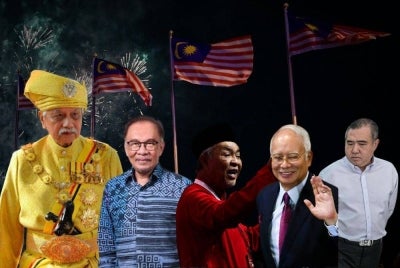
Below are several figures frequently mentioned in public discourse when discussing Malaysia’s leadership future after GE16.
1. Datuk Seri Anwar Ibrahim
Anwar remains one of the most iconic political giants in the annals of Malaysian history. From his days of student activism, holding the Deputy Prime Minister’s seat, becoming the symbol of the opposition movement, enduring imprisonment, right up to taking the oath as Prime Minister – his political archive is among the most dramatic in the region.
He possesses charisma and a strong international reputation. He is admired by supporters for his resilience, oratory skills, ideological commitment and decades-long perseverance in reaching the nation’s top post.
To his supporters, he represents the best face of a progressive and moderate Islamic Malaysia on the global stage.
However, Anwar’s greatest challenge today is addressing a growing “trust deficit” among the public, including even segments of his core supporters.
Fairly or not, some Malaysians feel disappointed that the reform agenda he once championed now appears slow, unfulfilled, or in some cases, deviating from initial expectations.
Critics argue that his administration is still struggling to convince the grassroots that the government can tackle rising living costs, strengthen governance and ease economic anxieties.
Supporters, on the other hand, defend him by pointing out that he inherited a fragile and divided government and rebuilding institutions and the economy takes time.
Despite the storm of criticism, Anwar remains the central pillar of Pakatan Harapan and one of the few politicians with cross-ethnic, cross-religious and cross-socioeconomic appeal nationwide.
Whether Malaysians still place their hopes in him for long-term stability and reform will be the ultimate gamble heading into GE16.
2. Datuk Seri Hamzah Zainudin
Hamzah is increasingly emerging as a disciplined and strategic political architect within Perikatan Nasional (PN). With extensive experience in government and ministerial portfolios, supporters view him as calm, meticulous, results-oriented and focused on delivery.
Unlike politicians who rely on emotional rhetoric or personality politics, Hamzah is known for his structured, focused and efficient approach to managing systems and organisations. His role as opposition leader positions him as a serious figure in policy and governance matters.
Within PN, he is seen as a bridge-builder capable of connecting diverse groups from Pas members and civil servants to corporate communities and non-Malay voters. His softer communication style makes him more broadly acceptable compared to more polarising figures.
However, observers continue to speculate about internal dynamics between Hamzah and Muhyiddin within Bersatu, particularly regarding future party leadership.
Still, in a time when Malaysians crave stability, efficiency and strong governance, Hamzah is a figure who cannot be overlooked.
3. Tan Sri Muhyiddin Yassin
Muhyiddin remains one of the most senior statesmen in Malaysian politics. His experience as Johor Menteri Besar, Deputy Prime Minister and Prime Minister gives him a deep understanding of governance and political strategy.
His strength lies in his grassroots influence, particularly among Malay voters. Compared to more elitist or urban-oriented leaders, he is often seen as practical, approachable and in touch with ordinary citizens.
His leadership during the Covid-19 pandemic remains a key benchmark for supporters, who argue that he successfully guided the nation through one of the most challenging crises in modern history.
Within PN, Muhyiddin is still considered a viable Prime Minister candidate, especially if the coalition retains him as its main figure.
Critics, however, point to political instability during his administration and question whether PN should introduce new leadership to expand its national appeal.
Nonetheless, Muhyiddin remains a heavyweight in any GE16 political equation.
4. Datuk Seri Dr Ahmad Samsuri Mokhtar
Samsuri is increasingly seen as one of the most promising and intriguing political figures within Pas and PN.
With a professional background in aerospace engineering, he brings a refreshing contrast to Pas’ traditional leadership image. He is often viewed more as a technocrat and efficient administrator than a purely religious figure.
Supporters see him as disciplined, calm and focused on policy implementation rather than endless political maneuvering.
His approach allows him to bridge the gap between Pas’ Islamist base and professionals and younger voters.
Importantly, analysts consider him one of PN’s most acceptable faces among non-Malay and non-Muslim communities, thanks to his moderate communication style and technocratic profile.
However, questions remain about his national-level influence beyond the East Coast and whether he possesses the political authority and experience to manage a large federal coalition.
Even so, in an era that values professionalism, stability and cross-ethnic acceptance, Samsuri could emerge as a “dark horse” capable of reshaping Malaysia’s political landscape.
5. Datuk Seri Dr Ahmad Zahid Hamidi
Zahid is a resilient, experienced and highly strategic political figure. Having climbed Umno’s ranks over decades, he has proven his ability to remain at the centre of power despite electoral defeats, internal party conflicts and shifting political alliances.
Supporters argue that his greatest strength lies in negotiation, coalition-building, grassroots management and balancing power dynamics.
Whether one agrees with his politics or not, many observers acknowledge his ability to navigate turbulent political waters while keeping Umno relevant.
One of his most notable political moves was forging cooperation between Umno, PKR and DAP under the Unity Government – bridging decades of rivalry for political continuity.
If Umno stages a strong comeback in GE16, Zahid’s name could once again surface as a Prime Ministerial candidate, especially in a hung parliament scenario requiring negotiation and consensus-building.
Critics, however, continue to raise concerns about public perception, trust deficits and controversies surrounding his image.
Still, Malaysian politics often rewards resilience, networks, patience and coalition management – qualities Zahid undeniably possesses.
6. Datuk Seri Fadillah Yusof
Fadillah represents a new and increasingly relevant dimension in Malaysia’s leadership discourse.
A Sarawakian with a legal background, he is known for being calm, low-profile, principled and hardworking behind the scenes.
Far removed from aggressive or populist politics, he is seen as consistent, reliable and consensus-driven.
His approachable and humble personality has also endeared him to many.
His extensive experience across key federal ministries and his role as Deputy Prime Minister demonstrate his ability to work across regions, parties and communities without sparking political friction.
More importantly, Fadillah’s rising profile reflects a new geopolitical reality: Sabah and Sarawak are no longer mere “fixed deposits” but decisive players in forming federal governments.
This raises an important question – could Malaysia be ready for a Prime Minister from East Malaysia? Why not?
Supporters believe his moderate image, federal experience and cross-regional acceptance make him an ideal candidate for such a historic shift.
While critics may argue he lacks the backing of a dominant national political machinery, Malaysia’s coalition-based politics suggests that future leadership will depend less on dominance and more on acceptance, trust, moderation and bridge-building.
As GE16 approaches, Fadillah represents not just a candidate, but the evolution of Malaysia’s political landscape.
This article does not aim to dictate who you should vote for.
Rather, it is an honest invitation for all of us to reflect more deeply on leadership, nation-building, stability, trust, competence, unity and the Malaysia we aspire to build.
In a democracy, differences in views on leaders, parties, ideologies and coalitions are natural. But let us embrace these differences with maturity, respect and open-mindedness.
I welcome all feedback from readers. You have every right to support any candidate – and to challenge the views presented here.
But let us debate with civility, without hatred, insults, or abusive language.
We must revive the culture of “agreeing to disagree” as one Malaysian family.
The healthiest step for us as citizens is to understand and evaluate the leadership talent available in the political arena, so we do not choose the wrong captain for our nation’s future.
Ultimately, under Malaysia’s constitutional monarchy, the authority to appoint the Prime Minister lies with the Yang di-Pertuan Agong, who will grant the mandate to the Member of Parliament deemed most likely to command the confidence of the majority in the Dewan Rakyat.
As citizens, we also have the right to express our aspirations regarding the qualities we seek in a leader – especially for the role of Prime Minister.
Above all, vote wisely. Use rational judgment and a sincere heart guided by wisdom – because Malaysia’s greatness is built by Malaysians who are capable.
Anas Zubedy is the Managing Director Zubedy (M) Sdn Bhd. The views expressed in this article are his own and do not necessarily reflect those of Sinar Daily.
Download Sinar Daily application.Click Here!