The story that stayed with me
What a Johor Sultan, three advisers and an ancient legal code can teach us about good governance.
A PRINCESS REMEMBERS
TENGKU AMPUAN PAHANG TUNKU AZIZAH AMINAH MAIMUNAH ISKANDARIAH
Every historian has a beginning. Mine did not begin in a university lecture hall or in the archives. It began with stories.
Growing up within the walls of a palace, history was never something distant. It was part of everyday life. The corridors carried memories, portraits watched silently from the walls, and elders spoke not only of events, but of the people who had lived them.
One of those who profoundly influenced me was the late Dato’ Abdullah Muhammad, the former State Secretary of Johor. He was an extraordinary man, a brilliant scholar who had been sent to the University of Cambridge to study law, but whose love for history was so great that he pursued a degree in history at the same time. Looking back, I jokingly call him the “culprit” responsible for my lifelong fascination with history.
Whenever we met, he would tell me stories. Not gossip. Not legends. Stories that revealed the character of rulers and the values that shaped an earlier generation.
One story has remained with me for decades.
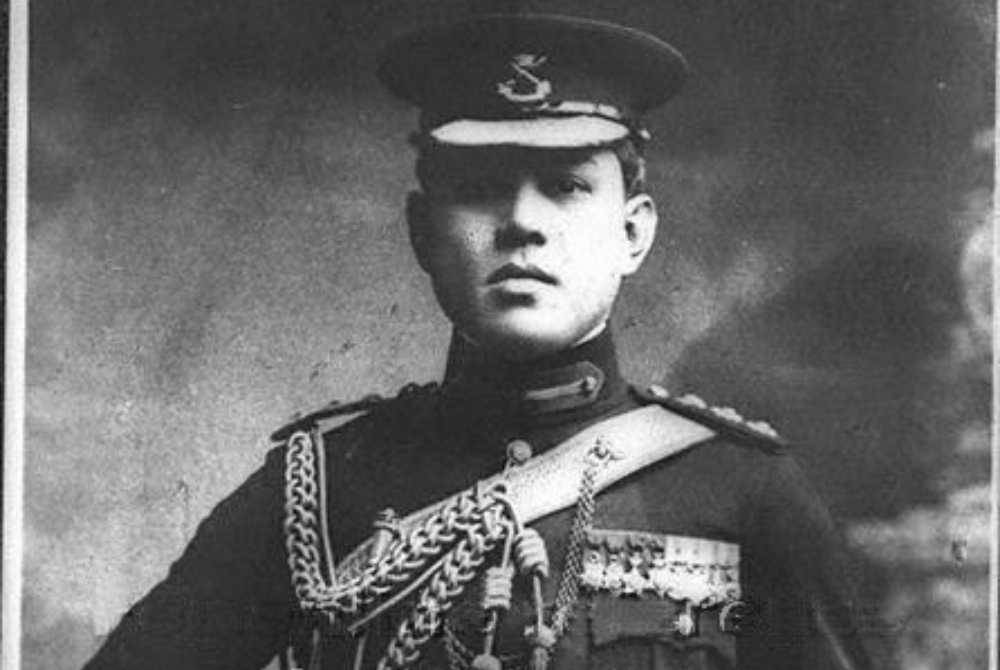
It concerned my great-grandfather, Sultan Ibrahim of Johor, who reigned for 65 years. He was described as a commanding figure, tall, handsome, and an absolute ruler whose presence inspired both loyalty and respect.
On one occasion, Dato’ Abdullah told me, the Sultan made a mistake in the administration of the state. Three of his senior advisers decided they had a duty to speak to him. They went to the palace, fully aware of the gravity of their task.
The Sultan knew exactly why they had come.
As they explained their concerns, he did not interrupt them. He did not raise his voice. He did not dismiss them from his presence.
Instead, he listened.
He poured them tea.
He asked whether they would like milk or sugar.
He offered them biscuits.
The advisers continued to speak frankly while the Sultan quietly attended to his guests.
When they had finished, they left the palace.
The following day, the Sultan corrected the matter.
For many years, I simply regarded it as a wonderful story about humility in leadership.
Only much later, while researching the Hukum Kanun Pahang for my Master’s degree, did I begin to understand it differently.
The Hukum Kanun Pahang repeatedly emphasises that rulers bear responsibilities as well as authority. Governance is sustained not merely by commands, but by justice, counsel, and accountability. The relationship between ruler and subject is not one of unchecked power, but one in which both carry obligations towards the preservation of good government.
I do not cite this family story as historical proof of the Hukum Kanun Pahang. Rather, the Hukum Kanun Pahang gave me a language through which I could better understand the story itself.
What had once seemed merely an example of personal courtesy came to represent something much deeper, a constitutional culture in which listening was not a weakness, but a strength.
Perhaps that is one of history’s greatest gifts.
Sometimes, a story told in our youth waits patiently for decades until a forgotten manuscript teaches us what it truly meant.
* Tunku Azizah Aminah Maimunah Iskandariah is a master’s candidate at the International Institute of Islamic Thought and Civilisation (ISTAC), International Islamic University Malaysia.
Download Sinar Daily application.Click Here!