PH’s Onn Hafiz gambit risks turning into political self-defeat
Attacks meant to weaken BN instead sharpen its narrative


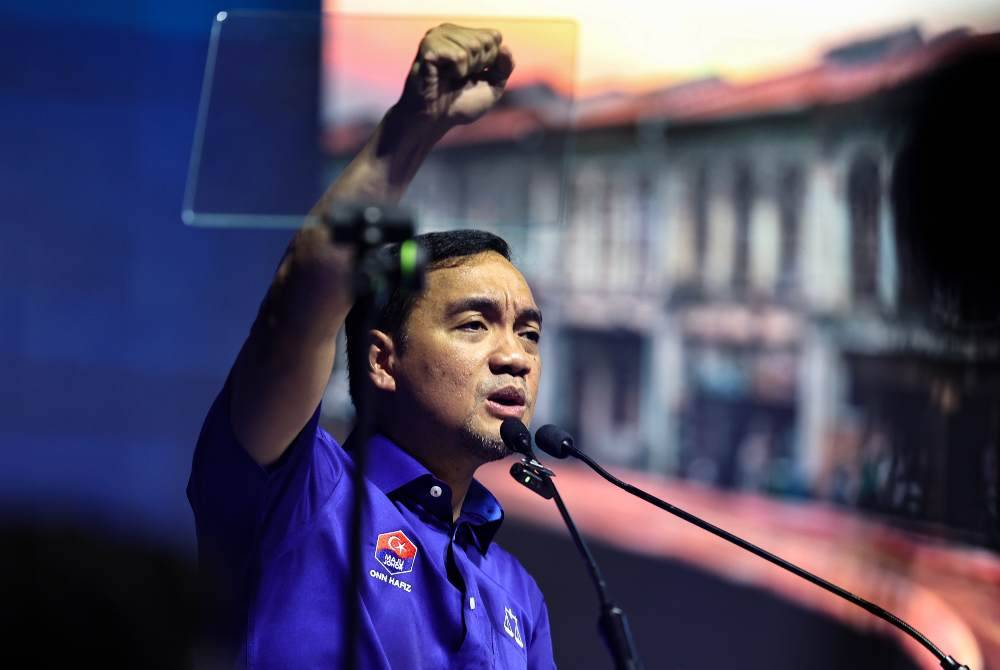
OVER the past week, Johor Menteri Besar Datuk Onn Hafiz Ghazi has come under sustained criticism from senior Pakatan Harapan (PH) leaders, including Prime Minister Datuk Seri Anwar Ibrahim and Communications Minister Datuk Fahmi Fadzil.
The attacks have focused on his leadership style, his willingness to engage in a public debate with former education minister Dr Maszlee Malik, and the broader image of a confident, high-performing administrator that Barisan Nasional has cultivated.
The political logic is straightforward: Onn Hafiz is BN’s most visible and marketable asset in Johor, and weakening him would, in theory, weaken the coalition’s broader electoral narrative.
But that calculation carries a familiar risk in Malaysian politics — elevating an opponent through overexposure.
Onn Hafiz has largely avoided the baggage that has weighed down many BN leaders in previous elections.
His public image is built around administration rather than political confrontation, and his tenure has been closely associated with Johor’s recent wave of investment activity — from the Johor-Singapore Special Economic Zone to manufacturing expansion and data-centre growth.
Whether voters attribute these developments directly to him is secondary.
What matters politically is that BN has successfully linked his leadership to Johor’s economic momentum.
That makes him a difficult target.
Fahmi’s recent suggestion that Onn Hafiz should “copy-paste” Khairy Jamaluddin’s campaigning style reflects PH’s attempt to question his political aggressiveness.
The implication is that the Menteri Besar is less willing to engage opponents directly, relying instead on BN’s broader machinery to carry the campaign.
Yet the line can cut both ways.
It also reinforces the visibility of BN’s campaign strength — and, by extension, the prominence of its Johor leader — at a time when PH is trying to define the narrative.
The same dynamic applies to Anwar’s involvement.
When a prime minister repeatedly singles out a state leader during a campaign, it inevitably raises that leader’s profile.
In political terms, attention itself becomes validation.
Onn Hafiz risks being cast not as a vulnerable incumbent, but as a figure important enough to warrant repeated intervention from the country’s most powerful politician.
Johor’s political environment adds another layer of complexity. Voters in the state have historically prioritised stability, economic performance and pragmatic governance over ideological positioning.
BN’s campaign rests heavily on the argument that Johor is on a steady growth trajectory and that continuity in leadership will sustain investor confidence.
PH, by contrast, has sought to shift attention toward accountability, including repeated calls for a public debate between Maszlee and Onn Hafiz.
While the issue has generated visibility, it is less clear whether it resonates beyond the campaign circuit.
Malaysian elections are rarely shaped by debates. They are more often decided by perceptions of cost of living, job opportunities and development outcomes.
That is where PH’s stronger arguments traditionally lie — not in personal challenges to Onn Hafiz, but in broader questions about whether Johor’s economic gains are reaching ordinary households.
Wages, housing affordability and living costs remain structurally more potent issues than campaign optics.
Instead, the election is increasingly revolving around one individual.
The risk for PH is not only that Onn Hafiz becomes more visible, but that he becomes the defining reference point of the contest.
In that scenario, the campaign shifts from competing visions for Johor to a referendum on a single incumbent who already enjoys a degree of political goodwill.
With polling day approaching, PH’s strategy hinges on a narrow assumption: that sustained scrutiny will eventually expose weaknesses in Onn Hafiz’s leadership image.
The alternative outcome is more straightforward. If voters remain broadly satisfied with Johor’s direction, the attention PH has generated may reinforce Onn Hafiz’s standing as the state’s central political figure — and the leader most associated with its current trajectory.
In that case, the campaign may not weaken him. It may simply confirm his position at the centre of Johor politics.
Download Sinar Daily application.Click Here!