Social media sparks new narratives on the Israel–Palestine conflict
Reporting on Palestine, Sudan and the Pakistan–Afghanistan border region should not adopt a one-size-fits-all approach, as each conflict requires careful consideration of its unique context to ensure fair, accurate and meaningful journalism.
ADLIYAH HABIBULLAH AND GRACE AISYAH KEDAYAN
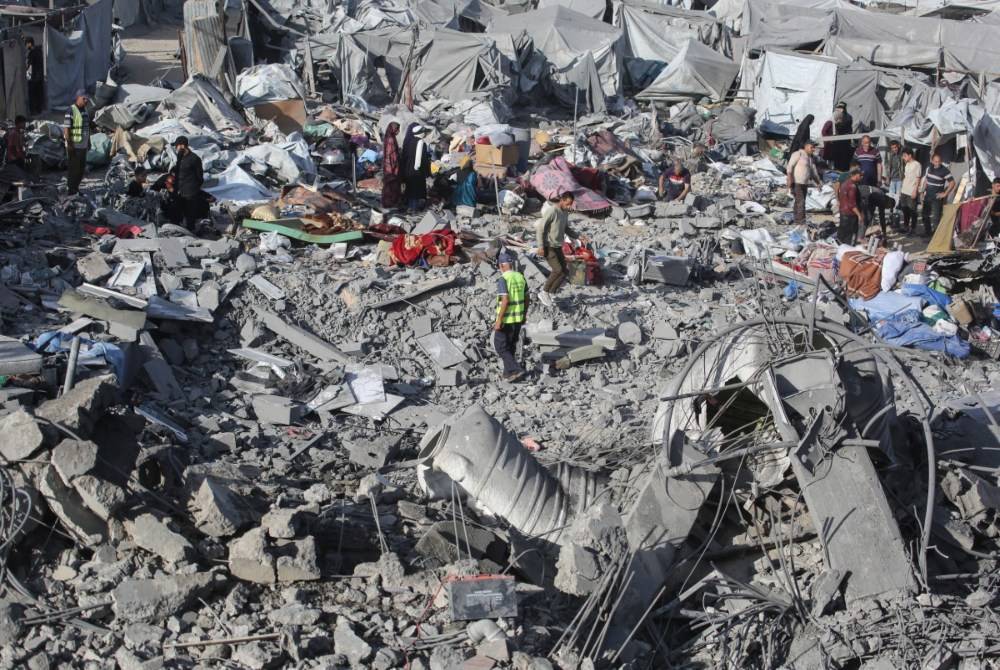
THE rapid growth of social media has significantly transformed the global communication landscape, particularly in the coverage of the Israel-Palestine conflict.
In the past, international audiences relied largely on Western media outlets for information about developments in the Middle East. Today, however, digital platforms such as X, Facebook, Instagram, TikTok and YouTube have diversified access to information, enabling people to engage with a broader range of news sources and perspectives on the conflict.
Social media has also become a primary communication channel for Palestinians in Gaza, allowing civilians to document events in real time through images, videos and eyewitness accounts that illustrate the humanitarian consequences of the conflict.
This phenomenon has transformed social media into a two-way communication platform, accelerating the flow of information across geographical boundaries.
Speaking at the academic forum Western Media Framing of the Middle East: Narrative Power, Media Law and Implications for Malaysia, director-general of broadcasting Ashwad Ismail observed that advances in digital technology over the past decade have encouraged the public to become more discerning in evaluating international issues.
This development also demonstrates how social media increasingly serves as a mechanism of accountability, challenging traditional news agenda-setting that has long been dominated by major international media organisations.
Ashwad, a former journalist, noted that throughout his two decades in the media industry, coverage of conflicts involving Muslim-majority countries has often reflected markedly different perspectives between Western and Eastern media organisations.
He described the growth of digital platforms as a positive development because they allow audiences to better understand public opinion, sentiment and reactions to events unfolding on the ground, particularly in Palestine.
The changing media landscape has also transformed audiences from passive consumers of news into active participants who contribute to public discourse by sharing information, experiences and perspectives.
The escalation of Israel's military campaign in Gaza following the events of Oct 7, 2023 marked a significant turning point in how global audiences followed and understood the conflict through digital platforms.
According to Ashwad, surveys conducted in the United States indicate that more than 60 per cent of Generation Z respondents expressed support for the Palestinian cause.
He described this shift as unprecedented, noting that public discourse has evolved considerably, with younger generations becoming increasingly vocal in expressing solidarity with the Palestinian people.
Two years ago, the AI-generated image bearing the slogan "All Eyes on Rafah" was shared more than 44 million times on Instagram alone, becoming one of the largest online expressions of solidarity with Gaza.
The slogan also spread widely across other social media platforms, particularly on X, where the hashtag #AllEyesOnRafah generated nearly one million engagements, further amplifying global awareness of the humanitarian situation.
Ashwad, who narrowly escaped Israeli gunfire while participating in the Mavi Marmara humanitarian mission in 2010, also shared his view that growing public engagement on social media has placed increasing pressure on international mainstream media to provide more comprehensive coverage of developments in Palestine.
Within the Malaysian media context, Ashwad emphasised that local media organisations have a moral responsibility to ensure that humanitarian crises affecting Muslim communities continue to receive sustained public attention.
This responsibility becomes even more significant in the context of Palestine, where decades of conflict have resulted in profound humanitarian consequences that warrant continued international attention.
Such a perspective is consistent with the Social Responsibility Theory which holds that the media's freedom to report carries an equally important ethical obligation to provide accurate, responsible and socially beneficial information.
From a social responsibility perspective, media organisations must recognise that every conflict possesses distinct historical, political and humanitarian dimensions.
Therefore, reporting on Palestine, Sudan and the Pakistan–Afghanistan border region should not adopt a one-size-fits-all approach, as each conflict requires careful consideration of its unique context to ensure fair, accurate and meaningful journalism.
Adliyah Habibulah and Grace Aisyah Humairah Kedayan are postgraduate students pursuing a Master of Mass Communication at Universiti Teknologi MARA (UiTM) Shah Alam.
The views expressed in this article are the authors' own and do not necessarily reflect those of Sinar Daily.
Download Sinar Daily application.Click Here!