Johor's Brutal Message to the Opposition: Johor Voted for the Future
Voters were not rejecting reform. They were demanding something PH failed to offer: a convincing alternative.


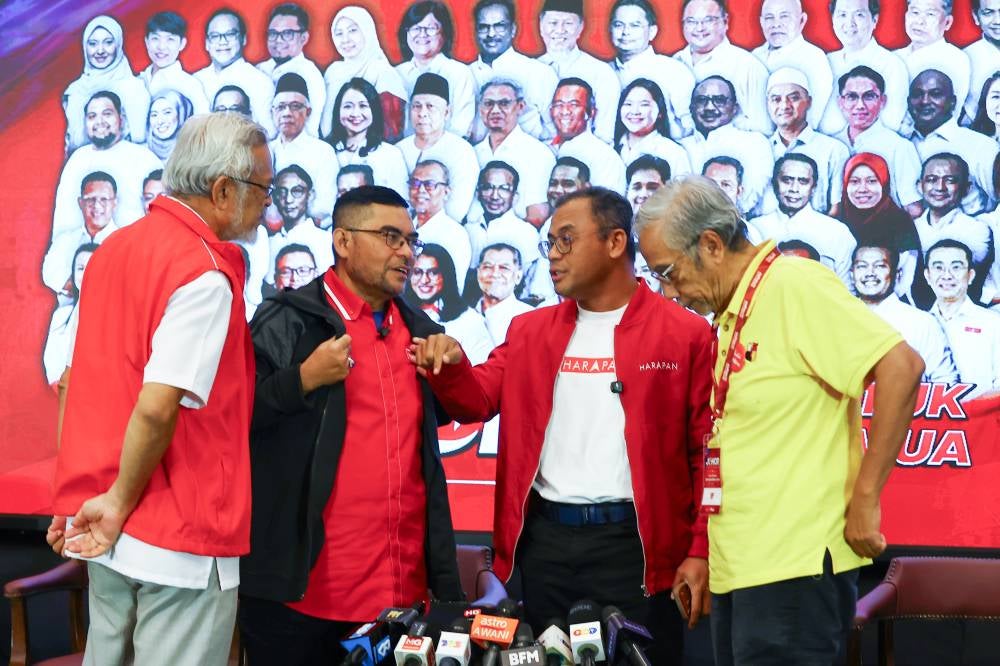
THE scale of the Opposition's defeat in Johor cannot be explained away as a bad campaign, poor candidate selection or low voter turnout.
This was something more fundamental.
Johor voters did not merely reject the Opposition. They embraced a different political priority.
For much of the past decade, Malaysian elections were shaped by calls for reform, accountability and political change. Voters wanted to punish governments, send messages and challenge the status quo.
Johor's election suggests many voters have moved beyond that phase.
As billions of ringgit flow into the Johor-Singapore Special Economic Zone, industrial parks, logistics hubs and data centre projects, voters appear increasingly focused on economic opportunities and stability. Whether that perception is fully justified is beside the point. What matters is that enough voters believed the current state government was moving Johor in the right direction.
Barisan Nasional successfully positioned itself as the steward of that future. The Opposition, meanwhile, struggled to explain why voters should abandon a government many viewed as delivering results.
Perhaps the most painful lesson for Pakatan Harapan is that its traditional strengths no longer guarantee electoral success.
For years, DAP's urban strongholds were regarded as among the safest seats in Malaysian politics. The assumption was that Chinese-majority and urban constituencies would remain firmly in the Opposition camp.
Johor has challenged that assumption.
If voters who once supported PH in large numbers are now willing to vote differently, it suggests the political landscape is evolving. Economic pragmatism is beginning to outweigh political loyalty.
The Opposition also appeared trapped in familiar political arguments.
Campaign speeches repeatedly returned to accountability, governance and corruption. Those issues still matter, but Johor voters seemed more interested in what each side could deliver over the next five years. The Opposition's challenge was not persuading voters that problems existed; it was convincing them that it offered a more compelling future than the incumbent government.
Then there was the Datuk Seri Anwar Ibrahim factor.
The Prime Minister campaigned extensively for PH, but his presence did not produce the electoral lift many expected. Rather than becoming a referendum on Putrajaya, the election became a judgement on Johor itself.
Voters assessed local leadership, state policies and their own economic prospects. In that environment, national political narratives struggled to gain traction.
Social media offered little comfort.
The campaign generated viral moments, energetic online debates and enthusiastic digital engagement. Yet Johor once again demonstrated a reality that political strategists often forget: elections are not won on smartphones.
They are won through organisation, local networks and the ability to turn supporters into voters.
On that front, BN's machinery remains formidable.
Most significantly, Johor's election may signal the emergence of a new voter mindset.
After years of political upheaval, party defections and coalition realignments, many voters appear less interested in political drama and more interested in competence, execution and tangible outcomes.
That does not mean the Opposition is finished in Johor. But it does mean the old playbook is no longer enough.
Johor's message was clear: voters are increasingly rewarding governments they believe can deliver results. For the Opposition, criticism alone is no longer sufficient. It must present a credible alternative capable of matching—or surpassing—the state's development narrative.
This election was not simply a defeat for the Opposition.
It was a warning that the politics of protest may be giving way to the politics of performance.
Download Sinar Daily application.Click Here!