Tech entrepreneur says Forest City's Network School felt 'five years into the future'
Brandon Possin said Network School was more than a conventional educational institution, describing it as a first-mover community.


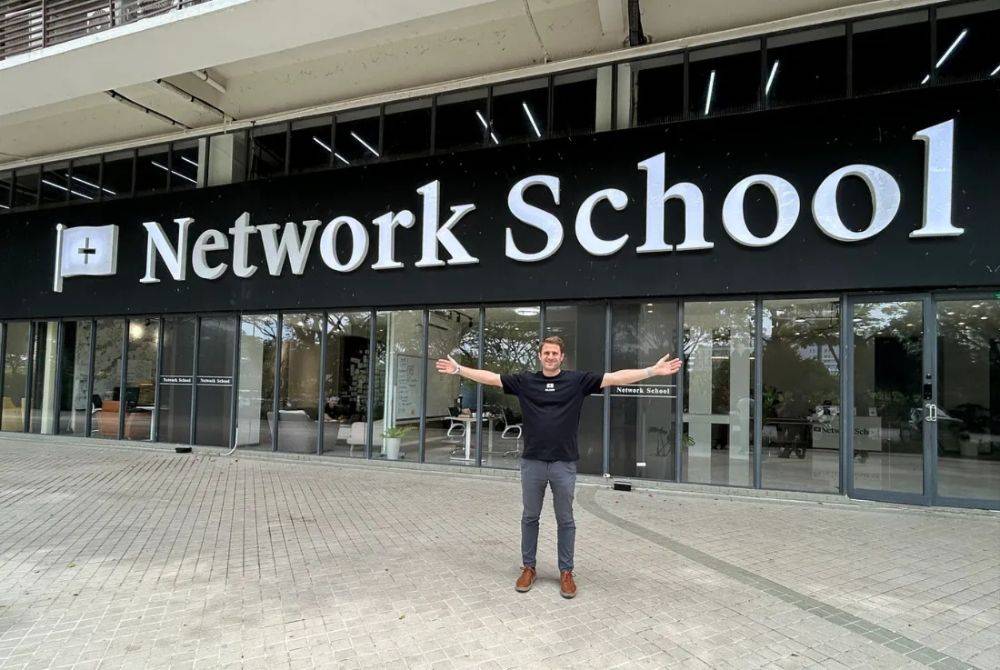
SHAH ALAM - A technology entrepreneur who spent a month at Forest City's Network School said the experience felt like living five years into the future, describing the Johor-based startup community as a place where entrepreneurs, developers and innovators lived, worked and learned together while building businesses.
Writing on the publishing platform Medium, Brandon Possin said Network School (NS) was more than a conventional educational institution, describing it as a first-mover community. He shared an extensive account of his month-long stay at the campus.
"A month ago, I arrived on a manmade island floating on the strait between Malaysia and Singapore.
“The island's centerpiece is a community of roughly 300 technologists, fitness enthusiasts and dreamers called the Network School, often called just 'NS'," he wrote.
Reflecting on his experience, Possin said the programme combined elements of several different concepts. After completing the programme, he described it as:
- A bottom-up incubator
- Living at a tech conference
- A start-up boot camp
- A luxury hacker house
- A first-mover community
"Would best describe it as a first mover community since during my month at NS, I kept on feeling like I was five years in the future when living and learning with 263 forward-leaning types.
"It has a fitness camp attached to it. One of NS' best features was its well-equipped gym and three-daily high intensity interval training (HIIT) classes for 30 minutes," he wrote.
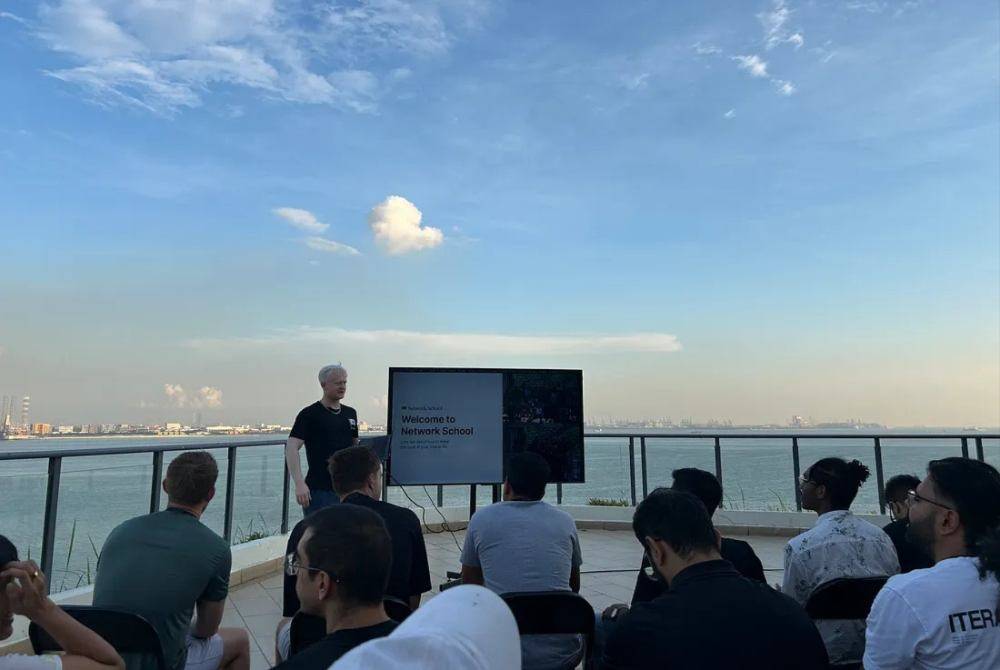
Possin said participants underwent physical assessments measuring push-up performance, balance, grip strength, body composition and VO2 max at both the beginning and end of the programme.
Rather than viewing the initiative as a traditional school, Possin said organisers introduced it as a new model called "Society as a Service."
He described the concept as combining accommodation, meals, co-working spaces, learning opportunities, startup fundraising access and guest speakers into a single community.
Possin also stressed that despite discussions surrounding the broader concept of NS, the programme itself was neither a political movement nor a conventional educational institution.
"First, it was not yet a political project. While founder Balaji Srinivasan spoke about his vision for future NS, participants received little political instruction.
The living example of a society-as-a-service was supposed to instruct us how to build something new.
"Second, it was not a formal school, despite the name. Only four formal classes were conducted by NS staff, while most learning came from participants themselves through seminars and knowledge-sharing sessions.
"It sure was a cultural smorgasboard,” he said.
He estimated that about one-third of the participants were Indians, while one-sixth each were from the South Asian diaspora, the United States, Europe, and Africa, East Asia and other regions.
Possin also highlighted what he called the absence of "incumbency bias", arguing that the community created opportunities for founders regardless of nationality or background.
He said the collaborative culture stood out throughout his stay.
Participants regularly organised workshops covering subjects ranging from marketing and app development to entrepreneurship, while members were encouraged to leave the community "a better place" before departing.
Among his key takeaways, Possin concluded that physical communities still play an important role in innovation despite advances in remote work.
"We can build things faster in a spirited environment like NS. Physical proximity and isolated communities still really matter,” he said.
Despite his positive assessment, Possin acknowledged several shortcomings.
He observed that roughly 80 per cent of participants were men, while ethnic-language groups occasionally formed among shorter-term participants.
He said that although the programme was based in Malaysia, there was little exposure to Malaysian language or culture during his stay.
"While located in Malaysia, during our month, the school offered no content related to Malaysia. Not once did I hear any of the NS members speaking Malay."
To address this, Possin said he personally organised a Malay language class for fellow participants, adding that after he left, another member from Johor Bahru later introduced a class on Malaysian culture.
Looking ahead, Possin said he believed the concept could eventually expand beyond Malaysia.
He suggested countries including Japan, the United Arab Emirates, Australia, South America and parts of Europe could potentially host similar communities in the future.
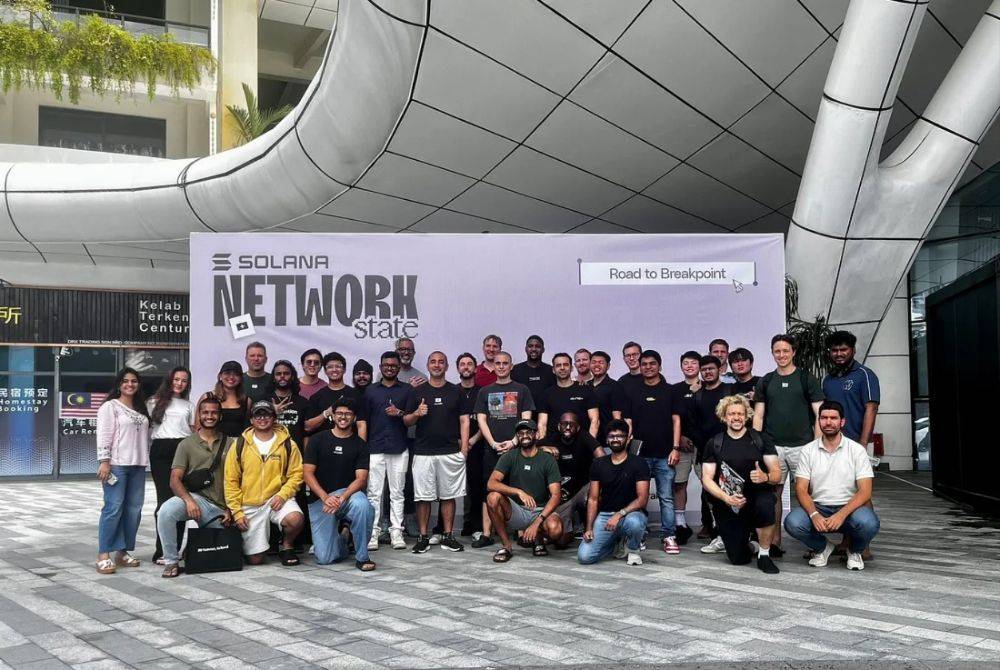
Forest City's Network School recently attracted attention in Malaysia after claims circulated on Threads alleging the project was recruiting Israeli nationals using second passports.
The allegations, which have not been independently verified, prompted online discussions over the initiative's screening process, curriculum and the backgrounds of some participants.
Some social media users also claimed interview questions for prospective participants touched on topics related to Israel, military technology and politics, while others alleged the project could become a gathering point for Israeli-linked entrepreneurs.
Network School is backed by Silicon Valley investor Balaji Srinivasan and describes itself as a decentralised residential programme where founders, developers, researchers and technology entrepreneurs live and work together while building startups and experimenting with new forms of digital communities.
Forest City in Johor was selected as one of its locations because of its infrastructure and proximity to Singapore.
Download Sinar Daily application.Click Here!