Manufacturing group urges bolder talent strategy as Malaysia seeks escape from middle-income trap
Industry leaders say research capability, university partnerships and global collaboration will determine country's competitiveness


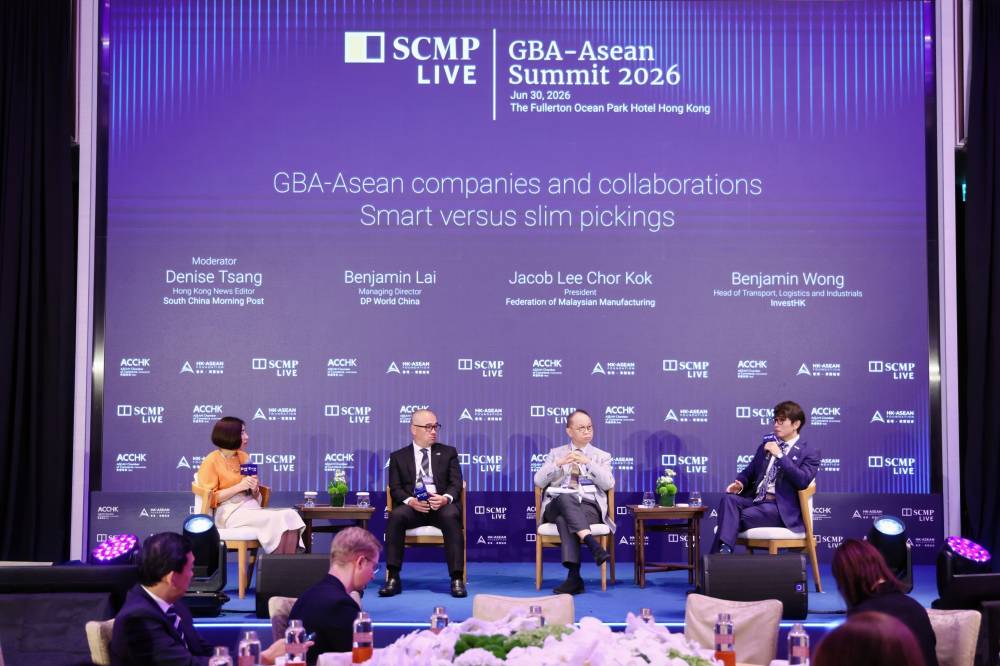
HONG KONG — Malaysia's ambition to become a high-value manufacturing economy will depend less on attracting factories and more on developing researchers, innovators and highly skilled talent, according to the country's largest manufacturing association.
Federation of Malaysian Manufacturers President Jacob Lee Chor Kok said Malaysia has benefited from shifting geopolitical dynamics and supply-chain realignments, but warned that future growth will require a deeper focus on research, development and innovation.
"We need talent," Lee said. "We need a critical mass of research talent."
The remarks reflects a growing debate over how Malaysia can capitalise on increasing foreign investment while avoiding the so-called middle-income trap that has constrained productivity growth in many emerging economies.
Malaysia has emerged as a beneficiary of geopolitical tensions between the United States and China, attracting fresh investment as multinational companies diversify production bases and seek greater supply-chain resilience.
The country's total trade reached a record RM3 trillion last year, with exports accounting for RM1.6 trillion.
Yet, Lee said Malaysia's next phase of development will require moving beyond cost competitiveness.
"We have to move away from competitive manufacturing to innovation-driven manufacturing," he said. "That is how we give the world better offerings."
Malaysia's industrialisation has evolved through several distinct phases.
In the 1990s, the country attracted significant investment from Japanese and Taiwanese manufacturers seeking lower-cost production bases in Southeast Asia. Following China's emergence as a global manufacturing powerhouse in the early 2000s, much of that investment shifted north.
Now, geopolitical tensions and trade disputes are again reshaping investment patterns, creating new opportunities for Malaysia.
The government has sought to position itself for that shift through initiatives including the National Industrial Master Plan 2030 (NIMP 2030), the National Energy Transition Roadmap, digitalisation strategies and artificial intelligence development plans.
Lee said these policies could strengthen Malaysia's foundations in advanced manufacturing, sustainability and technology if implemented successfully.
Sarawak's growing renewable energy capacity, for example, could provide a competitive advantage as manufacturers face increasing pressure to reduce carbon emissions.
But talent remains the missing ingredient.
Lee recently visited Hong Kong Science and Technology Parks, where he observed close collaboration between universities, researchers and technology startups.
Hong Kong's ability to attract highly ranked universities and channel research into commercialisation offers lessons for Malaysia, he said.
"If we cannot develop talent immediately, then we should collaborate," he said.
Lee advocated stronger international partnerships and more aggressive talent-development policies, including greater cooperation with universities and overseas innovation ecosystems.
FMM has already signed collaboration agreements with more than 10 universities, including research institutions and private universities, to accelerate research, development, innovation and commercialisation efforts.
Lee also challenged the notion that opening Malaysia to international talent would disadvantage local workers.
"The issue is not whether we are giving opportunities to local talent," he said. "Most of these people already have jobs. The bigger issue is building research capabilities."
He pointed to China as an example of the scale required.
"When you go to China, there are researchers everywhere. Malaysia needs companies that are willing to invest in research capabilities," he added.
Without that investment, he warned, Malaysia risks remaining trapped in lower-value manufacturing activities even as regional competitors move up the technological ladder.
For a country seeking to transform itself into a high-income, innovation-driven economy, the race for talent may prove more important than the race for investment.
The GBA-Asean Summit 2026 is a high-level economic forum focused on strengthening trade, capital flows and cross-border innovation between China's Guangdong-Hong Kong-MacauGreater Bay Area and Asean nations.
Download Sinar Daily application.Click Here!