When Investment Comes With an Ideology: The Network School question Malaysia must answer
Economic gains may be attractive, but sovereignty, transparency and long-term implications cannot be overlooked.


MALAYSIA has spent years trying to attract foreign investment, global talent and the next big technology wave. So when a high-profile Silicon Valley figure arrives in Forest City promising to build a global technology community, the instinct is naturally to welcome it.
After all, Forest City needs a second chance. Once marketed as a futuristic international metropolis, the Johor development became a symbol of overambition, with rows of apartments struggling to find residents and questions over whether the original vision could ever be realised.
Any project capable of bringing new energy, talent and investment into the area deserves attention.
But attention should not mean blind acceptance.
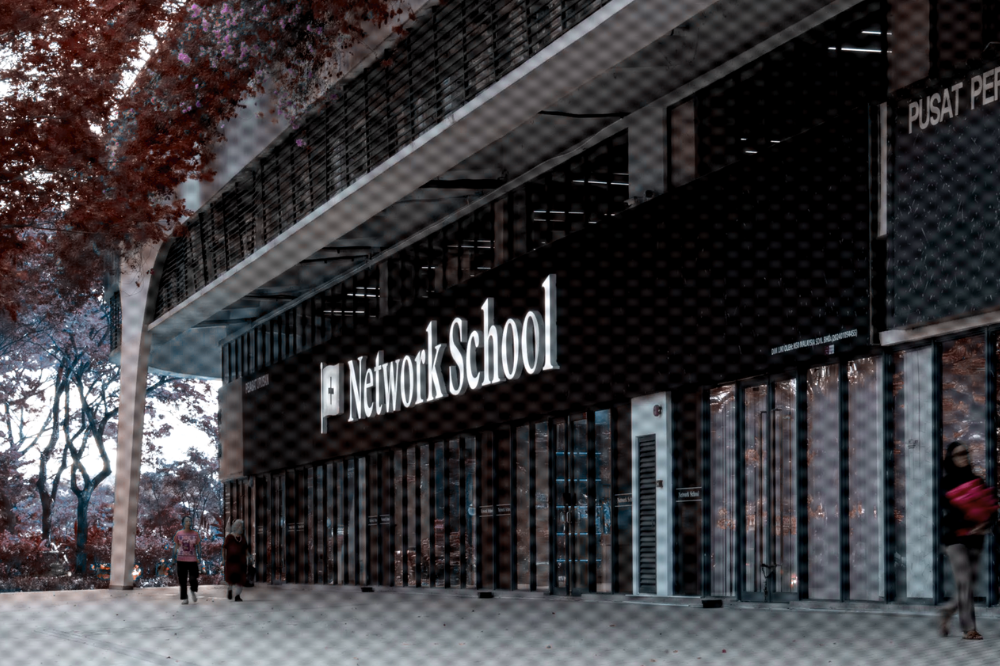
Network School, founded by former Coinbase chief technology officer Balaji Srinivasan, arrived in Forest City with an ambitious promise - to create a community of entrepreneurs, engineers and technology innovators from around the world.
Since launching in 2024, it has positioned itself as more than just a business incubator, describing itself as a place where people can live, work and build the future together.
The project has attracted significant interest, with claims of more than RM100 million already invested and plans for a further multi-million ringgit expansion.
On the surface, it sounds like exactly what Malaysia needs.
But beneath the excitement lies a more fundamental question: What exactly is Malaysia signing up for?
Srinivasan is not merely another tech entrepreneur seeking a place to build a company. He is also the author of The Network State, a controversial concept that imagines digitally connected communities evolving beyond traditional borders and structures.
That vision may sound futuristic and innovative to some. To others, it raises uncomfortable questions about sovereignty, governance and whether private networks could eventually become more influential than the governments within whose borders they operate.
This is where Malaysia must exercise caution.
The issue is not about rejecting foreign investment. Malaysia has built its economic success by welcoming global companies, investors and expertise.
The issue is whether every investment is being examined beyond its financial promise.
Too often, governments are seduced by impressive figures - billions in investment commitments, thousands of jobs, global publicity - while paying less attention to the long-term implications of allowing new forms of private communities and influence to take root.
A foreign company setting up a factory is one thing. A private community built around a particular ideology of how society should function is another.
The recent controversy surrounding immigration checks involving foreign participants at Network School has only intensified public interest. While authorities have said those inspected possessed valid documentation, the episode exposed a larger concern: the need for greater transparency about the nature and purpose of such projects.
Following the scrutiny, Srinivasan reportedly sought a “private audience” with Prime Minister Datuk Seri Anwar Ibrahim to discuss the future of the project and its investment plans.
That meeting, if it takes place, should not simply be about reassuring investors. It should also be about asking difficult questions.
What is the long-term vision for Network School in Malaysia? How will it operate within existing laws? Who ultimately benefits from the ecosystem being created? And what safeguards exist to ensure that Malaysia remains a host for innovation, not a testing ground for someone else’s grand experiment?
Forest City deserves a revival. Johor deserves more high-value investments. Malaysia should remain open to new ideas.
But openness without scrutiny is not a strategy.
The lesson from past mega projects is clear: money can build infrastructure, but it does not automatically guarantee alignment with national interests.
The excitement surrounding Network School should therefore be matched with healthy scepticism.
Because the biggest investment question is not how much money is coming into Malaysia. It is whether Malaysia fully understands what comes with it.
Download Sinar Daily application.Click Here!