New Swapsidy campaign proposes flexible fuel subsidy swap to accelerate Malaysia's clean energy transition
Campaign introduces calculator showing potential savings from switching petrol subsidies to EV financing, charging credits and rooftop solar.
SINAR DAILY REPORTER
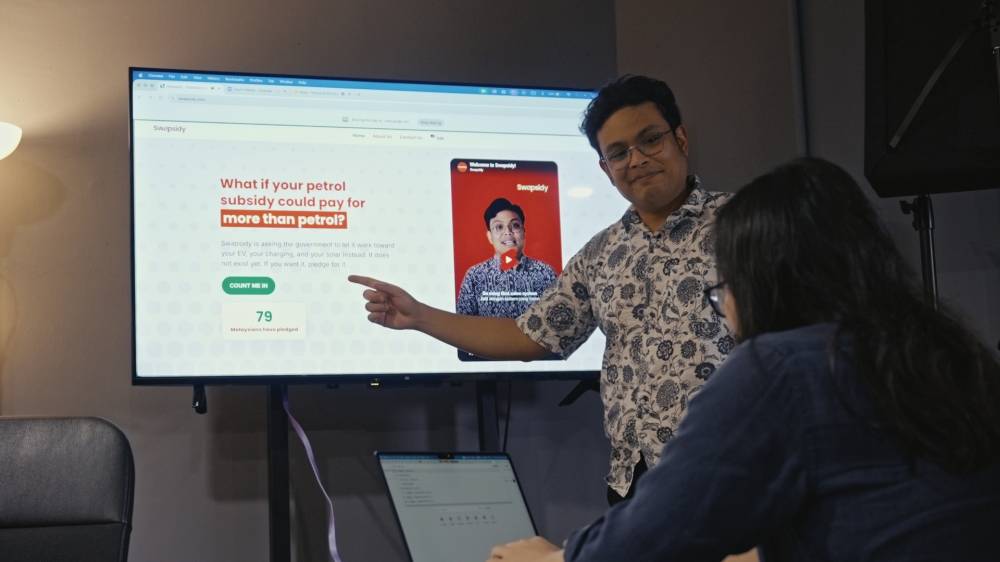
SHAH ALAM – A coalition of policy experts, researchers and journalists has launched Swapsidy, a new campaign proposing a voluntary approach to Malaysia's fuel subsidy reforms by allowing eligible Malaysians to exchange petrol subsidies for renewable energy incentives instead.
The campaign advocates three "Swapsidies" – electric vehicle (EV) financing, EV charging credits and rooftop solar panel installations – as alternatives to conventional petrol subsidies.
According to the campaign, eligible individuals could receive benefits worth up to RM13,500 over five years, equivalent to about 20 per cent of the upfront cost of purchasing an EV or installing rooftop solar panels. It also estimates that EV owners who charge their vehicles at home could reduce their travel costs by as much as 50 per cent per kilometre compared to petrol-powered vehicles.
To help consumers evaluate the financial impact, the campaign has also introduced a Swapsidy Calculator, enabling Malaysians to estimate potential savings from switching to cleaner energy options.
The initiative comes amid rising concerns over Malaysia's growing fuel subsidy bill, which the campaign says exceeded RM11 billion in the past eight months, driven largely by global oil price volatility.
Bright Spots Energy chief executive officer Hakim Albasrawy, who is leading the campaign, said the proposal is not intended to eliminate petrol subsidies but to give Malaysians greater flexibility in choosing how government support is utilised.
He said renewable energy technologies have become increasingly affordable, creating an opportunity for households to reduce long-term energy costs while allowing the government to redirect public funds towards areas such as education, healthcare and renewable energy infrastructure.
Hakim stressed that participation would remain entirely voluntary, acknowledging that many Malaysians still depend on petrol vehicles due to existing transport infrastructure.
He said offering incentives to early adopters of EVs and solar energy could gradually encourage wider renewable energy adoption while supporting future investments in charging networks and clean energy infrastructure.
If implemented, the proposed model could offer several potential benefits for consumers.
For households already considering purchasing an EV or installing rooftop solar panels, redirecting fuel subsidies towards these investments could lower upfront costs while generating long-term savings on fuel and electricity bills.
The campaign also argues that reducing dependence on petrol subsidies could improve Malaysia's fiscal position over time. It estimates that if one million people transitioned away from RON95 subsidies through EV and solar adoption, the government could save approximately RM1.8 billion annually, funds that could potentially be channelled into expanding public transport, purchasing electric buses or improving healthcare and education services.
Unlike conventional fuel subsidy rationalisation, Swapsidy positions itself as a voluntary, demand-driven transition that allows households to opt in based on their own financial circumstances rather than through mandatory subsidy removal.
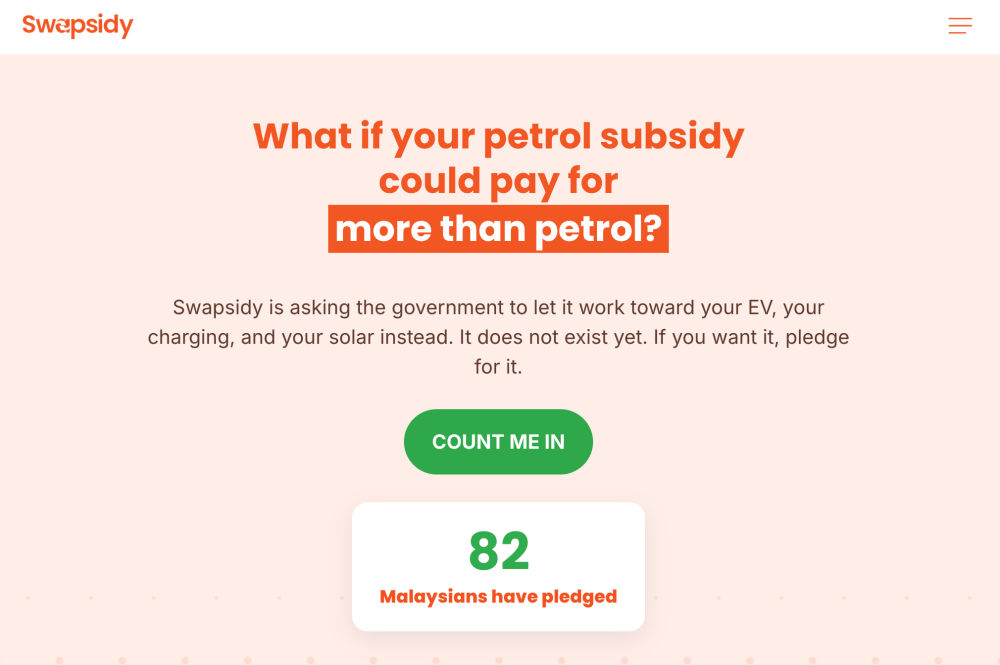
The campaign is currently seeking public support through an online petition while encouraging Malaysians to assess their potential savings using its online calculator.
Download Sinar Daily application.Click Here!