Will the BN-PN alliance last or is it merely a 'marriage of convenience'?
What was once considered an unlikely partnership is now viewed as a strategic move to avoid multi-cornered contests and maximise their chances of defeating rivals.


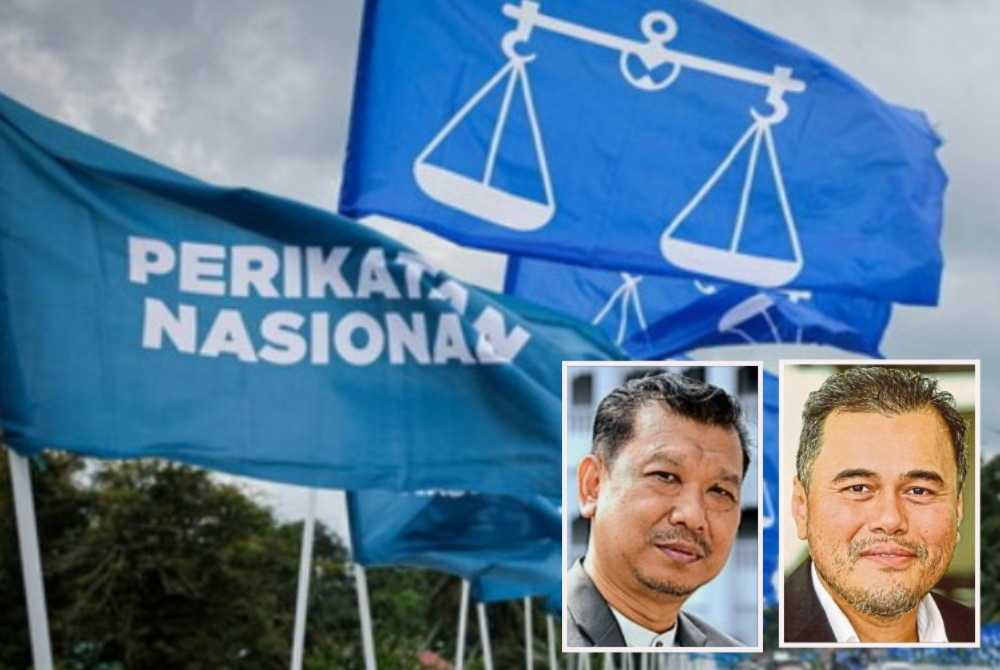
THE seat-sharing arrangement between Barisan Nasional (BN) and Perikatan Nasional (PN) for the Negeri Sembilan state election has been seen as signalling a new chapter in Malaysia's political landscape.
What was once considered an unlikely partnership is now viewed as a strategic move to avoid multi-cornered contests and maximise their chances of defeating rivals.
However, questions remain over whether the cooperation can survive beyond the election or if it is simply a temporary arrangement driven by political necessity — a so-called "marriage of convenience."
Political analyst Dr Ahmad Zaharuddin Sani Ahmad Sabri said the BN-PN cooperation was fundamentally not built on ideological compatibility but rather on political expediency.
"The primary objective is to avoid three-cornered fights, which have repeatedly split the Malay vote and benefited their opponents.
"It is a rational electoral strategy, but strategy does not necessarily create trust. The understanding between BN and PN is akin to a temporary alliance forged by a common enemy," he told Sinar.
According to Ahmad Zaharuddin Sani, Bersatu president Tan Sri Muhyiddin Yassin's remark that the partnership would not last should not be dismissed.
"His statement is significant because it revives the most fundamental question in Malaysian politics — whether today's political coalitions are built on shared principles or merely the mathematics of power.
"Politics has one undeniable rule: as long as two different parties exist, competition will continue.
"No political party is established simply to remain a junior partner forever because every party ultimately wants to become the dominant force," he said.
He noted that Pas remains the dominant political force in Kedah, Kelantan and Terengganu, while Umno is striving to reclaim its status as the leading Malay party after losing its dominance following the 14th General Election (GE14).
He said both parties are targeting largely the same voter base, promoting similar Malay-Muslim narratives and competing for the same political space.
"This is where the real contradiction re-emerges. Pas joined BN in 1974, but the relationship ended following the political crisis in Kelantan.
"Likewise, Muafakat Nasional, which was regarded as the biggest unification of Malay politics in 2019, eventually collapsed after Bersatu formed PN," he said.
Yet today, he added, alliances once considered impossible are being discussed again, while coalitions once viewed as solid are beginning to show signs of strain.
"Even more ironically, PN, which was originally formed in the name of unity, is itself struggling with internal rivalry.
"In political science, this is known as the coalition paradox — parties cooperate to win power, but as power comes within reach, they begin competing among themselves to determine who will emerge as the dominant force.
"They may unite against external rivals, but their real competition eventually comes from within the coalition itself," he said.
He also raised a broader question about the sincerity of political cooperation, asking where principles stand if political alignments change according to the election season.
"Democracy requires compromise, but compromise should not come at the expense of principles.
"Healthy politics allows cooperation without sacrificing integrity.
"In contrast, politics driven solely by the pursuit of power will continue to produce the same cycle — enemies become allies, allies become enemies, and then allies again when circumstances demand it," he said.
Meanwhile, political analyst Prof Dr Mohd Azizuddin Mohd Sani said the outcome of the Aug 1 Negeri Sembilan election would serve as a key indicator of BN and PN's long-term relationship.
He said if the alliance manages to produce an upset victory in Negeri Sembilan, both sides would likely see greater potential for strengthening their cooperation in the future, including pursuing the goal of capturing Putrajaya.
"But if the results fall short of expectations, this newly forged relationship will likely be reassessed.
"BN certainly hopes the cooperation with PN will allow it to win more seats than it did when contesting alongside PH in the previous election," he said.
However, Mohd Azizuddin noted that the understanding between the two coalitions in Negeri Sembilan was clearer and more structured than the arrangement in Johor.
"In Johor, they did not officially join forces, but there was an indirect understanding for PN supporters to back BN, which ultimately contributed to BN's landslide victory.
"In Negeri Sembilan, the arrangement is much clearer, with seats divided between the two sides and joint campaigning taking place, showing that the relationship has already moved a step forward," he said.
Commenting on the broader political landscape, he said Malaysian politics is increasingly moving towards coalition-building because it has become difficult for any single party to secure a parliamentary majority on its own.
He said the hung Parliament following GE15 demonstrated that inter-party cooperation had become a crucial factor in government formation.
"The reality is that coalition governments have become the norm, just as political 'marriages and divorces' between parties have become commonplace because political support constantly shifts.
"However, forging cooperation before an election is preferable because it strengthens both parties ahead of polling day, rather than deciding to work together only after the election," he said.
He added that it has become increasingly difficult for any single party to form a government on its own due to the challenge of securing an outright majority.
Download Sinar Daily application.Click Here!