[UNOFFICIAL] Aminuddin Harun’s fall: When a safe strategy turns into a costly gamble
The Menteri Besar was not just another candidate. He was the face of the PH-led state government, having served as the state’s chief executive since 2018.
FAUZIAH ISMAIL
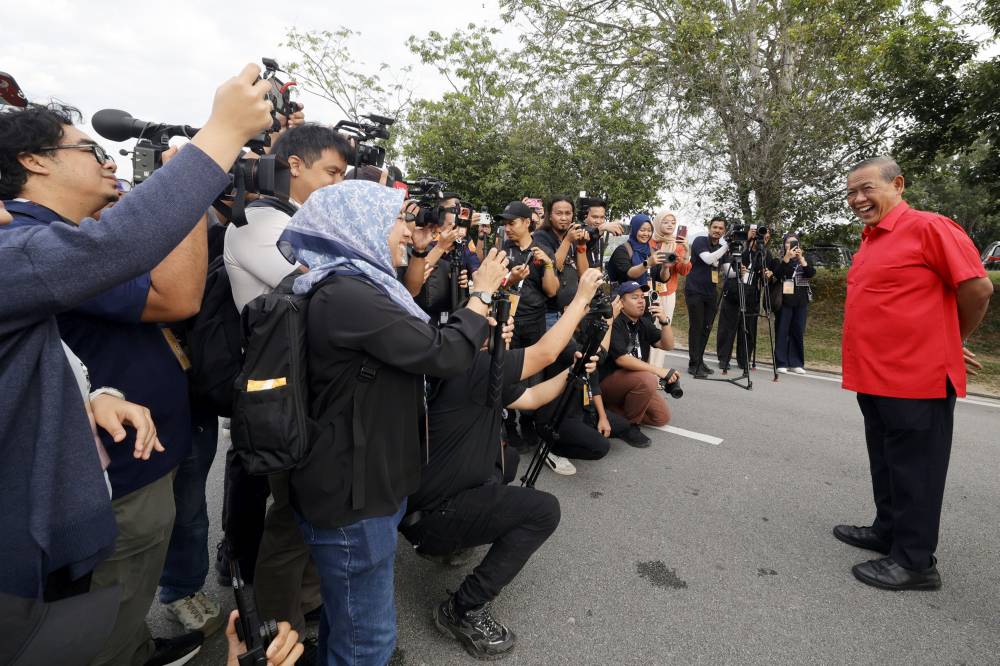
SHAH ALAM - The defeat of caretaker Menteri Besar Datuk Seri Aminuddin Harun in Linggi is arguably the most consequential setback for Pakatan Harapan in the Negeri Sembilan election.
The Menteri Besar was not just another candidate. He was the face of the PH-led state government, having served as the state’s chief executive since 2018.
His defeat to Barisan Nasional’s Datuk Mohd Faizal Ramli sends a powerful political message: even incumbency, a strong public profile and the authority of the Menteri Besar’s office are no longer enough to guarantee victory.
The decision to move Aminuddin from Sikamat, a constituency he had represented since 2008, to Linggi was always a calculated risk.
It was intended to reinforce PH’s position in a more competitive seat and demonstrate confidence in his ability to win beyond his traditional base.
But elections are often decided by local dynamics, voter sentiment and ground-level issues — factors that cannot always be overcome by a leader’s statewide popularity.
His defeat raises questions about whether the political calculation underestimated the strength of BN’s machinery and the depth of voter dissatisfaction.
A move that was meant to showcase strategic confidence instead became one of the defining moments of the election.
For BN, the victory in Linggi is more than a seat gain. Defeating a sitting Menteri Besar gives the coalition a powerful narrative of revival and reinforces its claim that it remains the dominant political force in Negeri Sembilan.
It also follows its success in taking other high-profile seats, including DAP strongholds.
For PH, the loss of Aminuddin will be difficult to explain. While the coalition may still retain significant support, the defeat suggests that voters are increasingly willing to separate their assessment of individual leaders from their traditional party loyalties.
Aminuddin’s defeat will likely be remembered as the moment the political landscape of Negeri Sembilan changed.
It was not merely the loss of a seat, it was the loss of a symbol of PH’s dominance in the state.
Download Sinar Daily application.Click Here!