Understanding the Rukun Negara through a royal address
When principles become character
A PRINCESS REMEMBERS
TENGKU AMPUAN PAHANG TUNKU AZIZAH AMINAH MAIMUNAH ISKANDARIAH
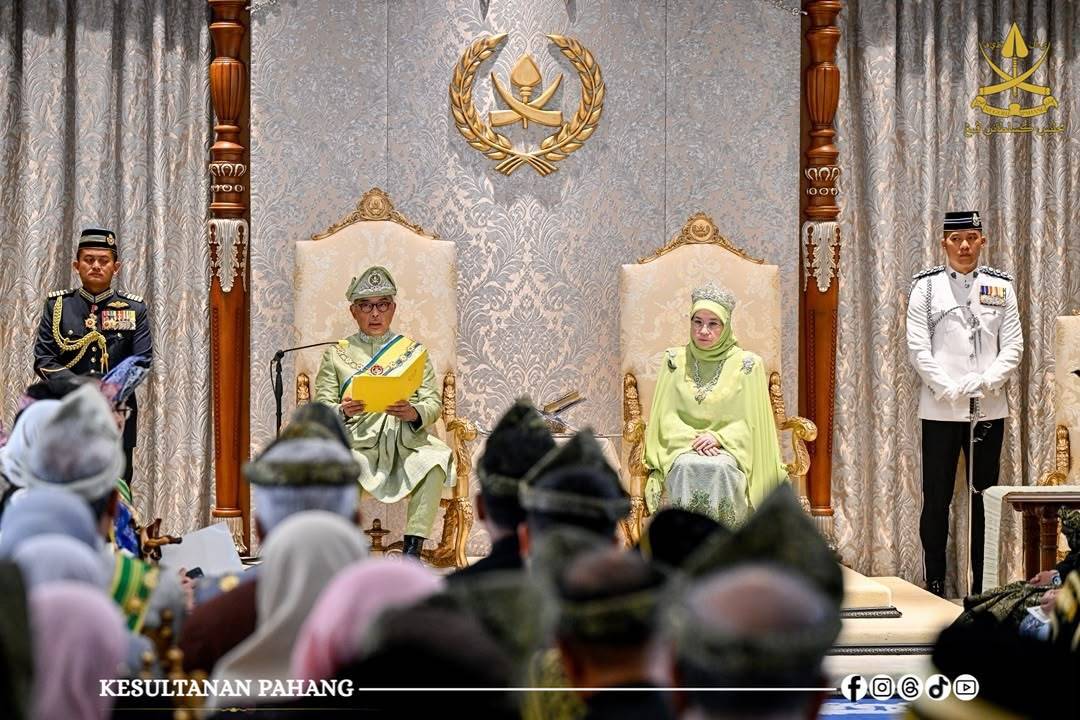
YESTERDAY, as I listened to Al-Sultan Abdullah Ri’ayatuddin Al-Mustafa Billah Shah deliver his Royal Address in conjunction with his 67th birthday, something unexpected happened.
For the first time in my life, I felt that I truly understood the Rukun Negara. Like many Malaysians, I grew up reciting its five principles in school. I memorised them. I respected them. Yet, if I am honest, I had never paused to reflect deeply upon what they really meant.
Yesterday, I did not hear the Rukun Negara recited. I heard it explained. Not directly. Not intentionally. But through the words of a Sultan.
Perhaps that is the greatest strength of the Rukun Negara. It was never intended merely to be recited. It was intended to be lived. Yesterday, I realised that its principles become most meaningful not when they are spoken aloud, but when they are quietly reflected in the conduct of those entrusted to lead.
The speech began with praise to Allah SWT. It reminded us that every blessing comes from Him and that leadership itself is an amanah. At that moment, I realised that “Kepercayaan kepada Tuhan” is not merely believing that God exists. It is recognising that every position of responsibility ultimately answers to Him.
The Sultan then described the constitutional monarchy as “payung penyatuan rakyat, benteng keadilan serta tiang seri kepada kemakmuran negeri.” Those words gave fresh meaning to “Kesetiaan kepada Raja dan Negara.” Loyalty is not blind obedience to an individual. Rather, it is loyalty to an institution that exists to unite, protect and serve the people.
When my husband later exercised his constitutional authority in appointing the Orang Kaya Indera Shahbandar under the provisions of the Undang-Undang Tubuh Kerajaan Pahang, I was reminded that “Keluhuran Perlembagaan” is not simply respect for a written document. A constitution lives only when those entrusted with authority govern according to it.
Perhaps the most powerful part of the speech was the Sultan's insistence that the law must never bow to influence, wealth or status. His words were unmistakable:
“Dalam soal amanah dan integriti, tiada siapa yang mengatasi undang-undang.”
At that moment, “Kedaulatan Undang-Undang” ceased to be merely another sentence I had memorised as a schoolgirl. It became a living principle. The rule of law means little if it is applied only to some and not to all.
Finally, he spoke of our young people, our forests, our land, our institutions and the kind of nation we should leave for future generations. He concluded by reminding us that what truly matters is a society still rich in adab, budi bahasa and mutual respect. Only then did I fully appreciate that “Kesopanan dan Kesusilaan” is far more than good manners. It is the moral character of a civilisation.
As each principle unfolded before me, I realised that I was no longer hearing five separate statements. I was hearing a complete philosophy of leadership.
Faith gives purpose to authority. Loyalty preserves institutions. The Constitution provides legitimacy. The rule of law safeguards justice. Courtesy and morality preserve civilisation. Together, they form the moral architecture of a nation.
As I sat quietly reflecting upon the Royal Address, another realisation dawned on me. Throughout the speech, the Sultan never once quoted the Rukun Negara. He never referred to it by name. Yet, as each part of the address unfolded, I found its five principles quietly mirrored before me. It was not being recited. It was being lived.
As I pondered on the speech afterwards, another thought quietly entered my mind. Perhaps the truest meaning of "Kepimpinan Melalui Teladan" is that those entrusted with leadership must first embody the very values they ask others to uphold. Leadership begins not with authority, but with example.
Human beings rarely become better simply because they are told to do so. They become better because they have seen goodness lived before them.
Children imitate parents. Students imitate teachers. Citizens imitate those whom they respect. Leadership is never exercised only through words. It is exercised through example.
That is why leadership carries such a profound responsibility. There cannot be one standard for leaders and another for everyone else.
Public trust begins at the top. Integrity begins at the top. Respect for the law begins at the top. If leaders live these principles, society is more likely to follow. If they abandon them, society inevitably pays the price.
As someone who has spent the past two years immersed in the Hukum Kanun Melaka and the Hukum Kanun Pahang, another thought quietly entered my mind. The values that had just helped me understand the Rukun Negara sounded remarkably familiar.
Faith in God.
Leadership as amanah.
Loyalty balanced by responsibility.
Constitutional order.
The rule of law.
Justice.
Integrity.
Adab.
These were not unfamiliar ideas within our civilisation. They resonate with constitutional and ethical principles articulated centuries earlier in the Hukum Kanun Melaka, and later preserved, refined and expanded in the Hukum Kanun Pahang. Different historical contexts, certainly. Yet remarkably similar moral foundations.
Listening to my husband's Royal Address, I found myself recognising those same values once again. Not because the speech quoted the old kanuns. Not because the Sultan consciously intended to explain the Rukun Negara. But because these values have, over generations, become part of the constitutional culture of our nation and our monarchy.
Perhaps this is how the finest civilisations endure. Their greatest values are no longer merely taught. They become part of the character of those entrusted to lead, and through their example, they continue to shape the generations that follow.
Institutions quietly shape people. They transmit values from one generation to another until those values become instinctive rather than rehearsed.
A constitutional monarch does not begin learning his responsibilities on the day he ascends the throne. He grows into them. Through upbringing, observation, duty and example, the institution itself becomes his teacher.
Perhaps that is why, while listening to my husband's Royal Address yesterday, I felt that I was not simply hearing the reflections of one man. I was hearing the voice of an institution that has quietly carried these values across generations.
Civilisations do not preserve themselves merely through books. Nor through constitutions. Nor through speeches. They endure because their values are lived. They are passed quietly from one generation to another through institutions, through tradition, through families and, above all, through the example of those entrusted to lead.
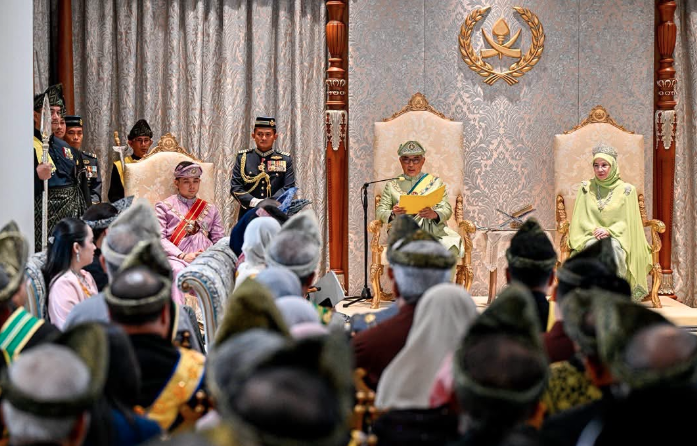
Yesterday, I thought I was listening to a Royal Address.
For the first time in my life, I felt that I understood the Rukun Negara in a deeper way than ever before. I realised that our greatest national ideals are not preserved because we recite them during school assemblies or display them on classroom walls.
They endure because they are lived.
Perhaps that is the true meaning of Kepimpinan Melalui Teladan. The finest speeches do not merely tell us what to believe. They remind us who we already are.
As I put down the text of His Majesty’s Royal Address, I found myself asking one simple question:
Have I been reciting the Rukun Negara all these years… without ever truly understanding it?
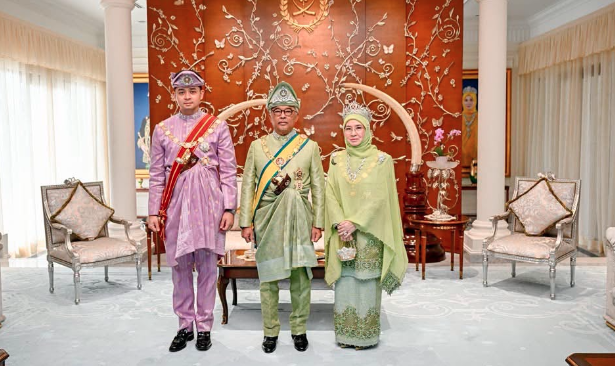
• Tunku Azizah Aminah Maimunah Iskandariah is a master’s candidate at the International Institute of Islamic Thought and Civilisation (ISTAC), International Islamic University Malaysia.
Download Sinar Daily application.Click Here!