PH projected to lose six seats in Perak if PN-BN join forces
The top-ranked seat is N43 Tualang Sekah, currently held by PKR.


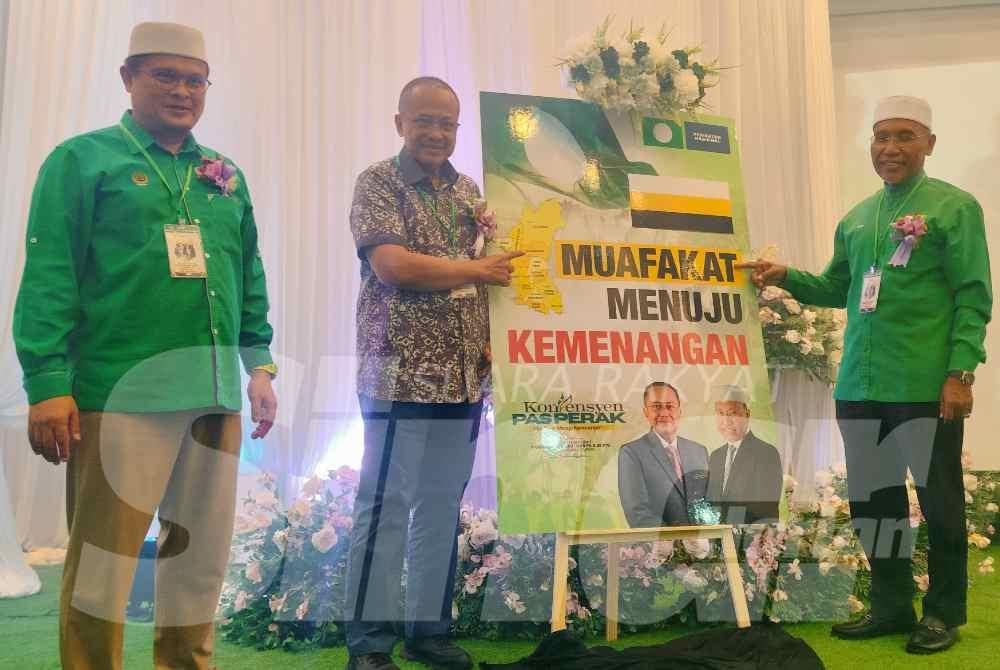
TAIPING – Perikatan Nasional (PN) and Barisan Nasional (BN) could potentially seize at least six Perak state seats currently held by Pakatan Harapan (PH) if both coalitions forge a political pact in the upcoming state election.
PN Chairman Datuk Seri Dr Ahmad Samsuri Mokhtar said an analysis showed that a joint PN-BN alliance could secure between 32 and 38 seats in the Perak State Legislative Assembly, leaving PH with an estimated 21 to 27 seats.
He identified the six state seats with the highest potential for a shift in support from PH to a PN-BN coalition as Tualang Sekah, Hulu Kinta, Tebing Tinggi, Sungai Rapat, Hutan Melintang and Teja.
"The top-ranked seat is N43 Tualang Sekah, currently held by Parti Keadilan Rakyat (PKR).
"Second is N24 Hulu Kinta, third is N26 Tebing Tinggi held by DAP, fourth is N44 Sungai Rapat (Amanah), fifth is N54 Hutan Melintang (PKR) and sixth is N46 Teja, which is also a PKR seat," he said during his opening address at the 23rd Perak Pas Convention at the Perdana Hotel here on Sunday.
Samsuri added that beyond these six constituencies, several other seats could fall to the alliance if PN and BN votes were combined, citing Sungai Manik, Changkat Jong and Sungkai.
He noted that PN’s standalone win probability in Perak currently stands at around 48 per cent, but this could jump to approximately 75 per cent through a strategic partnership with BN.
This projected increase stems primarily from the consolidation of votes between both coalitions and the elimination of three-cornered fights in favour of straight head-to-head contests.
However, he acknowledged that brokering such an agreement presents hurdles, including the risk that a segment of PN supporters might refuse to back BN candidates, and vice versa.
Determining seat allocation under a PN-BN pact would require a strategic assessment of each party's strengths to prevent votes from splitting.
"BN may request to contest certain seats if a cooperation materialises. That is when we must clearly lay out our strengths to justify why we are best suited to contest those specific seats over anyone else," he explained.
Speaking at a subsequent press conference, Samsuri emphasised that any formal negotiations between PN and BN would demand a give-and-take approach, with both parties aligning on broader shared goals.
He stressed that negotiations must focus on the core priorities of both coalitions to ensure the formation of a resilient administration.
"As long as we can sit down and discuss, I believe that is the best way forward.
"The ultimate priority is ensuring the stability of any government to be formed anywhere in the country, even at the national level which creates a stable administration capable of tackling the nation's issues," he said.
Samsuri added that political dynamics vary significantly across states, meaning a cooperation model used in one region cannot simply be applied universally.
Geographical nuances and localized political climates must be taken into account when defining the nature of the partnership and seat distribution.
"Elections and current political dynamics are unique; they are not only time-based, but also geographical-based.
"Therefore, models will naturally differ across states. Until we sit down and finalise these details, anything remains possible," he said.
Download Sinar Daily application.Click Here!