The Rohingya debate is also a test of Malaysia’s national reputation
Yet domestic sentiment tells a more complex story.
ONG AI LING
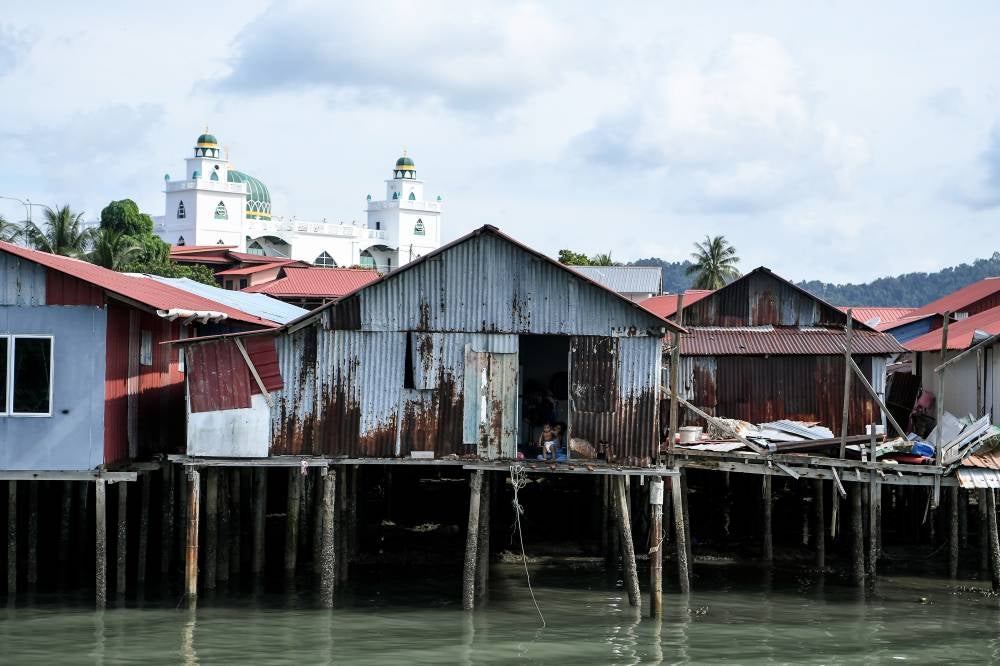
PUBLIC discussions about the Rohingya community in Malaysia have become increasingly visible and emotionally charged in recent years. Depending on one's perspective, the issue is often framed either as a question of humanitarian responsibility or as a concern about governance, resources, public security, and national priorities. Both perspectives reflect genuine concerns. However, beyond the immediate debates and viral social media exchanges lies a deeper question: what does this conversation reveal about Malaysia's national reputation, and how is that reputation being shaped in the process?
As someone working in the field of public relations and communication, I view reputation not as image-building or public relations spin. Reputation is fundamentally about trust. It is built through public confidence in institutions, belief in the fairness of policies, and assurance that complex issues are being managed competently and transparently. Viewed through this lens, the Rohingya issue is no longer solely a humanitarian or migration matter. It has become a test of governance, communication, and public trust.
Malaysia has long projected itself as a nation that values compassion and regional responsibility. Although the country is not a signatory to the 1951 Refugee Convention, it has historically provided refuge to displaced populations, including the Rohingya. Malaysian leaders have on various occasions spoken out about the plight of the Rohingya minority in Myanmar, contributing to an international perception of Malaysia as a nation willing to balance humanitarian concerns with practical realities.
Yet domestic sentiment tells a more complex story.
Over the past few years, several incidents involving members of the Rohingya community have received extensive media attention and generated intense discussion online. Viral videos featuring individuals claiming entitlement to certain rights in Malaysia, public concerns regarding access to healthcare and education, debates surrounding undocumented employment, and reports of crimes involving Rohingya individuals have all become prominent topics of conversation.
Whether these incidents involve a small number of individuals or represent broader trends is often secondary to how they are perceived by the public. In today's digital environment, perceptions can spread rapidly and shape public opinion long before facts are fully established.
This is where communication becomes particularly important.
Communication scholars have long argued that media do not simply tell people what to think, but they influence what people think about. Through processes known as agenda-setting and framing, repeated media coverage can elevate certain issues into public priorities while simultaneously shaping how those issues are interpreted.
When stories involving Rohingya individuals dominate news headlines, social media feeds, and online discussions, they naturally become reference points through which the public evaluates the broader issue. The challenge is that highly visible incidents can sometimes create representative narratives that overshadow more nuanced realities. This phenomenon is not unique to Malaysia. Across the world, migration-related issues often become highly politicised and emotionally charged because they touch upon identity, belonging, security, and economic concerns. In such situations, public discourse can easily shift from discussions about policy and governance to generalisations about entire communities.
When this happens, the quality of public debate begins to suffer. From a communication perspective, one of the most significant risks is the emergence of an information vacuum. When policy directions, legal frameworks, and long-term plans are not clearly communicated, public understanding becomes fragmented. Citizens begin relying on rumors, social media commentary, and anecdotal experiences to make sense of complex issues.
In the absence of clarity, assumptions flourish, and this is where reputation risk begins to emerge.
A country's reputation is shaped not only by what it does, but also by how its actions are understood by its people and by external audiences. Even well-intentioned policies can generate public dissatisfaction if they are poorly communicated. Likewise, public concerns that are left unaddressed can create perceptions of institutional indecisiveness or inconsistency. The Rohingya issue therefore presents an important communication challenge for Malaysia.
First, policy clarity matters as much as policy itself. Members of the public are entitled to understand the legal status of refugees, the scope of their rights, the limitations that exist, and the government's long-term approach to managing the issue. Clear communication reduces uncertainty and limits opportunities for misinformation to flourish.
Second, legitimate public concerns must be acknowledged without amplifying division. Questions regarding public resources, labour markets, urban management, healthcare access, and social cohesion are valid topics for discussion. Ignoring these concerns risks creating frustration and resentment. At the same time, discussions should remain focused on policies and systems rather than broad stereotypes about communities.
Third, trust is built through consistency. Public confidence depends not only on official statements but also on whether communication aligns with implementation. Mixed messages, policy ambiguity, or inconsistent enforcement can erode trust over time. Conversely, transparency and consistency strengthen credibility even when dealing with difficult or unpopular decisions.
Effective governance requires the ability to balance multiple considerations simultaneously. Humanitarian responsibilities, public confidence, national security, economic realities, and social cohesion are not mutually exclusive objectives. The real challenge lies in demonstrating that these priorities can coexist within a coherent and transparent policy framework.
Malaysia's national identity has often been associated with moderation, multicultural coexistence, and pragmatic problem-solving. These qualities have contributed significantly to the country's standing both regionally and internationally. They remain particularly important during periods when public sentiment becomes polarised and societal tensions risk deepening.
From a public relations perspective, reputation is not built through carefully crafted slogans or image campaigns. It is built through sustained credibility. Credibility emerges when institutions communicate clearly, act consistently, and engage openly with public concerns. The Rohingya debate illustrates how national reputation is increasingly shaped not only by government policies but also by public narratives. In an age where social media platforms amplify opinions instantly and continuously, citizens themselves have become active participants in constructing the country's image. Ultimately, the Rohingya issue is not only about refugees. It is also about how Malaysia manages complexity, communicates uncertainty, and sustains public trust during difficult conversations.
Every nation faces challenges that test its institutions. Reputation is not determined by the absence of such challenges. Rather, it is defined by how openly they are addressed, how consistently they are managed, and how effectively leaders communicate during moments of uncertainty. If there is one lesson from the ongoing discourse, it is this: Malaysia's reputation is shaped not only by what the world sees, but also by what Malaysians understand and experience at home. When external perception and internal trust align, national reputation becomes more resilient. And in an increasingly interconnected and scrutinized world, that credibility may be one of Malaysia's most valuable assets.
Dr Ong Ai Ling is a senior lecturer in School of Media and Communication at Taylor’s University.
The views expressed in this article are the author's own and do not necessarily reflect those of Sinar Daily.
Download Sinar Daily application.Click Here!