Missing in action, now centre stage: The Nurul Izzah question
Her appearance in Melaka projected unity, but it also exposed a larger question facing PKR: what comes after Reformasi, and who will lead that journey?


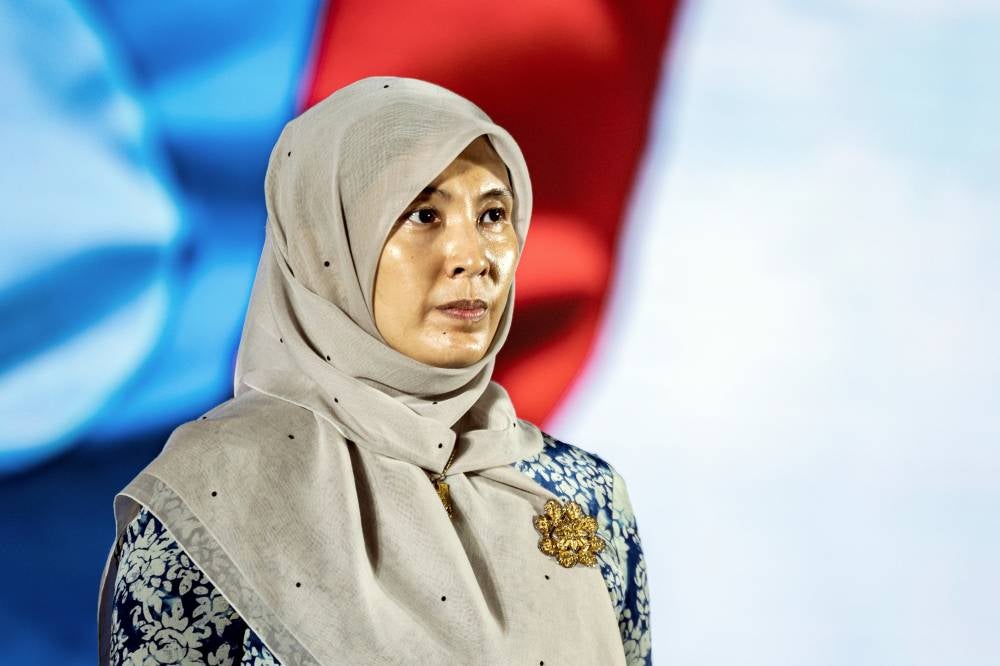
AFTER weeks of speculation over her political future, her relative absence from the campaign trail and reports that she had wanted to step away from active politics, Nurul Izzah Anwar was suddenly back where it mattered most — at the heart of PKR's national congress in Melaka.
That was the defining image of the congress.
Officially, delegates gathered to discuss party renewal, strengthen support for the Madani government and prepare for the political battles ahead. Yet much of the attention remained fixed on one person: the PKR deputy president.
For months, questions had been swirling around her position in the party. She was conspicuously absent from much of the Johor campaign and appeared only towards the tail end of the Negeri Sembilan campaign, prompting speculation that she was gradually retreating from frontline politics.
Then came reports that she wanted to resign, followed by confirmation that she would instead take leave from her party duties to pursue her studies.
PKR never allowed those questions to become an open political crisis.
And in Melaka, Nurul Izzah appeared determined to show that she remains very much part of the party's story.
Her presence was more than ceremonial. She projected continuity at a time when speculation about tensions within the party had begun to overshadow PKR's wider political message. There was no dramatic declaration about her future and no attempt to reopen old wounds.
Instead, there was a carefully choreographed picture of unity.
And perhaps that was precisely the point.
By appearing prominently in Melaka, she answered none of the questions surrounding her future directly. But she did something politically important: she showed up.
And in politics, sometimes presence is itself a message.
Yet Nurul Izzah's appearance also highlighted a larger challenge facing PKR. Having achieved its founding objective of placing Datuk Seri Anwar Ibrahim in Putrajaya, the party is now searching for a new mission capable of inspiring supporters beyond the Reformasi generation.
The congress came at a difficult moment. Setbacks in Johor and Negeri Sembilan have triggered soul-searching within the party. While PKR remains the dominant force within the federal government, recent electoral results suggest that governing power has not automatically translated into growing public support.
For more than two decades, PKR's mission was clear. It was the party of Reformasi, institutional reform and political change. Its supporters were united by a common struggle: the fight against injustice, the demand for accountable government and, ultimately, the quest to place Anwar in Putrajaya.
That mission was achieved in 2022.
The challenge now is defining what comes next.
The congress heard speeches about economic transformation, governance, institutional reforms and national development. These are necessary priorities for any ruling party. But they do not necessarily inspire supporters in the same way that Reformasi once did.
The danger for PKR is not that it loses power overnight. The danger is that it gradually begins to resemble the establishment it once challenged.
That is why Nurul Izzah occupies such an important place within the party.
She is not simply Anwar’s daughter. She carries her own political history and remains one of the most recognisable figures associated with Reformasi. Her credibility among party members was forged through years of political struggle long before PKR entered government.
For many grassroots supporters, she represents the moral legitimacy of Reformasi itself.
That makes any suggestion of her political withdrawal far more consequential than the departure of an ordinary party leader. It raises uncomfortable questions about succession, leadership renewal and whether PKR can retain its reformist identity while exercising power.
Her appearance in Melaka therefore provided reassurance that one of the movement's most recognisable figures remains within the fold, even if her long-term intentions remain unclear.
Yet the congress also highlighted a paradox.
PKR demonstrated unity around Anwar's leadership. There were no dramatic confrontations, no visible rebellions and no signs of a party on the verge of collapse.
But unity alone is not enough.
The party also needs renewal, fresh ideas and leaders who can connect with younger Malaysians who have little memory of the events that gave birth to Reformasi in 1998.
The Malay saying menarik rambut dalam tepung, rambut jangan putus, tepung jangan berselerak seems particularly apt.
PKR is attempting to manage internal differences without creating a public rupture. It is trying to preserve unity while preparing for generational change. It needs continuity, but it also needs a vision for the future that extends beyond its founding generation.
Nurul Izzah stands at the centre of that balancing act.
But one question remains unresolved: what role does she see for herself in PKR's future?
Is her temporary withdrawal genuinely about pursuing her studies? Or is she reassessing her place in a party that has transformed dramatically from a movement of resistance into a party of government?
For now, those questions remain unanswered.
The congress provided PKR with an image of unity and temporarily quietened speculation. Yet it also underscored the larger challenge confronting the party — how to evolve from a movement built around Reformasi into a political institution capable of thriving beyond its founding generation.
As delegates left Melaka, Nurul Izzah was once again at the centre of the conversation. Whether by choice or circumstance, PKR's search for a post-Anwar identity is increasingly being viewed through the prism of her next move.
The congress may have ended.
But the question it raised remains very much alive: what comes after Reformasi and who will lead that journey?
Download Sinar Daily application.Click Here!