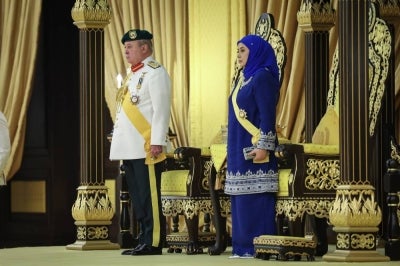
Hukum Kanun Melaka, Pahang reveal forgotten constitutional legacy, says Tunku Azizah
Rather than viewing the manuscripts simply as collections of rules governing crime, punishment, commerce, and administration, she said they provide a window into how political authority was understood and exercised in the Malay world.
FAUZIAH ISMAIL
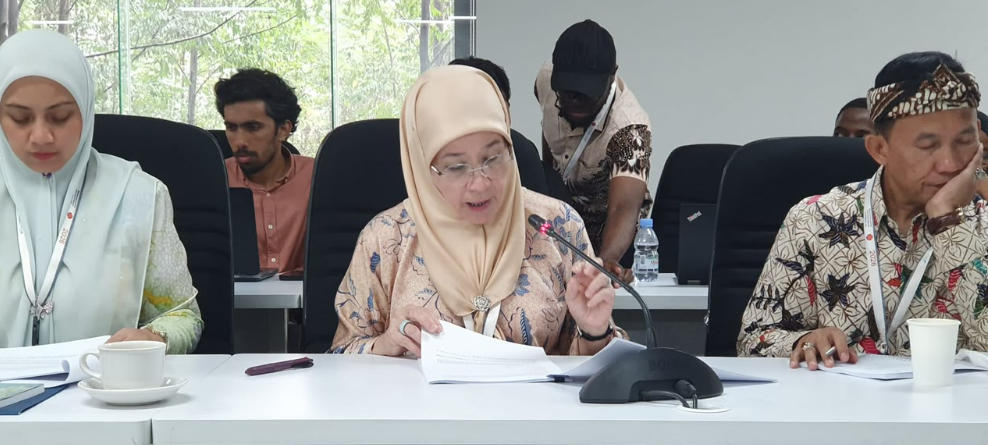
SHAH ALAM - The fall of Melaka to the Portuguese in 1511 may have ended the sultanate’s political power, but it did not end the legal and constitutional tradition it had created, with that legacy continuing through Pahang and other Malay Sultanates for centuries.
Tengku Ampuan Pahang Tunku Azizah Aminah Maimunah Iskandariah said the Hukum Kanun Melaka (HKM) and Hukum Kanun Pahang (HKP), long regarded primarily as ancient law codes, offer evidence of a wider Malay-Islamic tradition of governance in which sovereignty, law, justice and the responsibilities of rulers were closely connected.
Rather than viewing the manuscripts simply as collections of rules governing crime, punishment, commerce and administration, she said they provide a window into how political authority was understood and exercised in the Malay world.
“The texts address the position of the Sultan, the roles of ministers, judges and officials, the administration of justice, maritime authority and commerce, as well as the relationship between Islam, law and adat.
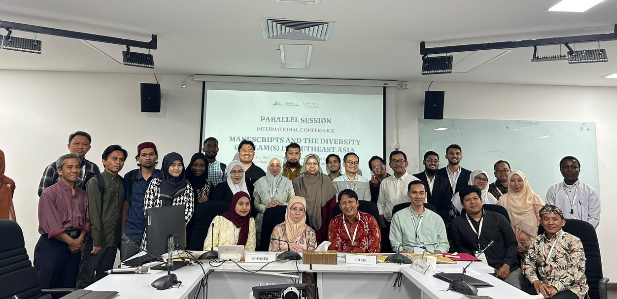
“Taken together, these provisions point to a structured system of government rather than a collection of unrelated legal rules,” she said in her presentation at a conference on Manuscripts and Diversity of Islam in Southeast Asia at the Faculty of Islamic Studies, Universitas Islam Internasional Indonesia, in Jakarta today.
Written in Malay using Jawi, the HKM reflected the political and intellectual world of the Malay Sultanates. Its significance lies not only in the laws it contained, but also in the political ideas embedded within them, particularly concepts of sovereignty, justice, authority and responsibility.
The Melaka tradition had already begun spreading before the Portuguese conquest.
In 1470, Sultan Muhammad Shah, son of Sultan Mansur Shah of Melaka and Puteri Onang Sari, a Pahang princess, established the Islamic Sultanate of Pahang — more than 40 years before Melaka fell.
“The chronology is significant because it shows that the Melaka political and legal tradition had taken root in Pahang while Melaka itself was still a functioning and powerful Sultanate,” she said.
Later, Sultan Abdul Ghaffar Muhyiddin Shah, the 12th Sultan of Pahang and a descendant of the Melaka-Pahang line, preserved and refined this inherited tradition in the Hukum Kanun Pahang.
“The HKP can therefore be understood not simply as another Malay law code, but as part of the continuing development of the Melaka legal tradition in Pahang.
“It retained elements of the earlier tradition while adapting them to the political, administrative and maritime circumstances of another sovereign Malay-Islamic state.” But perhaps the most significant implication of re-reading the kanun, she said, concerns the nature of Malay kingship itself.
The conventional narrative can suggest a historical progression from absolute monarchy to constitutional monarchy.
The manuscripts, however, raise a more complicated possibility: that Malay sovereignty was not necessarily conceived as unlimited or unconstrained, but operated within a normative order shaped by Islam, law, adat, justice and the responsibilities of rulers and officials.
“That does not mean the pre-modern Malay Sultanates possessed constitutional systems identical to Malaysia’s modern Federal Constitution.
“They plainly did not. But it challenges the assumption that ideas of lawful government and constrained political authority emerged in the Malay world only with modern European constitutionalism.
“Instead, the manuscripts suggest that an indigenous tradition of ordered government existed long before the modern constitutional state.
“The vocabulary and institutions may have changed, but the principle that political authority carried responsibilities and operated within a framework of law and accepted norms was already present.” She said the HKM and HKP therefore deserved renewed attention, not merely as relics of pre-modern law, but as sources for understanding how the Malay world conceptualised sovereignty, justice, government and political responsibility.
“Their significance lies not only in what they prescribed, but in what they reveal about the political civilisation that produced them.
“They are part of a shared intellectual inheritance — and potentially a missing chapter in the story of constitutional thought in the Malay world,” she added.
Download Sinar Daily application.Click Here!