IS tracked Malaysia's top cops. Ayob Khan reveals how police tracked back
Staying alert was not simply part of the job. It became part of his everyday life.

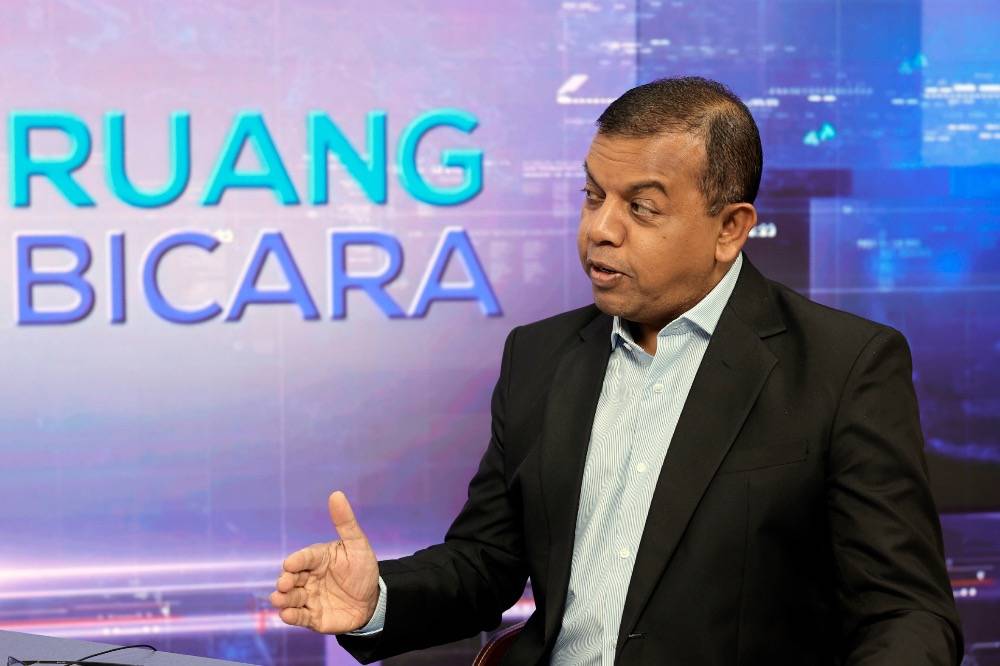
PETALING JAYA - For Tan Sri Ayob Khan Mydin Pitchay, staying alert was not simply part of the job. It became part of everyday life.
The Islamic State (IS) knew where he went jogging. It also knew when the country's top policeman joined a motorcycle convoy.
The former head of Bukit Aman's counter-terrorism division said IS operatives in Malaysia had recruited locals through social media to monitor security personnel, including senior police officers.
“They monitored the movements of several officers, including the Inspector-General of Police at the time. They knew I jogged at Perdana Botanical Gardens and that the then IGP, Tan Sri Khalid Abu Bakar, joined motorcycle convoys every Saturday.
“I obtained this information because we were also in the group, monitoring them,” he said in an interview with a local English portal FMT after recently retiring as deputy IGP following 35 years in the force.
During his years leading Bukit Aman's counter-terrorism division from 2016 to 2020, Ayob Khan said he had to take additional precautions, including using bulletproof vehicles, varying his travel routes and paying close attention to his surroundings.
Even at a restaurant, he would choose a seat facing outward so he could see what was happening around him.
Ayob Khan said some of the security practices used by police today were rooted in techniques developed during the security forces' fight against the Communist Party of Malaya from the 1950s to the 1980s.
His experience also shaped his view of Malaysia's security laws.
He said police needed specific legal provisions to deal with serious security threats, including the Security Offences (Special Measures) Act 2012, or Sosma.
Sosma has faced criticism and calls for repeal, but Ayob Khan said it remained important in investigations involving terrorism and organised crime.
He stressed that this did not mean he supported the return of the Internal Security Act 1960 (ISA), which allowed detention without trial for an unlimited period.
The ISA was abolished in 2012 and replaced by Sosma, which allows a suspect to be detained for up to 28 days for investigation before being charged or released.
Ayob Khan said ordinary remand procedures were not sufficient for large-scale terrorism investigations involving numerous suspects.
“When I was in the counter-terrorism division, I did not arrest just one person. Within a 24-hour period, I once arrested 40 suspects,” he said.
He said investigators needed time to examine seized items, analyse mobile phones and laptops and establish links between dozens of suspects.
A two-day remand period, he said, could therefore be insufficient for investigations of that scale.
Ayob Khan also said security laws were important in preventing racial tensions from escalating in Malaysia's multi-ethnic society, citing past clashes in Kampung Medan and Kampung Rawa.
“Our social structure is different. We cannot simply use the model practised by Western countries,” he said.
He urged politicians to consider the long-term interests of national security rather than pursuing short-term political gains.
Download Sinar Daily application.Click Here!