Umno heads into assembly on a high, but questions linger beneath the surface
Electoral gains have restored the party’s bargaining power, but its political direction, leadership succession and past record remain under scrutiny.


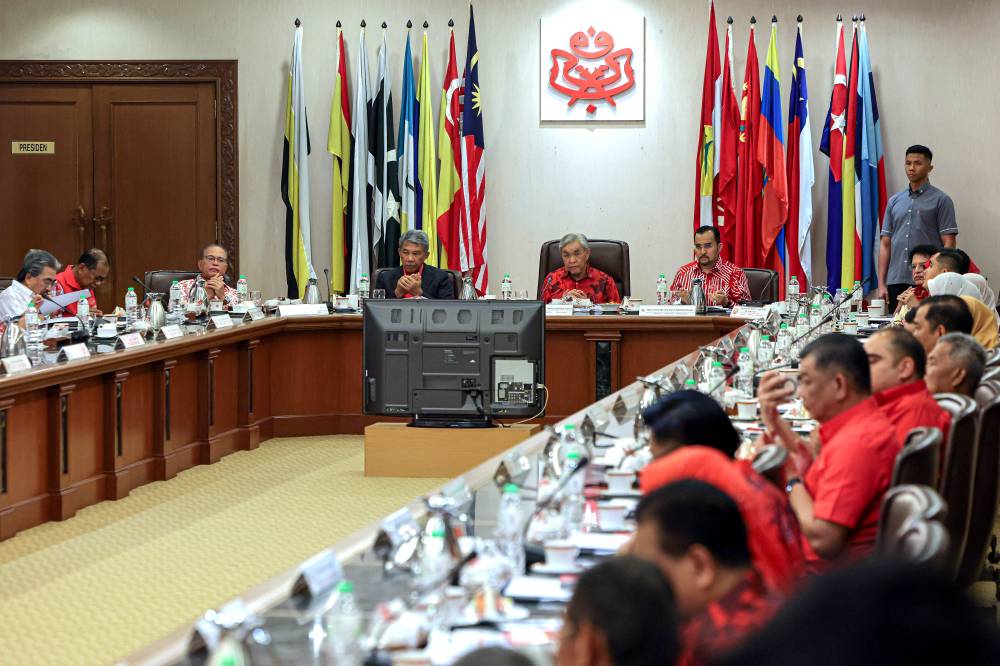
KUALA LUMPUR — The 2026 Umno General Assembly, scheduled from Sept 9 to 12 at the World Trade Centre Kuala Lumpur, will be one of the party's most confident gatherings in years.
Coming on the heels of Barisan Nasional's strong performances in the Johor and Negeri Sembilan state elections, the assembly is expected to showcase a party that believes it has regained much of the political ground lost after its disastrous showing in the 2022 general election.
That confidence was reinforced by the last Supreme Council meeting, which gave state Umno leaderships the mandate to negotiate electoral cooperation with any political party ahead of the next general election.
The message is clear: Umno believes its bargaining power has improved and does not want to be locked into any political alignment before GE16.
Yet beneath the optimism, delegates arriving in Kuala Lumpur this week will have no shortage of issues to debate.
Foremost is Umno's political direction.
While the party remains a key pillar of the Unity Government, questions persist over whether cooperation with Pakatan Harapan should continue into GE16 or whether Umno should explore broader arrangements, including renewed engagement with Pas.
The Supreme Council's decision to invite Pas leaders to the assembly is likely to fuel speculation that channels of communication remain open despite years of rivalry.
More significantly, Umno secretary-general Datuk Dr Asyraf Wajdi Dusuki has said the general assembly remains the party's ultimate platform for determining its political direction, including whether to maintain existing cooperation or pursue another course.
The most sensitive issue, however, may be the relationship between Umno president Datuk Seri Ahmad Zahid Hamidi and Prime Minister Datuk Seri Anwar Ibrahim.
Zahid has publicly denied any personal or official rift with Anwar and stressed the importance of political stability.
But the relationship is facing its most visible strain in some time.
Zahid has called for GE16 to be held earlier, saying it would be better for the government to seek a fresh mandate, while Anwar has said an early election can be considered.
The two leaders are therefore not necessarily divided over whether an election should eventually be held, but there is a potentially important difference over when it should happen.
That becomes more significant because Pas has also backed an earlier election, creating an unusual convergence between Umno and its former political rival.
Then came the public dispute over funding between Zahid's Rural and Regional Development Ministry and the Finance Ministry.
Zahid complained about delayed payments to contractors, while the Treasury said there were no restrictions on allocations and that the ministry's allocation for the relevant rural road projects had already been channelled. Anwar subsequently instructed both ministries to resolve the matter amicably.
For Umno, the dispute raises a broader question: does the party now expect greater influence within the Unity Government commensurate with its improved electoral fortunes?
The assembly could provide the first clear indication of how far Umno is prepared to push that argument.
But the issue likely to generate the most heated debate could come from another direction: Tabung Haji and Felda.
Anwar's description of the RM12 billion issue involving Lembaga Tabung Haji as “sakau” has already unsettled Umno figures.
The term carries an obvious political sting. It suggests that money was siphoned or taken improperly, rather than merely lost through poor investment decisions, weak governance or accounting failures.
That distinction matters.
The Tabung Haji Royal Commission of Inquiry (RCI) report has raised questions about the institution's past management and financial reporting. Delegates could ask what the RCI did or did not establish, how the RM12 billion figure was determined and whether its findings point to criminal wrongdoing or failures of governance and financial management.
An allegation, however, is not a finding of criminal liability.
The issue becomes even more politically sensitive because Anwar has indicated that the government will turn its attention to Felda after Tabung Haji.
For generations of rural Malay families, Felda has represented land ownership, economic opportunity and upward mobility. Any investigation into its past governance or finances could therefore resonate strongly with Umno's traditional support base.
The party's response will be telling.
It can portray investigations into Tabung Haji and Felda as attacks on Umno's legacy. Or it can support investigations while demanding evidence and insisting that anyone found responsible be held accountable, regardless of political affiliation.
The latter would allow Umno to defend its institutional legacy without automatically defending every decision made under previous administrations.
What could surprise the assembly?
The biggest surprise may not be an open challenge to Anwar.
It could be a carefully worded political signal: Umno reaffirms its commitment to political stability while making clear that it will enter GE16 with no guaranteed alliance.
That would give Zahid considerable room to manoeuvre — keeping the door open to Anwar and the Unity Government while signalling to PH that Umno has alternatives.
An early-election push could also emerge more clearly from the grassroots, although Zahid has said BN favours an earlier GE16 while remaining prepared to serve out the full parliamentary term.
Another potentially significant question is who Umno ultimately sees as its vehicle for federal leadership after GE16.
Zahid has said it is too early to name a prime ministerial candidate, given uncertainty over when Parliament will be dissolved.
But that does not mean delegates will not be thinking about it.
The assembly will also put succession, generational renewal and the party's appeal to younger voters under scrutiny.
Johor and Negeri Sembilan have demonstrated that Umno can still win elections. The challenge now is to turn those victories into a national proposition capable of rebuilding its Malay support base while remaining relevant in a coalition where it does not control the premiership.
That is the real test facing Umno.
It is no longer simply fighting for survival. It is deciding how much influence it expects within the Unity Government, how much distance it needs from Anwar and what political options it wants to preserve before GE16.
For all the expected displays of unity, the assembly's significance will lie in whether Umno can translate its electoral recovery into a coherent national strategy.
Winning state elections is one thing. Convincing Malaysians that Umno deserves another chance to lead the federal government is a far more demanding task.
The question delegates must ultimately answer is not simply whether Umno should remain in government.
It is what Umno wants to become before Malaysians next go to the polls.
Download Sinar Daily application.Click Here!