Remembering master weaver Ngot Bi, keeper of vanishing Sarawak craft Tikar Bergerang
She leaves behind not only a collection of finely woven mats but also a legacy of knowledge and cultural identity passed down through generations.


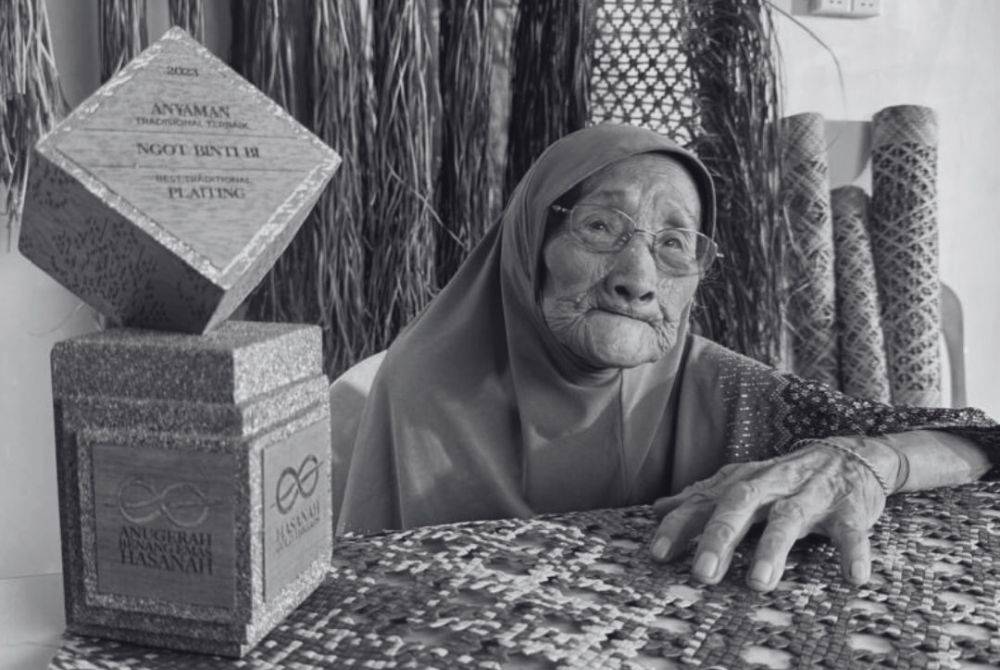
THE passing of Ngot Bi, a revered custodian of Sarawak Malay traditional weaving, marks the loss of an important practitioner of Anyaman Pandan Tikar Bergerang, an intricate heritage craft increasingly at risk of disappearing.
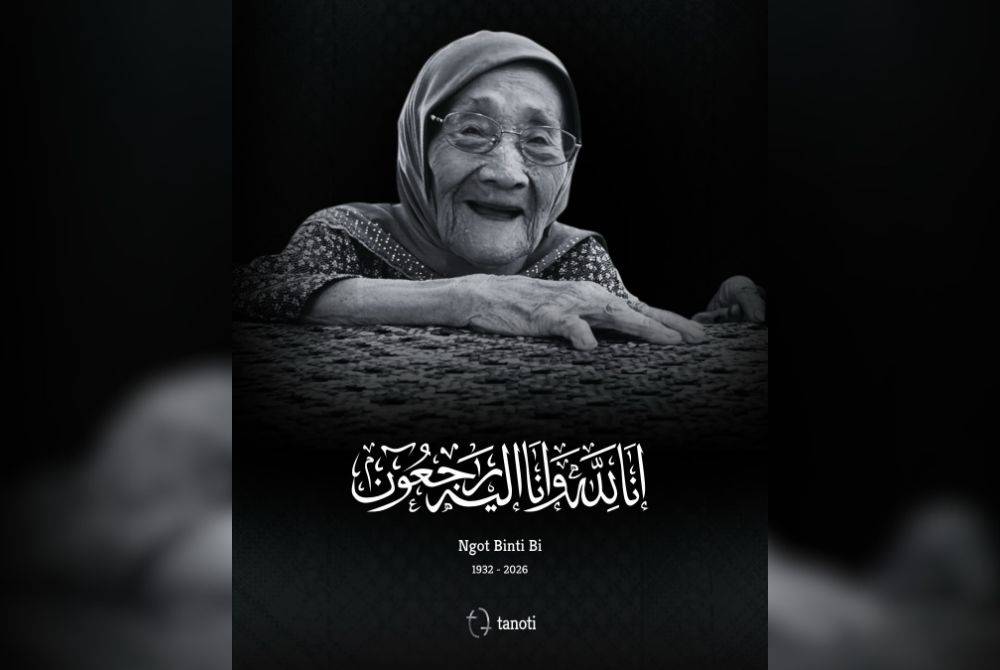
Born on June 30, 1932, in Kampung Semera, Sadong Jaya, Sarawak, Ngot died on Sept 7, 2026 at the age of 94, leaving behind not only a collection of finely woven mats but also a legacy of knowledge and cultural identity passed down through generations.
She had been actively producing Tikar Bergerang since 1999 and was appointed Adiguru Kraf Anyaman Tikar Bergerang by Kraftangan Malaysia in 2014 in recognition of her mastery and dedication to the craft.
Anyaman Tikar Pandan Bergerang is a traditional textile handicraft of the Sarawak Malay community, distinguished by its layered weaving technique and intricate open-square designs. The craft reflects the creativity, precision and dedication of its practitioners, whose motifs and techniques are closely connected to nature and cultural practices.
Ngot’s work was distinguished by motifs including ‘buah mempelam’ (mangoes), ‘biji bunut’ (ficus' seeds), the sword, frog and bridge. Her ability to produce high-quality, neatly woven mats featuring nature-inspired designs earned her orders from collectors, art enthusiasts, villagers and prominent individuals both within and outside Sarawak.
The mats were not merely decorative. Traditionally, Tikar Bergerang served a variety of cultural and practical purposes, including as prayer mats, mats used to welcome the birth of a first child, coverings placed inside coffins, mats for grooms during solemnisation ceremonies and floor coverings for various functions.
The craft’s distinctive construction also allowed both sides of the mat to be used, while practitioners developed the technique to produce increasingly larger mats with prominent open-square patterns.
Ngot’s mastery received recognition well beyond her community. In 2005, she received the Unesco ‘Seal Of Excellent’ Handicraft Products in Southeast Asia award for her pandan Tikar Bergerang.
Her contribution was further recognised when she was named an Adiguru Kraf Anyaman (master craftsman) in 2014. Her work also received the Unesco Seal of Excellence and recognition at the Hasanah Gold Threads Awards, where her work won Plaiting – Best Traditional in both 2023 and 2024.
In 2024, she was also honoured with the Hasanah Gold Award for her lifelong dedication to the craft.
Beyond the accolades, her greatest contribution was the transmission of knowledge. Married with seven children, Ngot trained two of them to follow in her footsteps and continue producing Tikar Bergerang.
That effort was particularly significant as the specialised weaving technique faces the risk of being lost if it is not introduced to younger generations.
Her commitment to the craft also demonstrated that cultural preservation could provide a sustainable livelihood. During her years producing Tikar Bergerang, the craft became a significant source of income for her, while demand for her work reflected its continuing cultural and artistic value.
As the Sarawak Malay community continues to confront the challenge of preserving traditional crafts, Ngot’s life offers a powerful reminder that heritage survives not simply through artefacts, but through people willing to learn, practise and teach.
Her legacy now lives in the hands of those she trained and in every Tikar Bergerang that continues to be woven.
The mats she created may serve as prayer spaces, household furnishings, ceremonial pieces or treasured collections, but each carries something greater — the memory of a craftswoman who dedicated decades to ensuring that an endangered tradition remained alive.
Download Sinar Daily application.Click Here!