A lifetime on the land, a highway through it
Beyond compensation, residents question fairness, flood risk and Malay Reserve Land protections
TASNIM LOKMAN WAN AHMAD ATARMIZI
SEMENYIH — For Kampung Sungai Pening Action Committee adviser Datuk Siajam Buyong, the dispute over the proposed Semenyih Bypass Road is about far more than compensation.
After spending nearly four decades developing and caring for his land, the 78-year-old retired civil servant says no monetary payment can fully reflect what he stands to lose if the property is acquired for the project.
Siajam said he purchased the land from his uncle in 1986 and began developing it the following year.
Over the decades, he planted fruit trees, some now more than 30 years old, while investing thousands of ringgit in maintenance and annual land payments.
"I planted many fruit trees, some of which are now more than 30 years old. I have invested thousands of ringgit maintaining the land and paying the annual rent.
"After caring for it for decades, its emotional value cannot simply be measured in money," he told Sinar Daily.
For Siajam, the issue is not merely the amount of compensation that may eventually be offered.
He said residents have opposed the proposed bypass since 2019 and have raised their concerns with multiple authorities, including the Land Office, Kajang Municipal Council, the Selangor Menteri Besar's Office and, most recently, Prime Minister Datuk Seri Anwar Ibrahim.
Yet, he claimed, affected landowners were never properly consulted on why the final alignment was chosen.
- THE 400M QUESTION BEHIND THE SEMENYIH BYPASS
- SEMENYIH RESIDENTS QUESTION SECTION 8 LAND ACQUISITION MOVE
- WORK BEGINS ON SEMENYIH BYPASS AS LANDOWNERS DEMAND ANSWERS ON COMPENSATION AND ACCESS
According to Siajam, residents attended a briefing informing them that their land would be acquired, but they were not given a satisfactory explanation as to why the alignment had shifted from an area they understood to be located some 400 metres away from the village.
"We are not against development, but we believe the project is being handled unfairly because it would split the village and potentially affect the community and environment," he said.
Beyond land acquisition, Siajam questioned whether sufficient social and environmental assessments had been undertaken before the project advanced.
He pointed out that Kampung Sungai Pening is located within what residents consider a flood-prone watershed area, raising concerns about the long-term impact of major earthworks and increased traffic.
Another issue, he said, involves the status of the affected land.
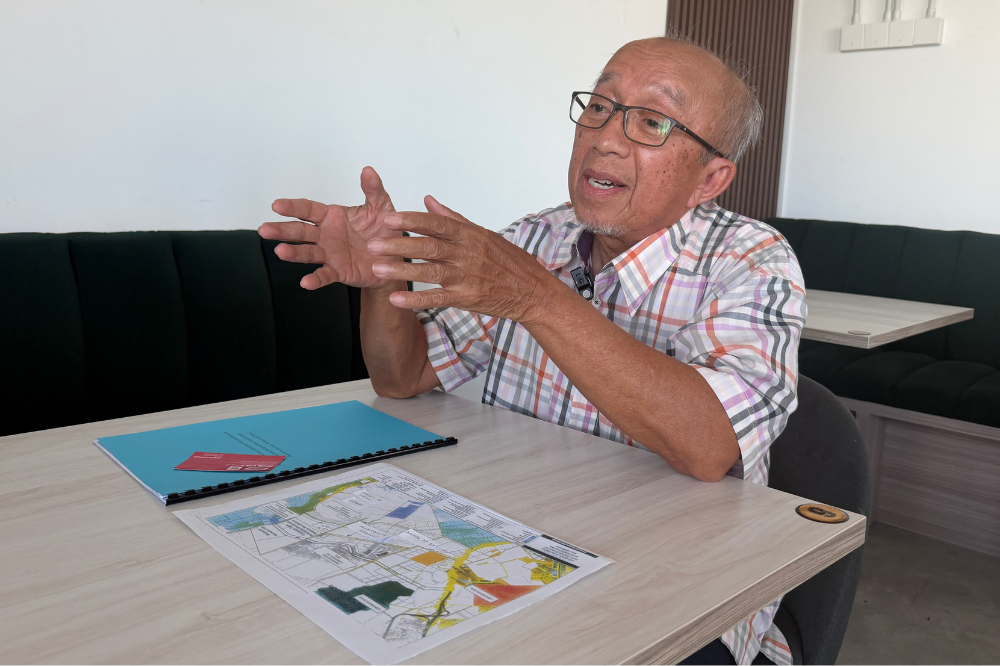
According to Siajam, Kampung Sungai Pening has been gazetted as Malay Reserve Land since 1927. He questioned why documents related to the bypass, based on his understanding, did not clearly identify the affected land as Malay Reserve Land.
He also raised concerns over the implications of acquiring such land in light of Article 89(3) of the Federal Constitution, which provides protections relating to Malay Reserve Land.
"If such land can be used for development without proper protection, I question its purpose. Future generations and the country could ultimately be the ones who lose," he said.
Siajam added that the proposed bypass could also affect the village's existing three-kilometre road, which residents rely on to access farms, orchards and rubber smallholdings.
"Those who cycle to their rubber smallholdings are concerned about how they will access their land if the existing route is affected. These practical issues should be discussed before the project proceeds," he said.
While compensation remains a concern, Siajam said residents are equally focused on the rationale behind the proposed alignment and whether less disruptive alternatives have been properly considered.
He argued that decisions should not be driven solely by short-term cost considerations if they result in lasting social and environmental consequences for the community.
Asked how he would value his own land, Siajam said even a substantial financial payment could never replace what the property represents.
"If developers can sell one acre for RM3 million to RM5 million, I believe my land should be valued accordingly, particularly after I have developed and maintained it for more than 30 years.
"But even then, the memories and emotional value attached to the land cannot truly be measured in money. I defend my land and the land of the Malay community in the same way I defend my religion, Islam," he said.
Residents continue to oppose the proposed bypass, which is intended to connect the Kajang Dispersal Link Expressway (SILK) to Jalan Sungai Lalang.
They maintain that alternative routes using existing road reserves should be fully assessed, while warning of possible impacts on traffic, flooding, safety and the village's social fabric.
The residents' action committee has submitted objections to the Selangor and Federal governments, arguing that the project should not proceed until all viable alternatives have been thoroughly evaluated.
Download Sinar Daily application.Click Here!