Malaysia Day: We know how to play mahjong. Why can’t we play Malaysia?
Different hands. Different interests. One table. The real test of unity is whether we are still willing to play together.


Every Malaysia Day, we talk about unity.
We talk about harmony, tolerance and the beauty of our diversity. We put up flags, sing patriotic songs and remind ourselves that Malaysia was born from the coming together of people, territories and histories that were never identical to begin with.
And then, almost inevitably, we go back to fighting about race, religion, language, politics and who belongs where.
Perhaps there is a simpler — and more Malaysian — way of understanding unity.
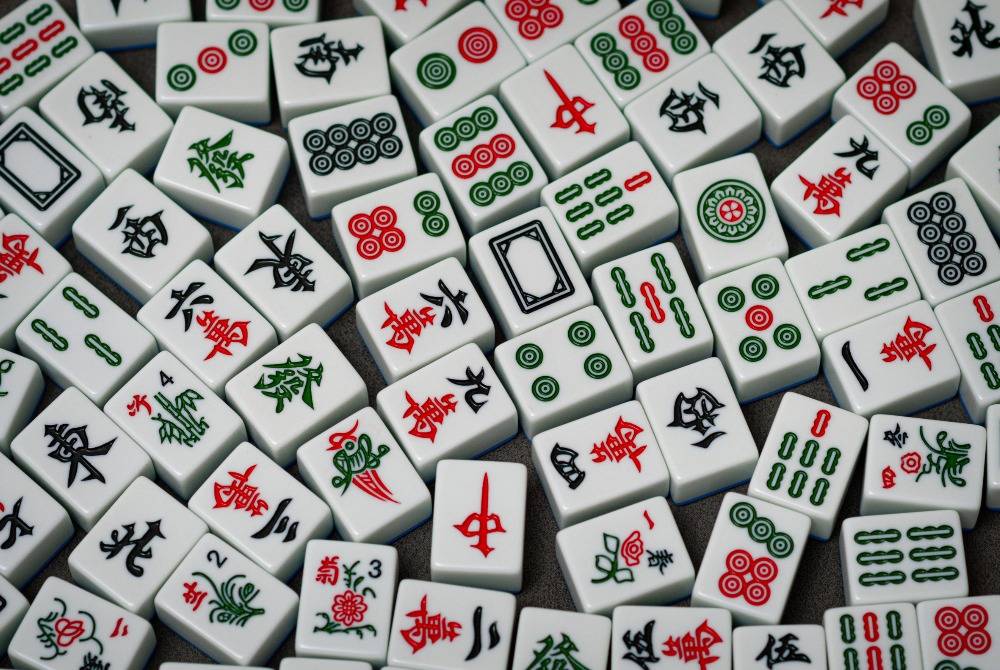
Let’s look at a mahjong table. Four people sit around one table, each holding a different hand, each pursuing a different strategy.
Nobody has the same tiles. Nobody sees the game in exactly the same way. Nobody gets everything they want.
But they accept one fundamental fact: They are playing the same game.
That is what Malaysia sometimes seems to forget.
We have become so preoccupied with our differences that we forget the table that holds us together.
Mahjong works because there are rules.
You wait for your turn. You observe the others. You calculate your risks. You accept that another player's winning hand is not necessarily your defeat.
And when the game does not go your way, you do not overturn the table.
You play the next round.
There is something profoundly Malaysian about that.
We were never meant to be a country of people who look alike, speak alike or think alike.
Malaysia was born out of negotiation and accommodation. The formation of the federation in 1963 brought together Malaya, Sabah and Sarawak, each with its own history, identity and interests.
Our diversity was not an unfortunate complication to be overcome.
It was part of the bargain.
Yet somewhere along the way, we began confusing unity with uniformity.
We seem to expect Malaysians to agree before we can call ourselves united.
That is an impossible standard.
A Malay does not have to think like a Chinese Malaysian. A Chinese Malaysian does not have to think like an Indian Malaysian. Sabah does not have to see Malaysia exactly as the peninsula does. Sarawak does not have to surrender its distinctiveness to prove its loyalty to the federation.
And political disagreement should not automatically turn fellow citizens into enemies.
The strength of a country is not measured by how little its people disagree.
It is measured by whether they can disagree without tearing the country apart.
That is where the mahjong table offers another lesson.
You cannot play while staring only at your own tiles.
You have to watch everyone else.
You have to understand what they are holding, what they might be planning and what they might need.
In Malaysia, we have become increasingly bad at that.
We know our own grievances intimately. We know what our community fears. We know what our political side wants.
But increasingly, we have little patience for understanding what the person across the table is worried about.
Social media has made this worse. We live in separate echo chambers, consume different versions of reality and increasingly encounter people who already agree with us.
We hear our own voices so loudly that everybody else's begins to sound like noise.
That is dangerous for any country, but especially for one as diverse as Malaysia.
Because eventually, somebody decides that the easiest way to win is to make sure the other player loses.
And that is when the game stops being a game.
Malaysia does not need everyone to hold the same tiles.
It needs everyone to remain at the same table.
That means accepting that Sabah and Sarawak have legitimate interests.
It means acknowledging that different communities have different anxieties.
It means allowing political opponents to be opponents without turning them into traitors.
It means defending one's own identity without demanding that everyone else diminish theirs.
Most of all, it means understanding that compromise is not surrender.
At a mahjong table, sometimes you discard the tile you want because keeping it makes no sense.
Nations work the same way. There are times when every side has to give something up for the larger game to continue.
That is not weakness. That is maturity.
So perhaps on Malaysia Day, we should ask a more uncomfortable question than whether we are united.
Are we still willing to sit at the same table?
Because the danger facing Malaysia is not that we are different.
We have always been different.
The danger is that we are becoming increasingly unwilling to live with those differences.
Malaysia Day is therefore not merely a celebration of how Malaysia came together in 1963.
It is a reminder that every generation has to decide whether it still believes in the idea of Malaysia.
We inherited the table.
Our responsibility is to keep it standing.
We may argue over the tiles. We may complain about the rules. We may even suspect that the person opposite us has a better hand.
But there is one thing we cannot afford to do. Flip the table. Because when the table goes down, nobody wins.
Different hands. Different players.
One Malaysia. One table.
Let’s keep playing.
Download Sinar Daily application.Click Here!