'You cannot control a dog': Don't turn neighbourly disputes into racial issue
The danger becomes greater when such incidents are recorded and shared online, as videos often strip away the context surrounding a dispute.



KUALA LUMPUR – A barking dog may be enough to frustrate a neighbour, but it should not become a reason to turn a personal dispute into a racial or religious issue.
Senior Associate (Advocate and Solicitor) Sahain Puthucheary said Malaysians were too quick to attach racial or religious identities to disputes that were fundamentally between individuals, warning that doing so could allow otherwise manageable disagreements to escalate unnecessarily.
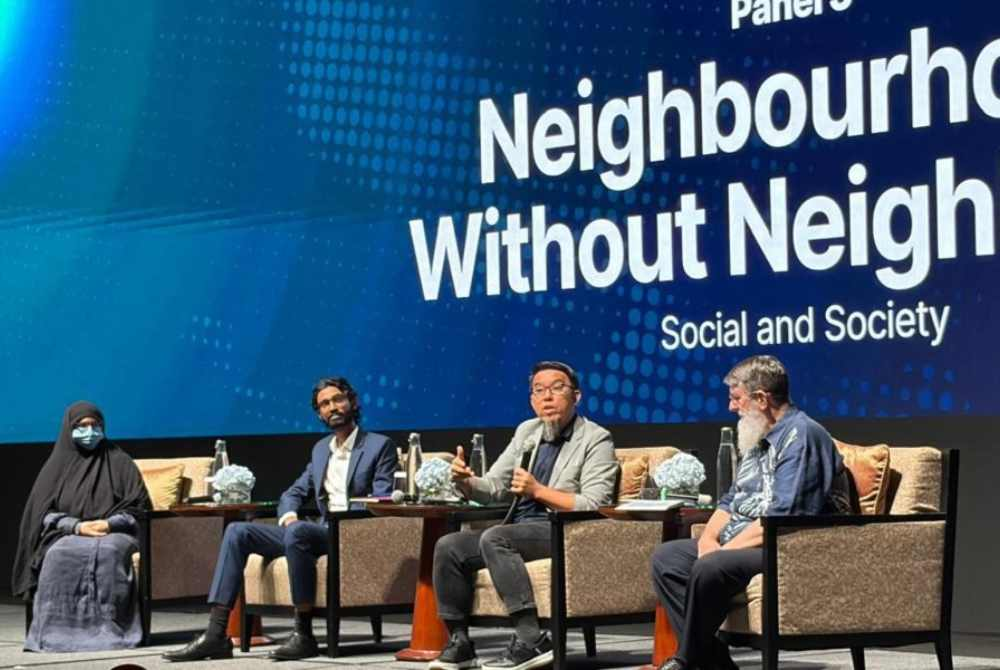
Speaking during the "The Neighbourhood Without Neighbours" panel discussion at the New Muslims Community Conference 2026, Sahain said the first question should be whether a dispute was genuinely about race or religion in the first place.
"Disputes between two people do not need the whole nation to get involved. There is no need to turn a personal disagreement into a wider issue, because that can cause things to escalate very quickly," he said.

In the neighbourhood-focused session, Sahain said a dispute between two people should not automatically be treated as a dispute between the communities they belonged to.
He said things happen that have nothing to do with race, but when the two people involved are from different races, it can quickly become framed as a racial issue.
He illustrated the point using a dispute involving a dog, saying that even if a neighbour was upset with a Chinese dog owner, the disagreement should not be interpreted as hostility towards Chinese Malaysians.
Sahain, who said he grew up with a dog from the age of 11 until he was about 23, said dog owners could not always control their pets' behaviour despite their best efforts.
"The truth is, you cannot completely control a dog. If it barks through the night, you can do everything you can to stop it, but sometimes there is very little you can do," he added.
He said a neighbour could understandably become annoyed by persistent barking, but there was no reason for the disagreement to be transformed into a wider racial or religious conflict.
For Sahain, the danger becomes greater when such incidents are recorded and shared online, as videos often strip away the context surrounding a dispute.
"When things get posted online, a lot of context disappears and it becomes a two-dimensional video image that is on somebody’s phone and they’re only seeing bits and pieces of that problem," he said.
He urged Malaysians to pause before reacting to such content and ask whether they were actually witnessing a racial dispute or simply a disagreement between two neighbours.
Sahain said the tendency to frame ordinary disputes as racial or religious could be particularly damaging because it could encourage people to rally behind communities rather than resolve the original problem.
This, he said could also happen in religious disputes, where individuals might appeal to their wider community for support instead of first examining whether the matter genuinely involved religion.
Sahain also questioned whether authorities should always be the first point of intervention when a dispute breaks out between neighbours.
He suggested that communities closest to the dispute could sometimes understand the circumstances better than outsiders who had not witnessed what happened.
"When it comes to neighbourhood issues, I believe the people within that neighbourhood often understand the situation better than anyone from outside," he said.
Rather than immediately escalating every dispute to the authorities, he urged Malaysians to first understand the context and prevent the disagreement from taking on racial or religious dimensions.
The panel, moderated by information technology specialist Peter Wood, also featured Multiracial Reverted Muslims founder and president Firdaus Wong and New Muslims Community student Preeti Kaur.
The discussion was part of the one-day conference which brought together speakers from different backgrounds to examine the wider challenges affecting trust and unity in Malaysia.
Four panels explored the way division can emerge through digital discourse, economic stereotypes, residential communities and the experiences of reverts living between different cultural and religious worlds.
Download Sinar Daily application.Click Here!