We can see the haze. We can’t see the leadership
The API is giving Malaysians the numbers. The Cabinet needs to give them answers.


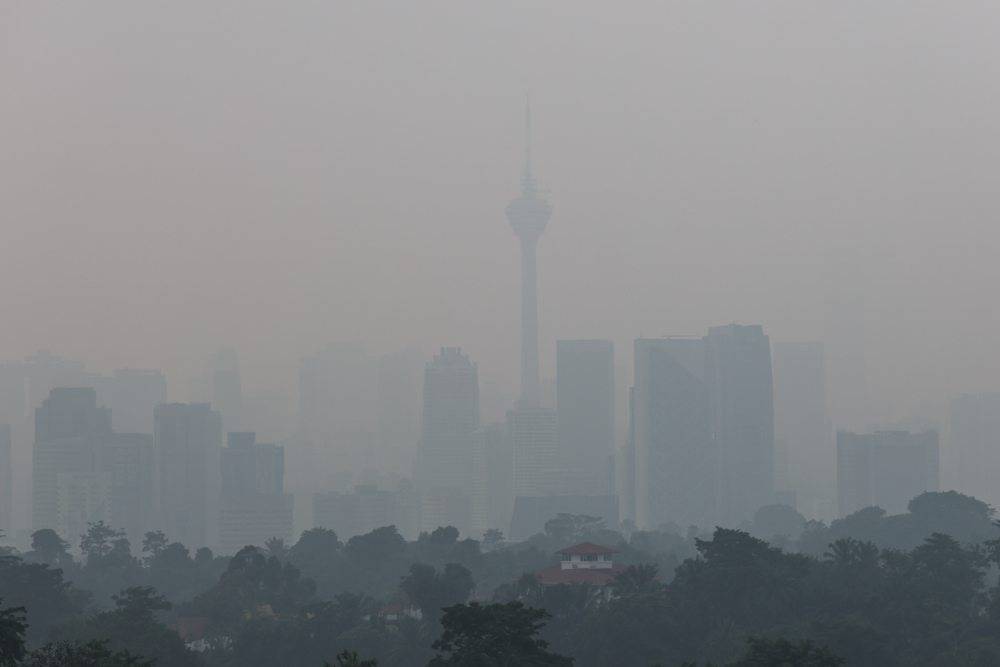
SO, when can we breathe clean air again?
Nobody can honestly give us a date.
But the Government can give us something we should not have to ask for — a voice, a face, a plan and accountability.
We can wait for the wind to change. We can wait for the rain. But we should not have to wait for the Cabinet to treat this as the public-health issue it has become.
Yet that is exactly where we find ourselves once again.
Checking the API. Looking at the sky. Wondering how bad the air will get before someone in the government actually stands up and addresses the crisis.
This is the strange part of the haze problem.
There is a minister responsible for the environment. There are government agencies monitoring the situation. There are officials issuing updates.
But when Malaysians need their Government to front the crisis, where is everyone?
We do not need an Information Minister to package the message. We do not need another government spokesperson to read out technical updates.
We need the minister in charge to account for what is happening. And we need the Cabinet to own the problem.
Because haze is no longer simply an environmental issue.
It is a public-health issue. It affects schools, workplaces, businesses, transport and the daily lives of millions of Malaysians.
That makes it a government-wide responsibility.
The environment minister has the portfolio. He should be at the forefront of the response, not shielded by agencies, officials or technical statements.
We need the Government to tell us plainly what is happening, how serious it is, what it is doing about it and what the public should do.
Instead, the API has become the Government’s most visible spokesman.
And even that is not as straightforward as it should be.
We are seeing different API readings from different sources, leaving people wondering which number they should actually believe.
One reading may suggest the air is unhealthy, while another appears less alarming. For ordinary people trying to decide whether to send their children to school, exercise outdoors or simply go about their day, that is confusing.
If the numbers themselves are confusing, the Government needs to explain why — not leave the people to figure it out for themselves.
Numbers can tell us how bad the air is. They cannot tell us who is responsible for what happens next.
And that matters because people are breathing this air.
Parents are wondering whether their children should be outside. The elderly are asking whether it is safe to go for their morning walks. Workers are commuting through polluted air. Those with respiratory problems are making decisions about their daily lives based on a number displayed on a screen.
They deserve more than a number. They deserve clarity.
Being in charge is not the same as being seen to be in charge.
We do not expect the Government to control the weather. We understand that much of the haze is transboundary and that Malaysia cannot simply extinguish fires burning across the border.
But we expect answers. What is Malaysia doing? What is Indonesia doing?
What can Malaysia legally demand — and what can it not? Is the situation expected to worsen? What happens if the API reaches dangerous levels? What should people do to protect themselves?
And, crucially, what is the long-term plan?
Because we have been here before.
Time and again, we talk about hotspots, cloud seeding, Asean cooperation, firefighting and satellite monitoring.
Then the rain comes. The skies clear. The haze disappears from the headlines.
Until the next time.
Malaysia signed the Asean Agreement on Transboundary Haze Pollution more than two decades ago. Yet we are still being asked to live with the consequences of fires beyond our borders.
Of course, Malaysia cannot solve a regional problem alone.
But that makes leadership and communication even more important, not less.
When you cannot control the source of a crisis, you have to be exceptionally clear about what you are doing in response.
The Government should not leave Malaysians to navigate a haze crisis through social media posts, WhatsApp messages and constantly changing API readings.
Nor should citizens have to wonder which ministry or agency is actually taking ownership of the issue.
Because this is not just about one ministry.
When children are kept indoors, schools are affected, workers are breathing polluted air and families are worried about their health, the response cannot be reduced to one ministry issuing statements.
This is a Cabinet responsibility. It means more than meeting behind closed doors and issuing a statement afterwards.
It means explaining what is being done. It means telling Malaysians what to expect. It means being honest about what the Government can control, what it cannot, and what it intends to do about both.
Talk to us while we are breathing the problem.
Because silence creates its own kind of pollution. It fills the vacuum with speculation, misinformation, frustration and distrust.
And that is the last thing we need when the air itself is already difficult enough to breathe.
Download Sinar Daily application.Click Here!