NRES urges public to refer to official API readings amid data discrepancies
Syed Ibrahim said discrepancies could also arise from how platforms assessed atmospheric conditions.


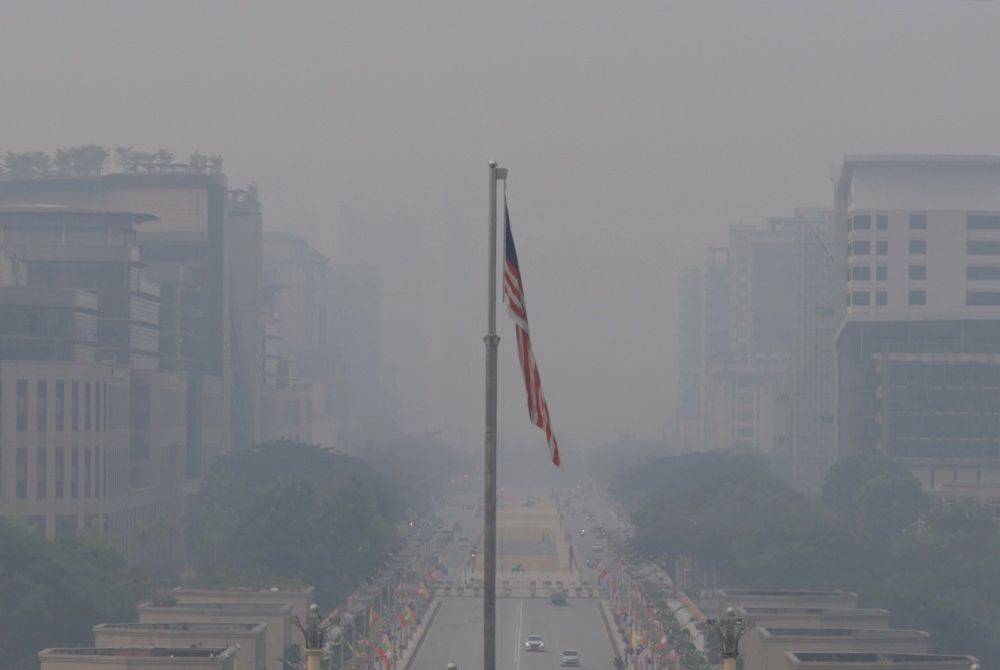
KUALA LUMPUR – The Natural Resources and Environmental Sustainability Ministry (NRES) has urged the public to refer to the government’s official Air Pollutant Index (API) readings on MyEQMS amid discrepancies with figures reported by alternative monitoring platforms.
NRES Deputy Minister Syed Ibrahim Syed Noh said the Department of Environment’s (DOE) MyEQMS platform published official readings based on data collected from monitoring stations at specific locations.
He said the public could consult other air quality monitoring websites but should understand that differences in calculation methods could produce different readings.
“DOE uses API data collected from monitoring stations located in specific areas where the readings are reported.
“This does not mean the surrounding areas do not have high pollution levels, as the readings reflect measurements taken at particular locations,” he told Sinar Daily at Parliament today.
Syed Ibrahim said discrepancies could also arise from how platforms assessed atmospheric conditions. Satellite-based monitoring, for instance, could account for mist, fog and other atmospheric conditions alongside haze, potentially affecting the readings.
“At NRES, we rely on official data released through MyEQMS, which is updated every few hours. We encourage the public to refer to the government’s official readings, although we do not prevent them from consulting alternative platforms.
“What matters is that the public understands the differences in the data and the methods used to calculate the readings.
“I believe the DOE’s statement is helpful in explaining the parameters and methods used in these calculations. I hope the public will understand these differences and take the official data into account.
“However, I believe the API is ultimately a measurement tool and what matters more is the action we take to protect ourselves from potential health hazards and other related issues,” he said.
His remarks came amid public confusion over differences between Malaysia’s official API readings and figures reported by third-party platforms, including IQAir and aqicn.org.

In a clarification to Sinar Daily on Oct 6, DOE attributed the discrepancies to differences in calculation methods, breakpoints, data sources and averaging periods.
The department said Malaysia’s API followed nationally established methods based on the United States Environmental Protection Agency’s Pollutant Standard Index approach. The overall API is determined by the highest sub-index among the pollutants measured.
DOE also explained that PM2.5, or fine particulate matter measuring 2.5 micrometres or less in diameter, is assessed using a 24-hour average. As a result, short-term increases in PM2.5 concentrations may not immediately change the API category, even when visibility has deteriorated.
Differences in averaging periods can therefore contribute to variations between the official API and readings displayed on alternative platforms.
DOE advised the public to consult MyEQMS and the MyJAS EQMS application for official information on Malaysia’s ambient air quality.
Download Sinar Daily application.Click Here!