TuJu much, too soon?
National security may justify restricting an app, but a replacement must earn trust through security and performance, not merely its Malaysian origins.


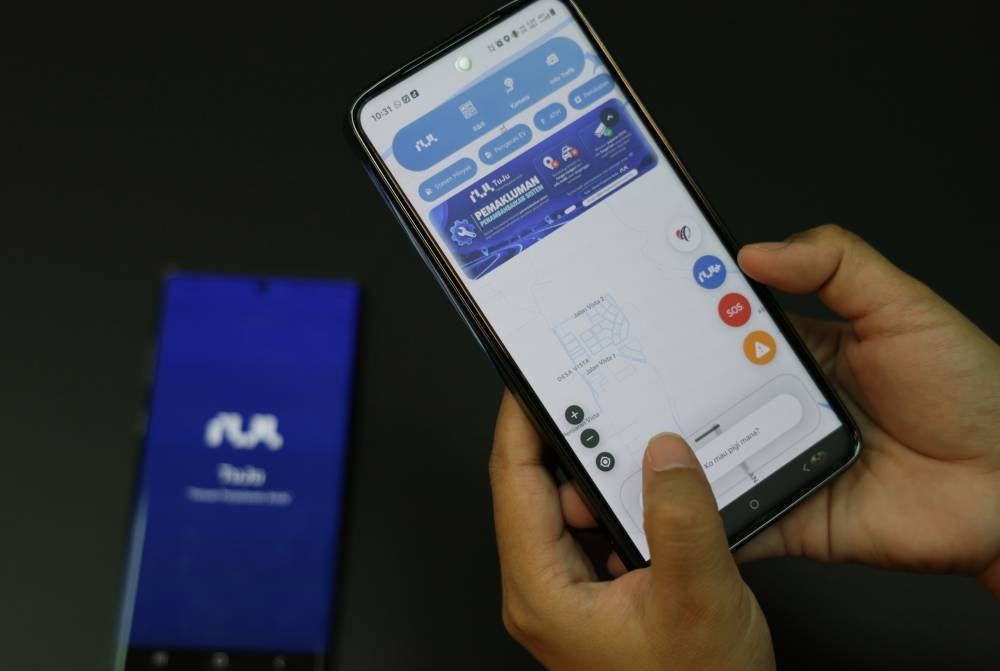
THERE is something ironic about the government telling civil servants which navigation app to use. Technology designed to help people find their way has become a matter of national security, political sensitivity and administrative compliance.
Following a decision by the National Cyber Security Committee, chaired by Prime Minister Datuk Seri Anwar Ibrahim on October 20, civil servants have been directed to stop using Waze for official duties.
The government cited concerns about personal information and movement data, given that Waze is subject to Israeli law, and encouraged Malaysians to consider TuJu, jointly developed by the Malaysian Highway Authority (LLM) and Prosignal Consortium Sdn Bhd.
Data security is a legitimate concern. Digital footprints can reveal sensitive information, and governments have a responsibility to scrutinise the applications used by their officials.
But raising a security concern and establishing a security threat are two different things.
What precisely is the risk? What information could be exposed, and through what mechanism? Is the decision based on an identified vulnerability or a precaution concerning the app’s legal jurisdiction?
The government did not provide details of the risks identified when announcing the restriction. Waze, meanwhile, has disputed claims that it compromises users’ privacy.
The public deserves an explanation, to the extent possible without compromising national security. Any assessment should consider what data an application collects, how it is stored, who can access it and what safeguards are in place.
Where a technology comes from matters, but so does how it handles users’ information.
Then there is the alternative, TuJu, which has become the subject of short online dramas poking fun at its navigation functions.
The skits may be hilarious, turning the frustrations of finding a destination into entertainment, but the joke carries a serious undertone.
When an app intended to guide motorists becomes a source of comedy, its developers have a public confidence problem to address.
Online ridicule, of course, is not a technical assessment. Viral skits cannot establish that an application is universally unreliable, just as official endorsement cannot guarantee flawless performance. But complaints about basic functions should not be brushed aside simply because they arrive wrapped in humour.
TuJu offers route information, estimated arrival times, toll details, traffic updates, rest area information, live CCTV access and emergency assistance.
These features could make it useful to Malaysian motorists, particularly highway users. But a local app is not automatically a reliable one.
Early user feedback has raised concerns about destination searches, flickering maps, delayed responses and confusing navigation instructions. At the time of writing, TuJu had a rating of 1.6 out of five on Apple’s Malaysian App Store, based on 100 ratings.
These early indicators do not represent every user’s experience, but the complaints concern essential functions. An incorrect turn at a highway interchange can send a driver towards the wrong exit, while a map that freezes or responds slowly can distract someone who should be concentrating on the road.
LLM and Prosignal Consortium have been working to address disruptions and increase system capacity following a surge in users. That may explain some of the difficulties, but it also raises questions about preparedness.
A wider rollout requires adequate testing, reliable performance and a clear plan to resolve problems. Motorists should not have to choose between protecting their data and getting accurate directions.
Digital sovereignty is a worthwhile ambition. Developing local technology can reduce dependence on foreign platforms, build domestic expertise and give Malaysia greater control over critical digital infrastructure. But encouraging people to switch apps does not, by itself, achieve that ambition.
TuJu must demonstrate that it can deliver reliable navigation, a user-friendly experience and transparent privacy safeguards.
Supporting homegrown technology is a legitimate national objective, but patriotism cannot be the quality-control standard for an app.
There is also a distinction between restricting an application for official duties and persuading the public to abandon it.
Civil servants handling government business may reasonably face stricter security requirements. Ordinary motorists, however, need credible evidence of risk and a convincing alternative before changing their digital habits.
The government is pursuing two objectives: protecting official information and encouraging local technology. The first requires a sound security assessment; the second, a product that people trust because it works.
Malaysia’s support for Palestine and opposition to Israel’s actions are matters of foreign policy and public conscience. Cybersecurity policy, however, must also rest on a clear technical and legal foundation. The two may overlap, but they are not interchangeable.
Ultimately, the question is whether the restriction is proportionate to the identified risk and whether TuJu can protect users’ information while delivering reliable directions.
The online jokes will eventually move on to the next trending topic. TuJu, however, has a more enduring task to turn public scepticism into confidence.
If the government wants Malaysians to change course, it must explain why the new route is safer. And if it wants them to trust a local alternative, that alternative must first prove it can get them where they need to go.
Download Sinar Daily application.Click Here!