Albania’s Crisis: Rama, Israeli investments and the demand for accountability
Protests against Rama’s government intensify amid allegations of corruption, controversial Israeli investments and growing concerns over police repression
OLSI JAZEXHI
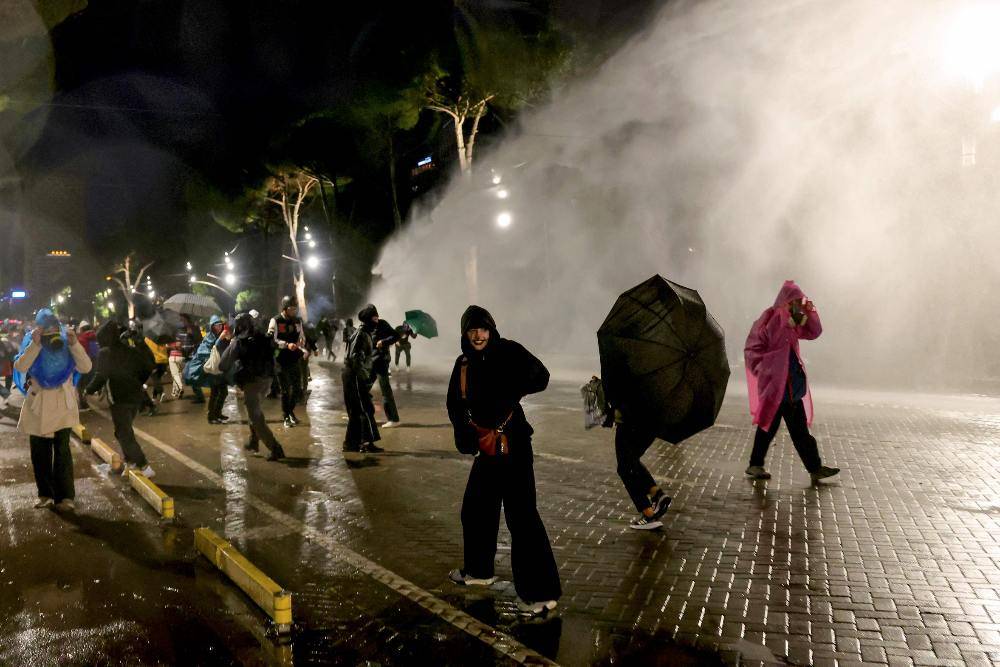
THE protests against Edi Rama’s government have become a test of Albania’s democracy. What began on 30 May 2026 as the Flamingo Revolution against Jared Kushner’s resort project in Zvërnec has broadened into a confrontation over corruption, Israeli investment and increasingly authoritarian government. Protesters accuse Rama of “selling Albania to Israel.” His government has responded with police violence, mass arrests and restrictions on freedoms.
For demonstrators, these grievances are connected: a government accused of protecting powerful business interests is using force against citizens demanding accountability.
Rama’s relationship with Israel is central to that confrontation. During the Gaza war, he maintained close ties with the Israeli government. In September 2024, he welcomed President Isaac Herzog to Tirana and invited Israelis to settle in Albania. Israeli acquisitions of residency, passports and property have subsequently intensified accusations among protesters that Rama serves Israeli interests.
The relationship has a longer security dimension. In 2016, Albania sheltered 3,000 Iranian former fighters from the Mojahedin-e Khalq organisation, MEK, which subsequently established its camp in Manëz. Allegations that the organisation conducted attacks against Iran in coordination with Israel form part of the controversy surrounding its presence.
In 2018, Benjamin Netanyahu requested that Albania “remove the Iranian presence in the country.” Albania expelled Iranian diplomats that year and severed diplomatic relations with Iran in 2022, attributing a cyberattack to Tehran—an attribution challenged by critics of Rama’s policy.
In October 2022, after the closure of the Iranian embassy, Rama made a three-day visit to Israel and invited Israeli companies to protect Albania’s digital infrastructure. This cooperation was accompanied by a reported €100 million in government spending, with contracts channelled through the National Agency for Information Society, AKSHI.
The resulting procurement allegations raise serious questions about who benefited from this security partnership. Investigations by the Special Structure against Corruption and Organised Crime, SPAK, have centred on Rama’s handyman Ergys Agasi, AKSHI director Mirlinda Karçanaj and businessman Ermal Beqiri. Allegations surrounding the affair include diversion of public funds, involvement by Israeli companies and contracts awarded without ordinary competitive tendering.
Albania’s Kosovo-born intelligence chief, Vlora Hyseni, has also been drawn into the allegations, alongside claims concerning her relationship with Israeli businessman Ron Yeffet. Yeffet is the son of Isaac Yeffet, a former senior figure in Israel’s Shin Bet. These connections have sharpened concerns about the overlap between intelligence institutions, political power and commercial interests.
Defence procurement is another source of controversy. Elbit Systems, the Israeli military company implicated in the genocide in Gaza, has secured contracts connected with Albania’s state-owned KAYO. Questions surrounding KAYO, Yeffet and Timak Defense include claims about control of the companies, more than €30 million in state funding and a projected €1.2 billion investment in Pashaliman port. SPAK has conducted searches and seized documents involving Yeffet, TIMAK and state officials.
The controversies extend beyond defence. A 2024 arrangement with Israel’s Sheba Medical Center has been criticised over alleged exclusive medicine-supply rights and the exclusion of Albanian suppliers. In June 2026, Albania signed agricultural investment agreements with 12 Israeli companies, a month after announcing the sale of 100,000 hectares to foreign companies. Albanian media reported that the land would be used for Israeli settlements, or kibbutzim.
In Vlorë, the $6.5 million Jewish Museum, whose construction began in February 2025, has become another focus of opposition. Residents protesting since 5 September 2026 argue that the project threatens the city’s historic identity, the Labëria Patriotic Club and the Ethnographic Museum they say it will replace.
The controversy intensified after Anna Kohen, an Israeli, claimed that Vlorë had once been inhabited by “90 per cent Jews and 10 per cent Albanians.” Some residents interpreted the statement as supporting claims over their city by Israelis. Their objections to the museum have consequently become entangled with broader suspicions about Israeli investment.
The airport dispute has reinforced those concerns. On 13 September 2026, Kosovar businessman Behgjet Pacolli alleged that Rama’s government was seeking to terminate his company’s Vlorë Airport concession so it could be handed to the Israeli “businessmen” Ron Yeffet.
Meanwhile, Israeli property purchases have become a focus of anger over rising prices. During his Tirana visit on 12 October 2026, Israeli Foreign Minister Gideon Sa’ar announced that 100,000 Israeli tourists had visited Albania that year. Israeli investment spans agriculture, tourism, medicine, defence, banking and other sectors, while Rama’s government has granted passports and residency to many Israelis.
During Rama’s January 2026 visit to Israel, Netanyahu publicly encouraged Israelis to visit Albania:
“I can tell all Israelis that Albania is a beautiful country with beautiful people, so go there, number one.”
Protesters interpret these developments as evidence of a government placing foreign interests above their own. Some accuse Rama of turning Albania into a “second Palestine” and acting as Netanyahu’s agent. Their banners declare that Albania is not for sale.
Rama has answered by describing protesters as antisemites exploited by the “enemies of Israel and Albania.” He has blamed Iran, Russia, Antifa, left-wing groups, imams and mosques, portraying demonstrators as radicalised and ideologically manipulated. Such rhetoric turns disputes over government decisions into questions of national loyalty.
Corruption cases involving senior officials have deepened the crisis. Former deputy prime minister Belinda Balluku faces SPAK accusations concerning tender violations, corruption and money laundering involving construction contracts worth over €200 million. On 12 March, Rama’s parliamentary majority refused to lift her immunity and authorise her arrest by SPAK.
Erion Veliaj, Tirana’s evangelical Christian mayor and former minister, has been in pretrial detention since February 2025 over allegations involving €1.1 million in public funds. Former environment minister Lefter Koka was convicted in an incinerator case involving an alleged €3.7 million bribe. Former deputy prime minister Arben Ahmetaj faced prosecution and left Albania, while former health minister Ilir Beqaj was arrested over suspected misuse of EU funds.
These cases, rising living costs and controversies over the Israeli takeover of the country explain demands for Rama’s resignation, arrest and prosecution. Protesters see a governing system that protects American investors such as Jared Kushner and Israeli business interests while treating opposition as a threat.
Rama is not following the path of Serbia’s Aleksandar Vučić. He refuses to step down, call early elections or face corruption allegations in court. Critics argue that Israeli political support has shielded his government from international pressure while he turns Albania into a police state, using police violence to silence protesters.
These grievances have driven protests since May 2026. The unrest increasingly resembles urban guerrilla warfare, with young people clashing with police. Albanians want regime change.
Olsi Jazexhi is an Assistant Professor at the Department of History and Civilization, International Islamic University Malaysia.
The views expressed in this article are the author's own and do not necessarily reflect those of Sinar Daily.
Download Sinar Daily application.Click Here!