All supervisory police officers must take action against misconduct - Ayob Khan

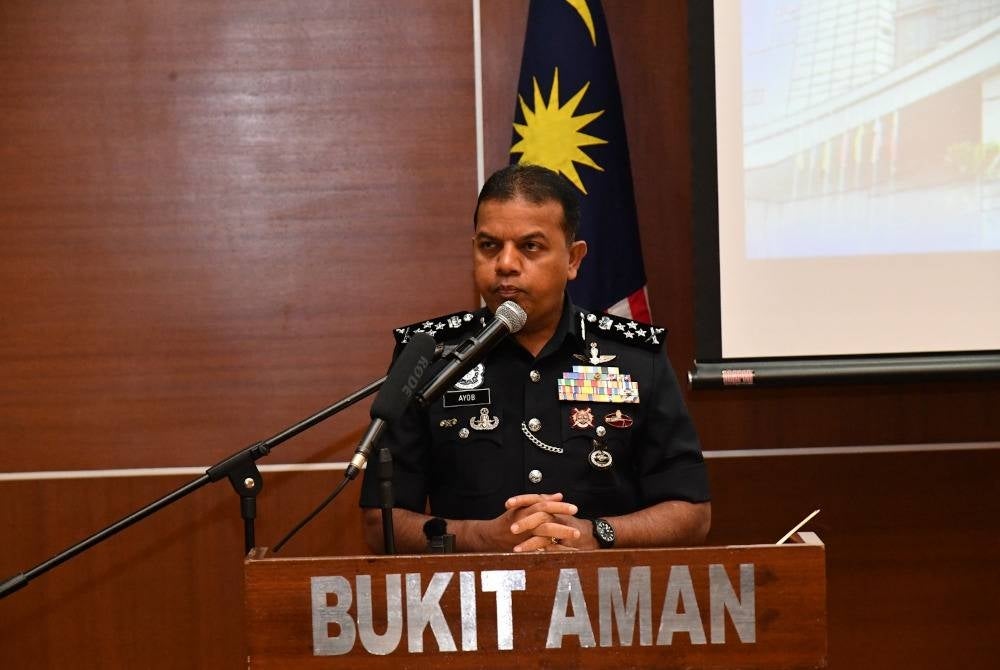
KUALA LUMPUR - Deputy Inspector-General of Police Datuk Seri Ayob Khan Mydin Pitchay has reminded all officers and personnel of the Royal Malaysia Police (PDRM) holding supervisory positions that they are responsible for taking action against their subordinates who engage in misconduct.
He said that as supervisors, they must be firm, courageous, and conduct more detailed monitoring.
"Lately, cases of misconduct among PDRM officers and personnel have been on the rise.
"There is no longer any excuse for supervisors not to take action against officers and personnel involved in misconduct, as they should be eager to rectify the wrong and gain recognition for their willingness to take decisive action," he said during the Federal Police monthly assembly here today.
Ayob stressed that all Directors, Police Commissioners, State Police Chiefs, Commanders, Commanding Officers, Department Heads, and District Police Chiefs must take strict measures to enforce regulations without fail.
"Any failure by all senior officers to take action under Regulation 3C, which pertains to any regulation and breach of discipline involving police officers and personnel, will result in action being taken," he added.
He added that all Contingents, Brigades, and Formations should not rely solely on inspections by the Integrity and Standard Compliance Department (JIPS) and directives from Federal Police Headquarters to conduct inspections.
"All parties must be consistent, courageous, and firm in enforcing Regulation 3C to ensure that we can bring about effective change in issues of integrity and misconduct within PDRM," he said.
Download Sinar Daily application.Click Here!