Did Indonesia’s President Prabowo really say we must recognise, respect and guarantee Israel’s security?
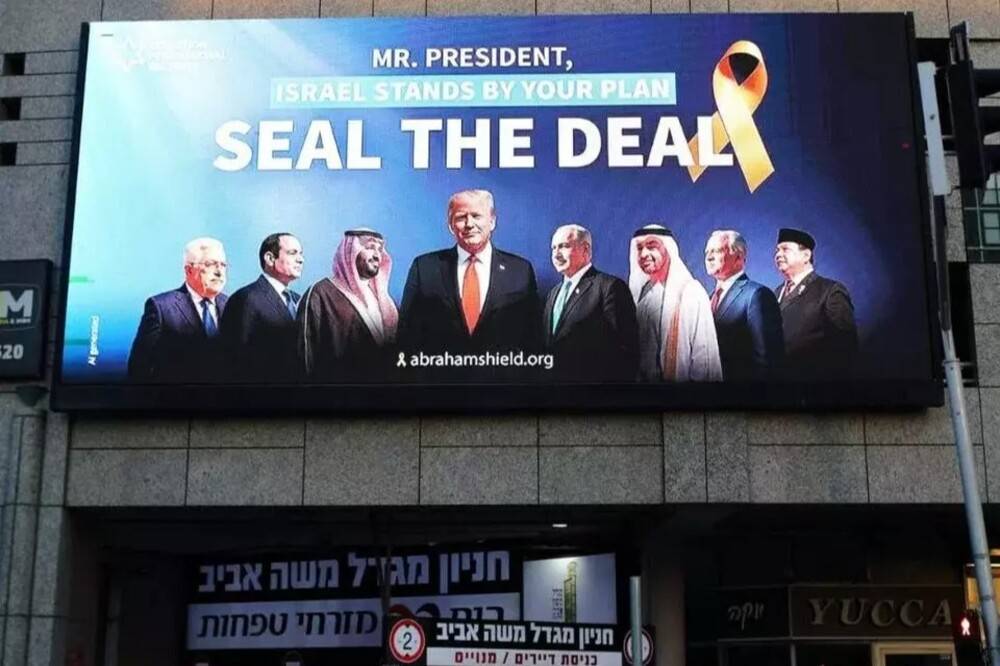
In the days following the UN speech, speculations swirled after electronic billboards featuring Prabowo’s image appeared in Tel Aviv on Sept 30.


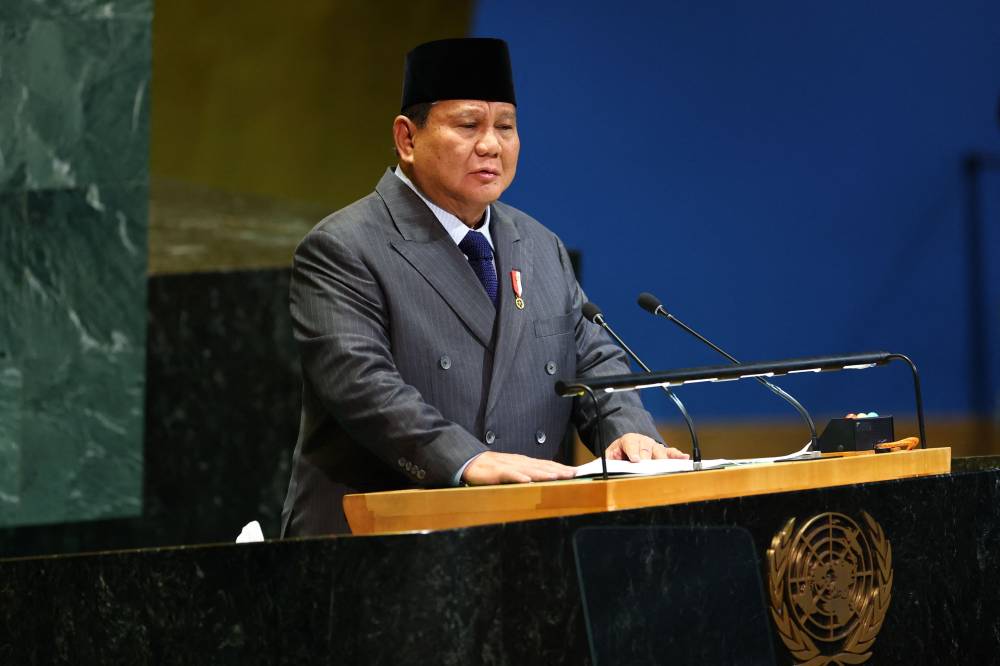
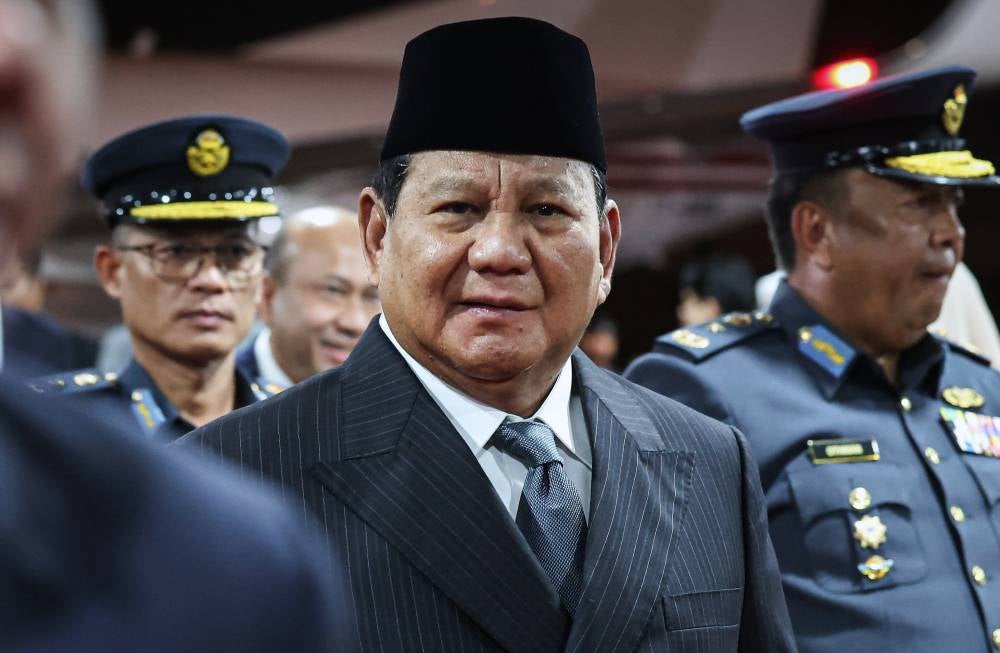
SHAH ALAM - At the 80th United Nations (UN) General Debate Session in New York on Sept 24, Indonesian President Prabowo Subianto delivered a speech that has sparked intense regional and global discussion.
In his speech, he said the “safety and security of Israel must be recognised, respected and guaranteed.”
The statement, made alongside his reaffirmation of support for a two-state solution, has raised questions about whether Indonesia was rethinking its long-standing policy of non-recognition towards Israel.
In his address, Prabowo framed his message within the broader themes of justice, equality and humanity; values rooted in Indonesia’s own historical struggle for independence.
“The words of the UN Declaration of Independence have long inspired democratic movements across continents, including Indonesia’s own struggle for freedom.
“Despite an era of scientific and technological advancement, the world continues to face fear, racism, hatred, oppression and apartheid,” he said.
Prabowo linked Indonesia’s colonial past with present-day global injustices, emphasising that Indonesia understood this pain deeply.
He highlighted that for centuries, Indonesians lived under colonial domination, oppression and slavery, treated as less than human in their own homeland.
“We know what it means to be denied justice, to live in apartheid and poverty, and to be deprived of equal opportunity. But we also know the power of solidarity.
“The UN had a big role in Indonesia's independence and early development and the same solidarity should now be extended to oppressed nations, especially Palestine. We must also never remain silent while Palestinians continue to be denied justice and legitimacy.
“The notion that ‘the strong do what they can and the weak suffer what they must’ must be rejected. The very existence of the UN is to stand against such a doctrine, to defend both the strong and the weak. ‘Might’ can never be ‘right’; only what is right must prevail,” he told the assembly.
However, it was his concluding statement that drew the most attention and controversy.
“Indonesia reaffirms its unwavering support for a two-state solution in Palestine. A truly independent Palestinian state must exist, but the safety and security of Israel must also be recognised, respected and guaranteed. Only then can real peace emerge, a peace free from hatred and suspicion.
“Arabs, Jews, Muslims, Christians, Hindus, Buddhists and all faiths must live together as one human family. Indonesia is fully committed to helping make this vision of reconciliation and harmony a reality,” he said.
In the days following the UN speech, speculations swirled after electronic billboards featuring Prabowo’s image appeared in Tel Aviv on Sept 30.
The billboards, part of a campaign by the Israeli Coalition for Regional Security, linked Prabowo’s speech to a push for expanding the Abraham Accords, a diplomatic initiative originally championed by United States President Donald Trump.
This prompted Indonesia’s Foreign Ministry to issue an immediate clarification, firmly denying claims that Jakarta was moving towards recognising Israel.
“There will be no recognition or normalisation of ties with Israel, except if Israel recognises an independent and sovereign Palestinian state first.”
“Indonesia’s foreign policy remained consistent. Any engagement or dialogue concerning Israel must begin with the acknowledgment of Palestine’s independence,” Ministry Spokeswoman Yvonne Mengkawang said.
Despite the ministry’s swift clarification, Israeli Prime Minister Benjamin Netanyahu welcomed Prabowo’s words as “encouraging,” calling them a “positive signal” for potential future normalisation.
Prabowo’s remarks also caught the attention of political commentators in Malaysia, where the issue of Israel’s genocide on the Palestinians remained deeply sensitive.
Former health minister Khairy Jamaluddin described the speech as “unprecedented,” pointing out that “no Indonesian or Malaysian leader had ever made such a declaration.”
Speaking on his Keluar Sekejap podcast with Muda vice-president Zaidel Baharuddin, Khairy said Prabowo’s statement might be part of a calculated geopolitical strategy.
“It might be a move to improve Indonesia’s standing with the US, but in reality, Israel probably does not care about what Indonesia thinks,” he said.
Khairy also warned Malaysia not to follow a similar path, urging the country to stay firm in condemning Israel’s actions in Gaza rather than leaning on a two-state solution narrative that “often benefits Israel more than Palestine.”
Zaidel, on the other hand, stressed that peace could never be achieved without justice.
“True peace and security can never exist without justice. Palestine’s oppression and economic strangulation make any notion of guaranteed peace meaningless.
“We do not need to be overly sympathetic towards the colonisers,” he stressed.
Both commentators agreed that solidarity must remain firmly with the Palestinian people and not be diluted by premature diplomatic gestures.
Although Prabowo’s speech was anchored in Indonesia’s traditional support for Palestine, his phrasing; acknowledging Israel’s right to safety and security, was interpreted differently across the world.
Some analysts viewed it as a balanced approach aimed at positioning Indonesia as a credible peace broker, while others saw it as a potential softening of Jakarta’s historical non-recognition policy.
Still, the Foreign Ministry’s response and domestic sentiment indicated that Indonesia’s official stance remained unchanged: no recognition of Israel until Palestine achieved full independence.
Prabowo’s appeal to shared humanity and moral responsibility may have been an attempt to reclaim the moral high ground at the UN, but the mixed interpretations showed how deeply sensitive the issue remained in Southeast Asia, especially among Muslim-majority nations that continued to see Palestine’s freedom as a matter of faith, justice and identity.
Download Sinar Daily application.Click Here!