No party expected to secure more than 25 seats in Sabah election
"The post-election government will likely be a coalition."


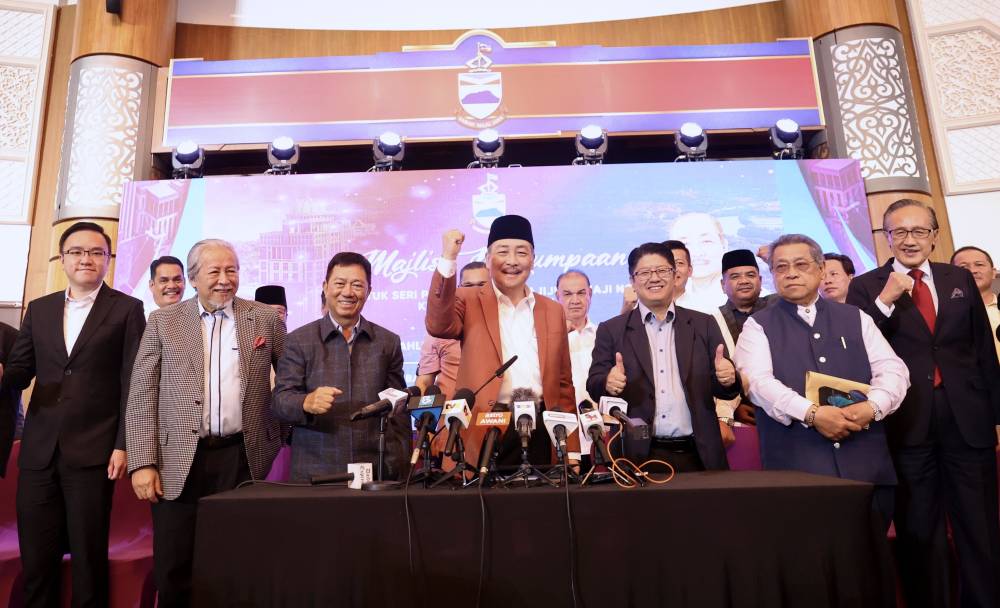
SHAH ALAM – The uncertainty surrounding the dissolution of the Sabah state legislative assembly (DUN) finally ended after Chief Minister Datuk Seri Hajiji Noor announced it on Monday.
The announcement, made at the Sabah State Administrative Centre (PPNS), officially sets the stage for the 17th Sabah state election (PRN17).
All eyes are now on the Election Commission (EC), which will convene a special meeting to determine the dates for nomination, early voting and polling day.
A total of 73 seats will be contested, with 1.786 million eligible voters — including 662,000 first-time voters — expected to cast their ballots.
This election will not only be a battle for political control but also a decisive moment that will shape Sabah’s direction for the next five years.
However, unlike previous polls, this state election is unfolding against a backdrop of political turbulence and shifting alliances.
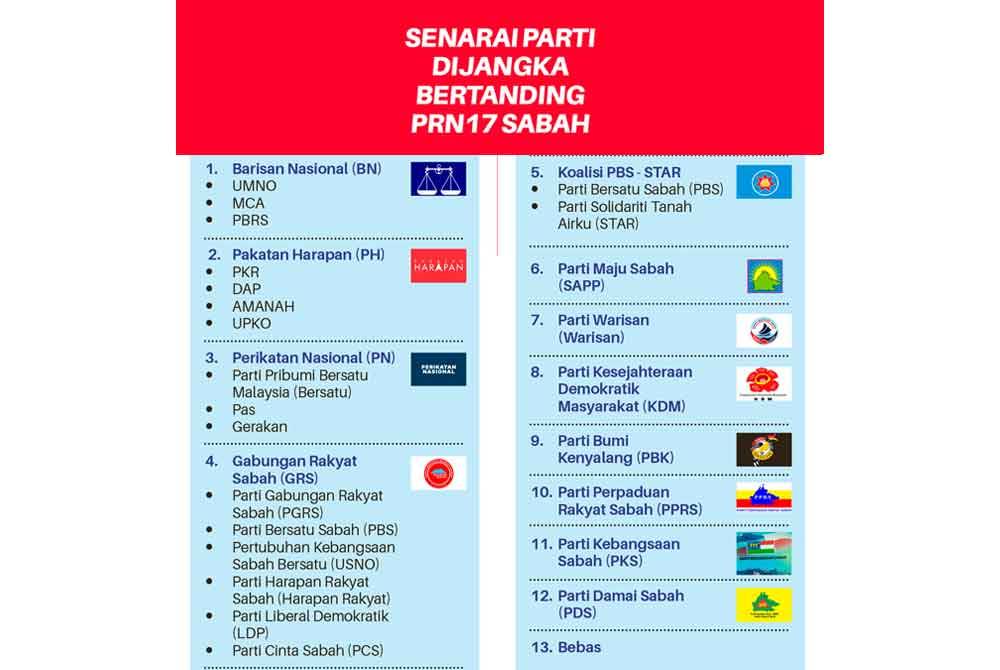
Major coalitions such as Gabungan Rakyat Sabah (GRS), Pakatan Harapan (PH), Barisan Nasional (BN) and Warisan are now contesting independently.
Recently, Parti Solidariti Tanah Airku (Star) and Parti Maju Sabah (SAPP) withdrew from the Sabah government to go solo, signalling widening rifts within the ruling bloc.
GRS has lost two of its eight original component parties, leaving only six within the coalition — Parti Gabungan Rakyat Sabah (PGRS), Parti Bersatu Sabah (PBS), Pertubuhan Kebangsaan Sabah Bersatu (Usno), Parti Harapan Rakyat Sabah (Harapan Rakyat), Parti Liberal Demokratik (LDP) and Parti Cinta Sabah (PCS).
Given the current political climate, analysts believe no single party will achieve a simple majority of 37 seats, potentially paving the way for a new post-election power configuration.
At the same time, several parties are grappling with controversies. GRS, in particular, has faced growing pressure due to internal divisions and recent political scandals, including a viral video clip alleging corruption involving some of its leaders.
BN, meanwhile, is facing a leadership crisis, having yet to name its Chief Minister candidate despite confirming it will contest independently.
Warisan, while seen as more organised and stable, continues to face scrutiny over past allegations such as the alleged issuance of MyKad to foreigners and the cancellation of several public projects.
These shifting dynamics suggest that parties and candidates will need to adapt their campaign narratives and better understand local sentiments ahead of polling day.
Analyst predicts coalition government
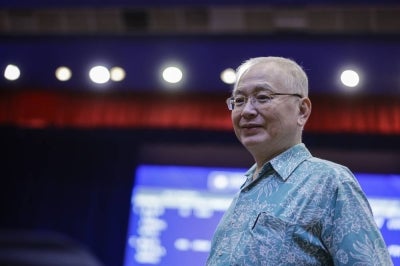
Universiti Malaysia Sabah (UMS) political analyst Associate Professor Dr Romzi Ationg predicts that no single party will win more than 25 seats in the state election.

He said the outcome would likely lead to the formation of a coalition government, as a minimum of 37 seats is required for any party to govern the state on its own.
“So far, I can see a maximum of one party getting 25 seats, but none will exceed that number. However, this is not conclusive as it’s still early.
"For example, even if a party is unpopular, it could still win if it fields good candidates,” he said.
“This is based on current conditions — it’s very difficult for any party to win 37 seats. Even reaching 25 seats will be tough.
"So, the post-election government will likely be a coalition,” he added.
Romzi also said Warisan, GRS and BN are among the most likely parties to form the next government.
“This is because each of these parties has its own strengths, for instance, Warisan still dominates the East Coast areas of Sabah.
“GRS could secure certain seats, making it part of a coalition. The same goes for BN Sabah — we shouldn’t underestimate them.
“I think apart from these major parties, smaller ones could also join to form a coalition government,” he explained.
He also cautioned that cooperation between PH, GRS and BN could create confusion among voters.
“However, I hope it will not have a negative impact,” he said.
Parties express confidence ahead of Polls
GRS Youth Chief Datuk Jonnybone Kurum expressed confidence that the coalition would remain in government after the election, citing its efficient administration.

He said it was too soon to predict the outcome of any new political alignments following the assembly’s dissolution.
“Our main focus is to strengthen existing cooperation. Political stability requires collaboration and we’ve already established that platform.
"But when others make unilateral moves, that’s beyond our control.
“We’ve worked hard to unite all local parties. Umno-BN Sabah had the chance to shape Sabah’s future but decided to leave.
"Warisan too has opportunities to improve its weaknesses.
“BN had joined GRS before but left again. They didn’t want to be deputies — they wanted to be Chief Minister.
"They think holding that position solves everything, but it doesn’t work that way,” he said.
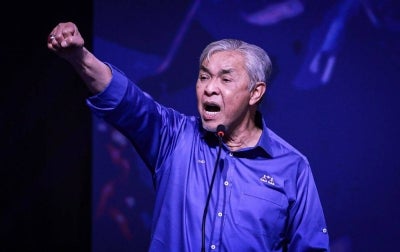
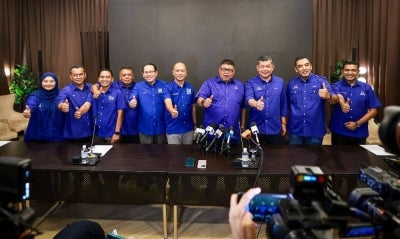
Sabah Umno Chief Datuk Seri Bung Moktar Radin said the dissolution of the assembly had been eagerly awaited by the people of Sabah.
“We will strengthen our machinery in all constituencies. I am confident that BN will be able to reclaim Sabah this time,” he said.
Download Sinar Daily application.Click Here!