Hamas-Israel ceasefire marks turning point, but questions remain over Israel's commitment - Experts
Questions remain over Israel's willingness to fully adhere to the peace plan.

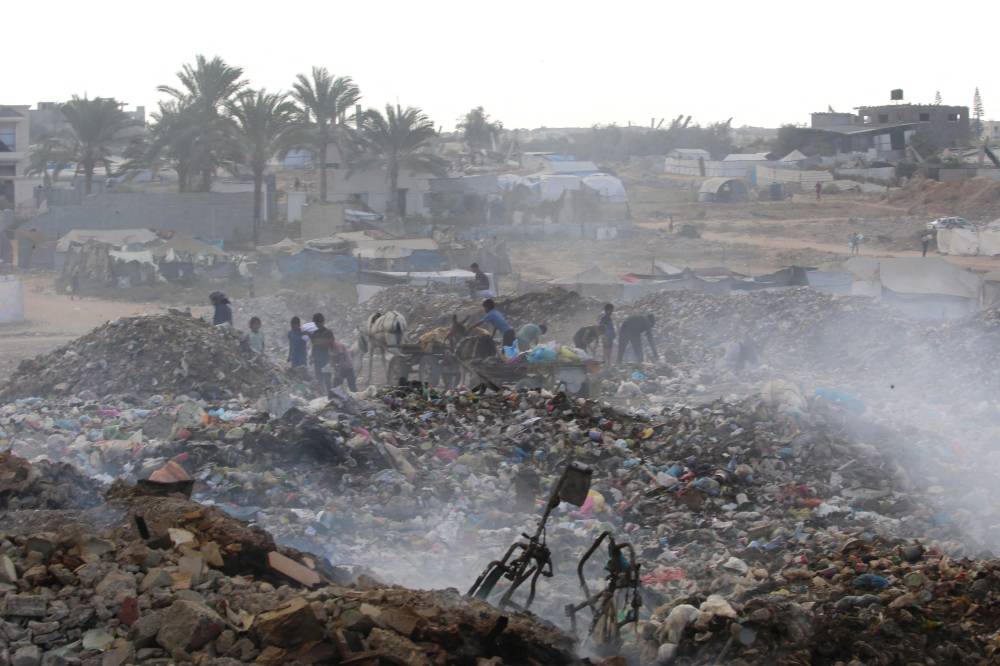
KUALA LUMPUR - The first phase of the ceasefire agreement between Hamas and Israel is being viewed as a long-sought positive development that could pave the way for the rehabilitation of the war-torn enclave and the withdrawal of Zionist regime troops.
Leading geopolitical expert Prof James Chin from the University of Tasmania said, however, questions remain over Israel's willingness to fully adhere to the peace plan, given Prime Minister Benjamin Netanyahu’s longstanding opposition to any settlement that limits Israel’s control over Gaza.
He noted that Netanyahu has consistently maintained that his primary objective is to destroy Hamas and exert direct control over Gaza, a goal that the current peace roadmap does not support.
"He (Netanyahu) just wants to destroy Hamas and control Gaza directly. This peace plan doesn't allow him to control Gaza directly,” he said.
Hamas announced that an agreement had been reached on Thursday, outlining an end to the war in Gaza, the withdrawal of occupying forces, the entry of humanitarian aid, and a prisoner exchange.
The group's remarks came right after United States (US) President Donald Trump announced on Wednesday that Israel and the Palestinian group Hamas signed off on the first phase of a US-proposed Gaza deal.
According to Chin, under the proposed plan, the administration of Gaza will be placed in the hands of a group of appointed international figures, with Trump and former British Prime Minister Tony Blair expected to play key roles.
"After two years of intense conflict, the fighting capacity of Palestinian forces has been largely depleted, with many combatants either killed or captured.
"The remaining population in Gaza now consists mainly of elderly people, women and children,” he said.
Chin noted that neighbouring countries have also grown weary of the prolonged war, which has had spillover effects on regional stability.
"Egypt and Jordan, in particular, have suffered economically and politically, while Qatar recently came under Israeli airstrikes linked to the ongoing conflict,” he said.
Chin stressed that after two years, it is clear that there are no real winners in this war.
"Israel may claim a military victory, but the threats it faces remain unchanged, while Hamas’s legacy of resistance has arguably been strengthened.
"The greatest victims, however, are the Palestinian civilians,” said Chin.
Meanwhile, geostrategic expert Prof Dr Azmi Hassan said the success in reaching the first phase of the agreement is seen as an initial effort to halt attacks in Gaza City and create a calm atmosphere in the area, even though sporadic strikes can still be heard at present.
He said this first phase is crucial as it lays the foundation for a long-term plan to ensure the complete withdrawal of Israeli forces from Gaza, as well as discussions on the future of Hamas and the security of the Palestinian people.
"We should give credit to US President Trump because he forced both sides - Netanyahu and Hamas - through Qatar, Egypt, and Türkiye (all three being mediators).
"We give credit to Trump for having the courage to pressure Netanyahu on this matter. But let’s look at the first phase first - once it is agreed upon, it can be seen as a good sign that a long-term solution may be achieved,” he said.
Although Israel is known for frequently violating peace agreements, Azmi expressed confidence that this first phase can be implemented due to the pressure President Trump applied on Israel.
"Trump wants the negotiations to be concluded by this weekend. So the pressure he applied on both Israel and Hamas is extremely strong, and in this regard, Netanyahu is seen as being able to ‘hide’ his defeat, since his main objective was to eliminate Hamas 100 per cent (completely).
"So in this situation, I believe Israel, under pressure from President Trump, who wanted the least - a ceasefire - to be implemented under the first phase - has compelled Netanyahu to comply,” he said.
To date, more than 11,000 Palestinians are being held in Israeli prisons, including 3,544 detained without trial, the news report said, citing the Israeli human rights group the Centre for the Defence of the Individual (HaMoked).
Since October 2023, Israeli attacks have killed nearly 67,200 Palestinians in the enclave, most of them women and children. - BERNAMA
Download Sinar Daily application.Click Here!


