Political analysts see 2026 Budget as fair yet cautious
The government wants to be seen as a principled, forward-looking administration focused on fiscal discipline, growth and tangible results for the people.
NUR ADNIN MAHALIM
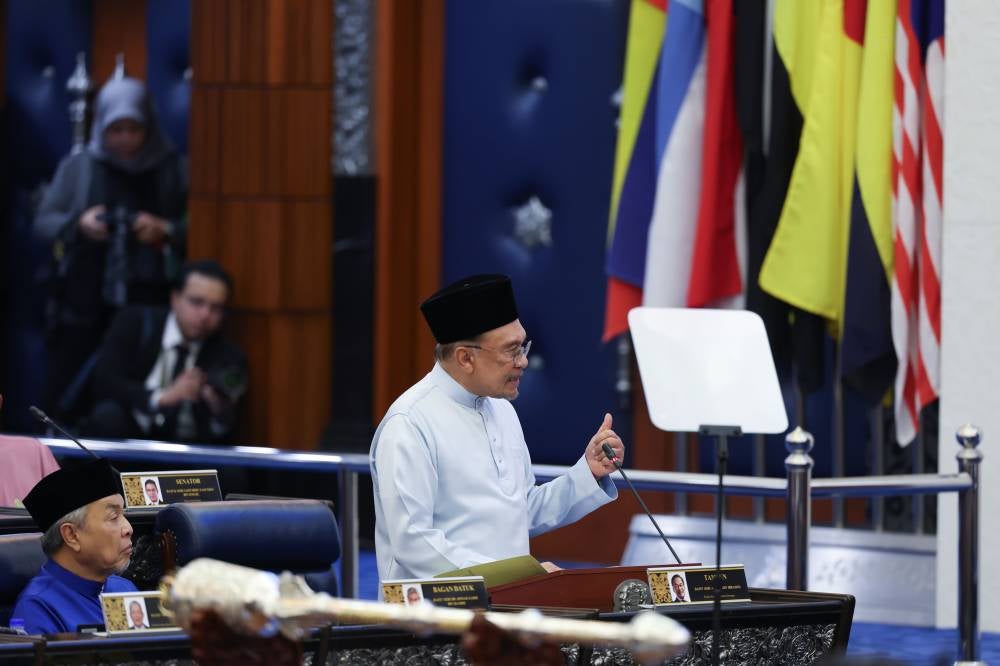
SHAH ALAM – The 2026 Budget demonstrates a disciplined and inclusive approach, with allocations for Chinese, Indian and Malay communities, while prioritising long-term structural reforms over populist spending.
Political analyst James Chin said the budget reflected fairness across communities, although he described the measures for the Chinese and Indian communities as largely symbolic.
He said the government had allocated funds to rebuild a Chinese school and provided toll exemptions for Deepavali.
He added that while such gestures were important for public perception, they were not necessarily substantial in terms of policy impact.
"When you look at the broader picture, many forms of tax relief apply to all Malaysians regardless of ethnicity.
"So even if the Prime Minister did not specifically mention Chinese or Indian communities, it doesn’t mean they were left out," he told Sinar Daily.
Chin said most rational Malaysians from these communities understood that they benefitted from general measures.
"For example, a large portion of student loans under the National Higher Education Fund Corporation (PTPTN) are taken by non-Malay students, since Malays and Bumiputera have other education funding options," he said.
He added that forgiving PTPTN loans for first-class graduates will benefit many Chinese and Indian students, reminding that those criticising the budget often overlook how such national policies work.
On the government's plan to reinstate PTPTN blacklisting for loan defaulters, he said most Malaysians would support it as long as it was being implemented fairly.
"It’s straightforward if they are employed since their tax records can be checked, but it would be harder for those running their own businesses," he said.
Overall, Chin said the government’s main priority appeared to be achieving a balanced budget, which was crucial for Malaysia’s long-term economic stability.
However, he said limited attention was given to small and medium enterprises (SMEs).
"SMEs are the backbone of Malaysia’s growth, yet there seems to be little for them in this budget," he said.
He also welcomed the government’s subsidy rationalisation plan, noting that it could save about RM15 billion.
However, he cautioned that the projected amount depended on the accuracy of the government’s calculations and that such estimates may not always be reliable.
Meanwhile, political analyst Associate Professor Dr Syaza Shukri said the budget should be viewed holistically, noting that most welfare programmes benefit all communities.
"In previous years, allocations have been made for Chinese and Tamil schools as well as non-Islamic houses of worship," she said.
"The government is taking a universal approach focused on ensuring that no one is left behind.
"I do not think this will affect public perception unless the opposition decides to exploit it for political gain," she added.
She described the 2026 Budget as cautious, moderate and pragmatic, highlighting the decision to forgive PTPTN loans for underprivileged students as a meaningful step towards a more inclusive higher education system.
Echoing similar sentiments, political analyst Arif Anwar Lokmanol Hakim said the allocations reflected the government’s continued commitment to multiracial inclusivity.
"Every year, the government provides allocations for the renovation or construction of non-Malay schools, business funds and government aid that benefit all races without discrimination," he said.
Such approach, he said was unlikely to stir racial sentiment or affect public perception.
He said the budget reflected a mature and disciplined fiscal approach.
"It is not a populist budget like in previous years, where cash assistance or subsidies were often increased," he said.
He noted that key aids such as the Sumbangan Asas Rahmah (SARA) and Sumbangan Tunai Rahmah (STR) remained at the same levels, showing the government’s focus on policy efficiency rather than expansion.
He said in last year’s budget, the government introduced several new taxes and balanced them with higher allocations to cushion the public.
In contrast, he said this year’s budget emphasised structural improvements and high-impact development.
Arif added that many state infrastructure projects were approved, alongside allocations for school upgrades and housing programmes under the Housing Credit Guarantee Scheme.
He also highlighted new measures such as the RM4,000 matching grant for old-to-new car trade-ins, the expansion of the Lemon Law and stronger investment in AI and digitalisation.
"These moves show a shift from aid-based policies to performance-driven governance, aiming to generate value and returns for the broader economy.
"Overall, the 2026 Budget may not deliver the usual feel-good announcements, but it sends a clear message: The government wants to be seen as a principled, forward-looking administration focused on fiscal discipline, growth and tangible results for the people," he said.
Yesterday, the Finance Ministry officially tabled the 2026 Budget, marking the fourth budget under the Madani administration and the first under the 13th Malaysia Plan (2026–2030).
Download Sinar Daily application.Click Here!


