Pandikar reminds Malaysians that MA63 was not made only for Sabah
He also criticised the use of MA63 as a recurring political issue that resurfaces during elections without real outcomes.

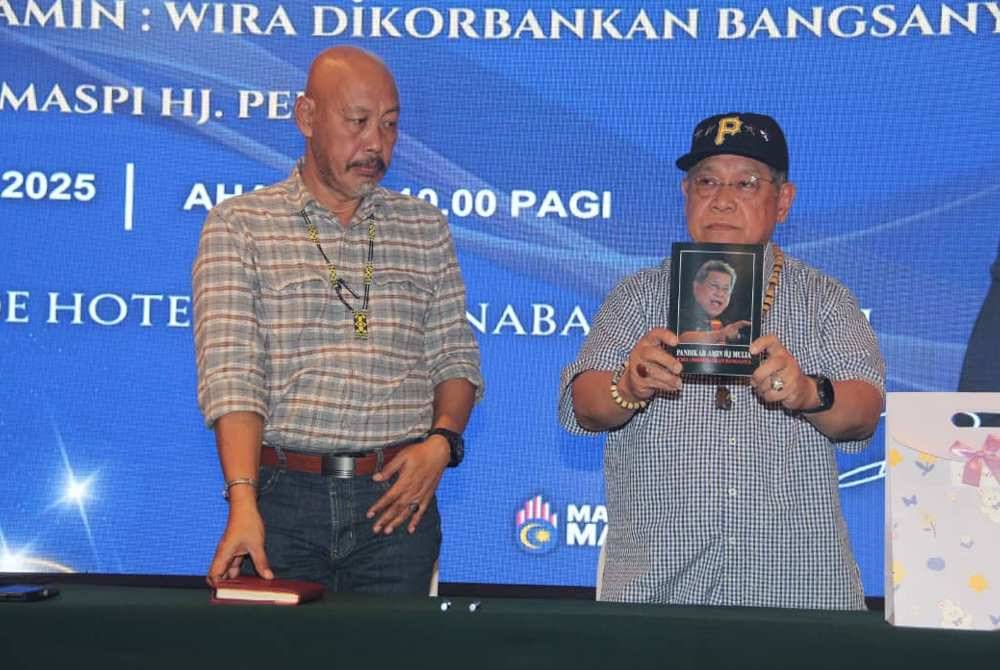
SHAH ALAM - Former Dewan Rakyat Speaker Tan Sri Pandikar Amin Mulia has reminded Malaysians that the Malaysia Agreement 1963 (MA63) should not be viewed as a document created solely for Sabahans, but as an agreement that united all territories that agreed to form Malaysia.
Speaking at the launch of the book "Pandikar Amin: Wira Dikorbankan Bangsanya" in Kota Kinabalu, the United Sabah National Organisation (Usno) president said understanding the true context of Malaysia’s formation was crucial, especially the position of Sabah and Sarawak when they joined the already independent Federation of Malaya.
“When we achieved independence, it was Malaya that led us. They had been independent since 1957 and were already much more developed than us. When Tunku Abdul Rahman signed the MA63, he did so on behalf of the eleven states of Malaya.
“So, if Sabah were to be considered equal in status to Malaya, it would not be fair, because Malaya already had eleven states,” he said.
Pandikar clarified that the MA63 should be viewed as an accord that united Sabah, Sarawak and Singapore with the states of the Federation of Malaya, rather than a special arrangement for Sabahans.
He stressed that the purpose of the agreement was to ensure that Sabah, Sarawak and Singapore joined the new nation as equal partners with the Malayan states.
“But when leaders here talk, it is as if MA63 was created only for the people of Sabah. Just imagine, if you were people of Malaya and were asked to sign an agreement purely for the benefit of Sabah, would you sign it?,” he questioned.
He clarified that his comments were not intended to deny Sabah’s constitutional rights, including the 40 per cent state revenue entitlement that remained a major point of contention in MA63 discussions.
“Of course Sabah has its rights. That is already in the constitution. One of them, as everyone knows, is the 40 per cent state revenue. But within MA63 itself, it must be implemented fairly and based on the capacity of the federal government.
“Because when Malaysia is viewed by the world, the member of the United Nations is not Sabah or Sarawak, but Malaysia,” he said.
Pandikar also criticised the use of MA63 as a recurring political issue that resurfaces during elections without real outcomes.
“Our leaders here, they just talk and the people vote. Oh, MA63! But how many years has it been? After the election, it is the same; roads unfinished, no water supply. Then they talk about MA63 again and we wait another five years,” he said.
Addressing the 40 per cent state revenue demand, Pandikar urged for a more balanced and mature perspective, saying the issue should not be seen purely as a financial claim.
“Now everyone says we have won the 40 per cent claim, that we have got the money. But if one side keeps demanding without wanting to compromise, how can that be fair? This is an agreement and both sides must understand each other.
“If we keep attacking the federal government every day, who loses in the end? This is why I do not follow Jeffrey (Datuk Seri Jeffrey Kitingan). He is my good friend, but I cannot agree with that approach,” he said.
In the newly launched book about him, Pandikar expressed gratitude to the author, Dr Maspi Peran and said he hoped the portrayal of his life and career would be positive.
“I would like to thank the author of this book because no one has ever written about my story before. I have not had the chance to read it yet, but hopefully, everything written inside is good,” he said.
Maspi explained that his book aimed to highlight Pandikar’s leadership legacy and his enduring influence in Sabah’s political and social history.
“This book explains that his legacy is not just about buildings or bridges, but about the struggle and values of leadership; just like the examples I mentioned earlier, Mandela and Mahatma Gandhi.
“I wrote this not because we come from the same ethnic group, but because he is a figure who deserves recognition,” he added.
Maspi said the book was written out of appreciation, not personal connection.
Download Sinar Daily application.Click Here!