Sabahans demand real solutions as road, water and electricity problems persist for decades
As elections near, residents demand real action on the state’s chronic road, water and power woes.

SANDAKAN – Sabahans are becoming increasingly vocal about the persistent “three-in-one” issues of roads, water and electricity that continue to disrupt their daily lives, despite repeated promises of solutions during every election season.
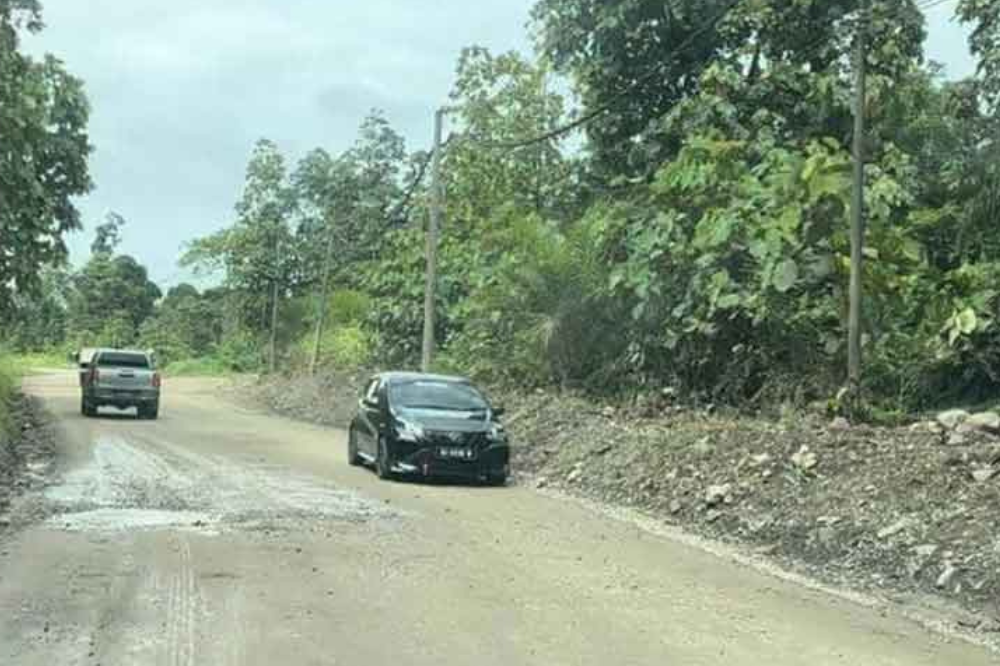
For Abd Rashid Salleh, 44, the condition of Sabah’s roads remains far from satisfactory, especially the routes he frequently uses from Kudat to Pitas and Kudat to Sandakan.
“From the past until now, the situation is almost the same. Still full of potholes, uneven and bumpy.
“There are repair works, but they don’t last. It gets damaged again, then patched again. It just repeats. And that’s not even counting the roads that are currently being upgraded,” he told Sinar Harian on Monday.
Rashid stressed that overall, the quality of roads in Sabah remained worrying and often exposes users to risks.
Meanwhile, Henry Jainal from Batu Sapi shared an even heavier experience involving all three critical issues, which continue to occur until today.
But to him, the water issue is the most burdensome for residents.
“We once had no water supply for up to ten days. Imagine having to buy mineral water just to bathe or clean up waste,” he said.
He added that water disruptions were no longer unusual; instead, they happened almost every week or at least every month.
“Every time we ask the relevant authorities, the answer is always the same... maintenance, maintenance and maintenance. That’s the line we hear whenever there’s a water disruption,” he said.
He hopes that the new government formed after the upcoming state polls will be bold enough to overhaul water management in Sabah.
“This isn’t just about funding. The problem lies in the state-level management. Sabah needs immediate reform,” he stressed.
The three-in-one issue has now become the focal point of various parties in Sabah’s 17th State Election and is viewed as a legacy problem that requires major investment and long-term planning to solve.
The issues are not new, having persisted for a long time and requiring continuous commitment from the government.
Sabah Chief Minister Datuk Seri Hajiji Noor, when officiating the 2023 Sulaman Division Gagasan Rakyat Annual Meeting previously, emphasised that the state government is taking steps to increase water and electricity capacity.
He expressed confidence that the issues can be resolved within two to three years, in line with the Sabah government’s priority of improving the people’s quality of life.
Despite ongoing public complaints, leaders of major parties contesting in this state election are once again declaring their commitment to addressing the three main issues.
Warisan President Datuk Seri Mohd Shafie Apdal, for instance, pledged to resolve the water issue within a year if given the mandate to govern again.
Meanwhile, Sabah Umno Chief Datuk Seri Bung Moktar Radin promised to resolve the issues within three years, adding that the road problem requires pressure on the Federal Government to expedite allocations.
He also previously stressed that these issues have persisted for 60 years but still remain unresolved despite changes in the state government and Chief Ministers over the decades.
Jalinan Qaseh Sabah Chairperson Datuk Marsya @ Norhaizah Abu Bakar, said that as a non-governmental organisation (NGO) working closely with grassroots communities, they view the ‘three-in-one’ issue as a social challenge that has a direct impact on people’s wellbeing.
“We see poverty in Sabah as structural poverty, not just due to low income, but also unequal development across districts.
“In rural, island and peri-urban areas, communities are still left behind in terms of basic infrastructure such as water supply, electricity and proper road access,” she told Sinar on Monday.
She added that this situation forces many residents, especially those in rural areas, to spend significantly more.
“For example, with poor road conditions, it becomes difficult for them to access healthcare, education or travel to town for business.
“As a result, high travel costs keep them trapped in a cycle of poverty because there is a price to pay every time they need to make these journeys,” she said.
She urged the government to place greater emphasis on upgrading and developing local industries so that people can benefit directly from them.
Download Sinar Daily application.Click Here!