Which party will dominate Sabah’s 73 state seats this Saturday?
Everything now lies in the hands of millions of Sabah voters from Banggi to Sebatik.

Sabah is witnessing intense political momentum as parties, coalitions and Independent candidates move into the final hours of campaigning ahead of the state election.
A total of 596 candidates from 24 political parties and Independent candidates will compete for 73 the Sabah State Legislative Assembly seats in this tomorrow's state election, making this edition one of the most intensed with multi-cornered battles in almost every constituency.
Warisan has emerged as the most aggressive party, fielding candidates in every seat, followed by Parti Impian Sabah (PIS) with 72 candidates, Gabungan Rakyat Sabah (GRS) with 55, Solidariti Tanah Airku (Star) with 46, Barisan Nasional (BN) with 45, Perikatan Nasional (PN) with 42, United Progressive Kinabalu Organisation (Upko) with 25 and Pakatan Harapan (PH) with 22 candidates, in addition to 74 Independent candidates who may shape unexpected outcomes.
A total of 73 seats were elected by the public while another six appointed seats will complete the composition of the State Assembly, making the outcome of this state election crucial in determining the stability of the new government.
Multi-cornered clashes were a key feature of this election, with several seats recording as many as 12 to 14 candidates.
This situation opened the possibility of narrow wins and the potential formation of a government through post-election negotiations.
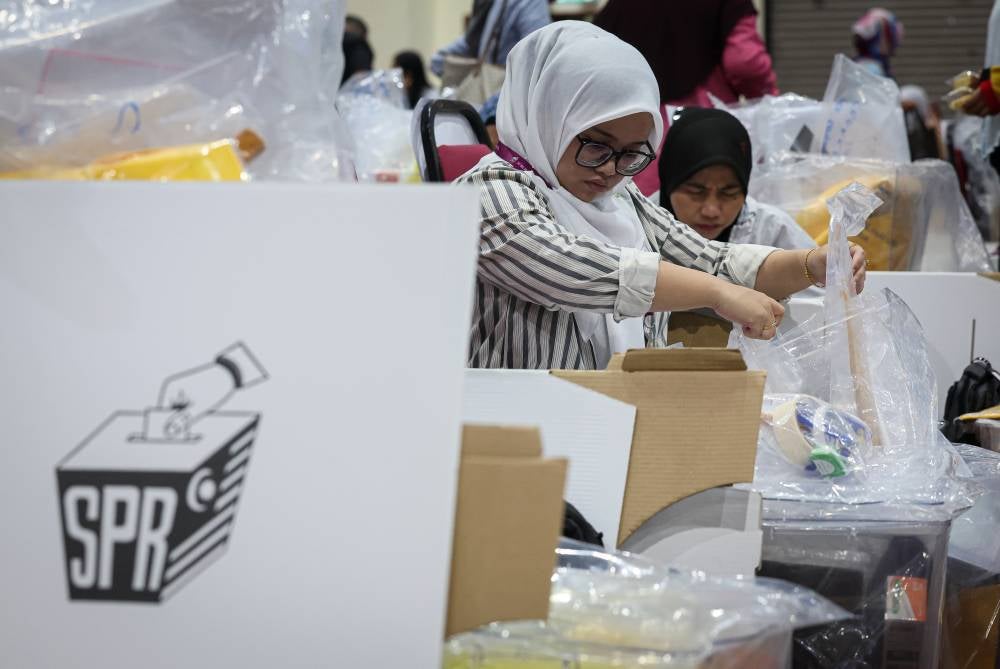
The Election Commission (EC) has allocated RM116.8 million to manage the state election, including the appointment of 33,002 election workers who will coordinate 882 normal polling centres and 58 early voting centres across the state.
For security, more than 12,000 police personnel will be deployed on polling day, including reinforcements from the Sarawak Contingent Police Headquarters and Bukit Aman to ensure a controlled, safe and provocation-free voting environment.
As of mid-campaign, more than 80 police reports were received involving damages to posters, flag wars and misuse of social media, although the police classified them as minor offences that remained under control.
Early voting on Nov 25 recorded a turnout of 92.5 per cent, involving 17,615 military and police personnel, General Operations Force (PGA) members and their spouses.
A total of 8,347 military personnel and spouses, as well as 10,696 police and PGA personnel and spouses, were eligible for early voting.
For postal votes, the EC issued 22,881 postal ballots, including 336 overseas postal votes for Malaysians residing abroad.
All votes must arrive before 5pm this Saturday to be counted.
More than 1.76 million registered voters will determine Sabah’s direction, with Undi18 youth voters expected to be key deciders in several urban and semi-urban seats.
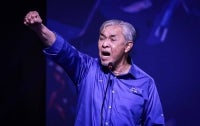
Two weeks of campaigning have seen an active atmosphere with major political figures attending ceramah, walkabouts and community programmes.
The flag war has also intensified in hotspot areas such as Kota Kinabalu, Sandakan, Tawau and Keningau.
Issues surrounding the Malaysia Agreement 1963 (MA63) and Sabah’s claim for the 40 per cent special grant have been the most dominant topics, with both the government and opposition blocs defending their respective records.
GRS emphasised continuity and stable cooperation with the Federal Government, while Warisan and PN claimed that the current government has failed to move quickly in fulfilling the state’s rights.
The narrative of "Sabah parties versus Malaya parties" has resurfaced, although Sabah’s political reality remained more complex as the state government coalition also included Peninsular-based parties such as PH and BN.
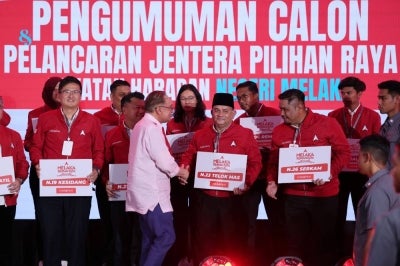
The visit by Prime Minister Datuk Seri Anwar Ibrahim to several key areas heightened campaign attention, including his reminder that confrontational politics against the Federal Government should not be excessively played up.
The opposition has focused on issues like the cost of living, job opportunities, clean water supply, road conditions and rural development when speaking to voters in interior and semi-urban areas.
At the same time, the controversy involving a support letter linked to the Prime Minister’s former senior political secretary also became campaign material as the opposing bloc questioned the integrity and transparency of the government.
Several seats such as Inanam, Api-Api, Kapayan, Bugaya, Karamunting, Kukusan and Sebatik were seen as key battlegrounds, as urban and semi-urban voter sentiment tends to shift based on national issues and candidate appeal.
With such a large composition of candidates, the intense competition opened the possibility that no coalition will secure a comfortable majority, potentially leading to prolonged negotiations after the results were announced.
This Saturday’s Sabah election does not only decide who will lead the state government, but also the future of Sabah’s relationship with the Federal Government, the direction of rural development and the implementation of MA63.
Everything now lies in the hands of millions of Sabah voters from Banggi to Sebatik.
Download Sinar Daily application.Click Here!