Sabah polls: No clear majority, coalition govt likely through negotiations - UiTM analysis
The report, titled "PRN Sabah 2025: Electoral Outlook and Strategic Implications. A Post-Nomination Assessment (Campaign Period)" indicates that no single coalition or party is expected to achieve a "clear plurality."

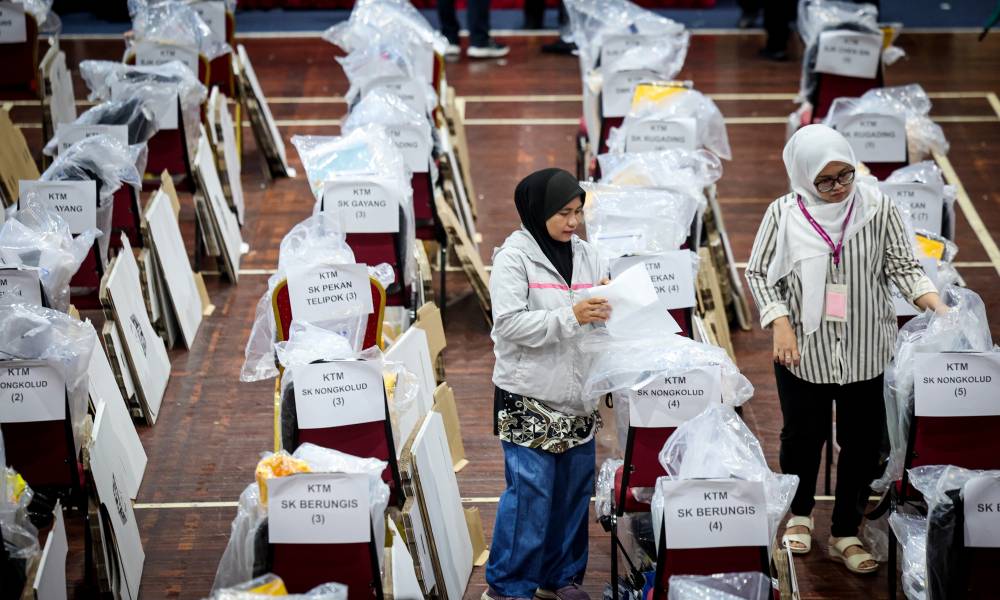
KOTA KINABALU - The 17th Sabah State Election is expected to produce a hung state assembly, paving the way for the formation of a government through negotiations between parties after the official results are announced, according to an analysis.
The post-nomination analysis by Universiti Teknologi MARA (UiTM) senior lecturer Dr Ismail Rakibe shows that the election is shaping up to be among the most fiercely contested in Sabah’s history, with a political landscape fragmented into multiple parties and coalitions.
The report, titled "PRN Sabah 2025: Electoral Outlook and Strategic Implications. A Post-Nomination Assessment (Campaign Period)" indicates that no single coalition or party is expected to achieve a "clear plurality."
According to the analysis, the election outcome is expected to be balanced, with both Barisan Nasional (BN) and Gabungan Rakyat Sabah (GRS) projected to win 18 seats each.
The remaining seats are divided among Parti Warisan (Warisan), Pakatan Harapan (PH), Perikatan Nasional (PN), other smaller local parties and independent candidates, creating a state assembly with several medium-sized blocs but no dominant party.
Warisan is projected to win 16 seats, PH 14, PN three, while the remaining four are expected to come from smaller parties and independents.
"The next Sabah government is likely to be formed through negotiations between parties after the election, rather than from a majority victory by a single party," the analysis said.
The final outcome is expected to depend on inter-party negotiations, bloc discussions, strategies of medium-sized blocs such as Warisan and PH, and agreements with smaller parties that could prove decisive.
The analysis also shows that the state election involves multi-cornered contests, minimal ideological differentiation, and strong candidate-centric voting, especially in semi-urban and rural areas.
The state election sees the most crowded field in the Tulid seat with 14 candidates, followed by Bandau, Tamparuli and Inanam (13 candidates each) and Banggi (12 candidates).
He said the change in voting patterns this time is also influenced by the inclusion of more than 660,000 new voters under Undi18 and automatic registration, now representing almost 30 per cent of Sabah’s total electorate.
He said surveys conducted during the campaign period identified two key factors driving small but significant changes in electoral dynamics: the demand for political stability and the voting patterns of young electors.
"These youths are seen to assess candidates based on integrity, performance and the ability to address daily issues such as water, electricity and roads.
"The desire for stability remains dominant, particularly among rural and semi-urban voters who want a more orderly and predictable administration," the report said.
Some 960,000 of the 1.76 million registered voters for this election are aged 18 to 39.
The report also shows that BN and GRS dominate young voters’ interest on social media, particularly on TikTok, Instagram Reels and Facebook Shorts, while PN and Warisan face challenges in campaign resources and digital outreach.
A total of 596 candidates are contesting for 73 seats in this election.
Of these, independent candidates are the largest group with 74, followed by Warisan (73), Parti Impian Sabah (PIS, 72), GRS (55), Parti Solidariti Tanah Airku (STAR, 46), BN (45), PN (42), Parti Kesejahteraan Demokratik Masyarakat (KDM, 40), United Progressive Kinabalu Organisation (UPKO, 25) and PH (22).
After the nomination period ended on Nov 15, PH confirmed contesting 22 seats. However, two days later, Abdul Halim Sidek Gulam Hassan from PKR, who was listed for Silam, withdrew.
The Election Commission (EC) stated that Abdul Halim’s withdrawal is not permitted under existing regulations, and his name remains on the ballot as the PH candidate for the seat.
Other parties contesting include Parti Kebangsaan Sabah (PKS, 20), Parti Kerjasama Anak Negeri (Anak Negeri, 17), Parti Perpaduan Rakyat Sabah (PPRS, 16), Parti Bumi Kenyalang (PBK, 14), Parti Rumpun Sabah (Rumpun, 7), Sabah Progressive Party (SAPP, 6), Sabah Peace Party (SPP, 5), Perjuangan Rakyat (PR, 6), Pertubuhan Gemilang Anak Sabah (GAS, 3), Parti Bangsa Malaysia (PBM, 3), Parti Aspirasi Rakyat Sarawak (Aspirasi, 3), while Parti Bersatu Sasa Malaysia (Bersama) and Pertubuhan Perpaduan Rakyat Kebangsaan Sabah (Perpaduan) fielded one candidate each.
Polling is tomorrow. - BERNAMA
Download Sinar Daily application.Click Here!