The privacy our children never consented to - 'Sharenting'
While we debate the balance between AI empowerment and protective bans, we must confront a more fundamental question: As adults, are we truly doing right by our children?


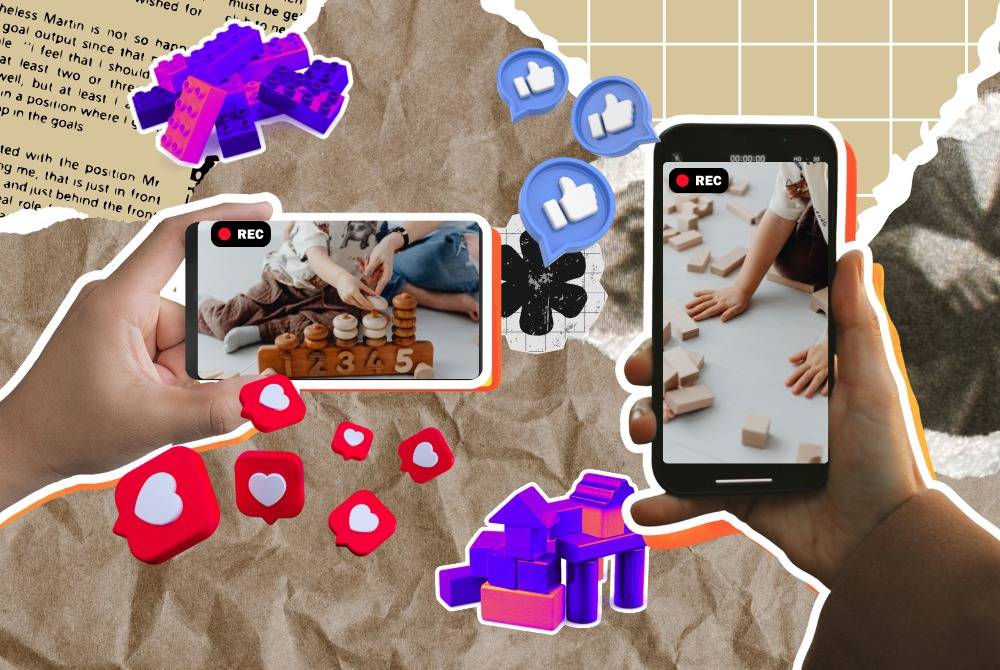
MALAYSIA’s bold move to enforce a nationwide ban on social media accounts for users under 16 starting in 2026, under the new Online Safety Act 2025, has drawn applause.
For many, it feels like a necessary step — an early shield against documented online harms such as cyberbullying, scams and sexual exploitation that plague the digital space.
But this move brings us to a crucial ethical crossroads, a kind of digital limbo.
While we debate the balance between AI empowerment and protective bans, we must confront a more fundamental question: As adults, are we truly doing right by our children?
The uncomfortable truth is this: while governments and tech companies wrestle with age verification and content moderation, one of the greatest threats to a child’s privacy and safety often begins much closer to home, in a parent’s own photo gallery.
The irony is hard to ignore. We fear external predators, yet we often unknowingly invite them in. This is the phenomenon of “sharenting” — the excessive sharing of children’s photos and personal details by their parents on social media.
By the time many children turn 13, much of their lives have already been documented online. Some have had their entire childhood published for public viewing from their first breath outside the womb, first steps and every major milestone preserved on Instagram and Facebook. Unfortunately, some even share 'funny moments' of poop accidents because 'my followers just need to know'.
Recent reports suggest that many children already have more than 1,300 images and data points of themselves online, creating a permanent, non-consensual digital footprint long before they understand what privacy means.
Every photo or video shared, whether it is a birthday post, a school uniform snapshot, a holiday beach photo or even an image taken inside the home quietly becomes part of that permanent digital record.
To a parent, it feels like sharing pride and joy. To the wrong person, it is raw material that can be copied, stored and analysed without your knowledge.
With the rise of artificial intelligence, this risk has grown far more serious. Law enforcement and cybersecurity reports show that even fully clothed, “innocent” images such as school portraits and swimming photos are being collected by online predators.
These images are not taken for nostalgia, but for manipulation. Criminals now use AI tools to generate realistic deepfakes and sexualised images of children, sometimes needing as few as 20 publicly available photos to produce convincing fake content.
The danger does not stop at manipulated images. Using open-source intelligence (OSINT), attackers can piece together a child’s life — their school name, daily routines, neighbourhoods, family members and even walking routes.
This has led to “digital kidnapping”, where strangers steal children’s photos to create fake online families, and the creation of synthetic identities used for fraud. In some cases, children become victims of identity theft long before they are old enough to understand what a bank account is.
The hardest truth is this: what feels like a harmless post can become a building block in a stranger’s file on your child. When a child’s face is shared publicly, it can unintentionally give predators the material they need to watch, track and archive.
While the proposed social media ban works as a macro-level barrier against platform-led harm, it cannot stop a parent from uploading a private photo into a WhatsApp group, which can easily be forwarded, screenshotted and spread far beyond its intended audience.
The ultimate risk to a child’s privacy does not always come from strangers. Sometimes, it begins with their own parents.
We must accept that our children deserve privacy, dignity and consent — even before they are old enough to ask for it.
Surveys across the world have found that many teenagers feel “violated” by oversharing and fear future bullying or professional consequences because of images posted before they were able to speak.
The real issue today is not just whether we should ban platforms or embrace AI. It is whether we, as parents, can practise the self-restraint and ethical awareness needed to protect our children’s digital future, while teaching them how to navigate the online world safely.
The first line of enforcement does not begin with government agencies. It begins with you — the adult, when you raise your phone, frame the shot of your child and hesitate before pressing “share”.
Like seriously, as a millennial mother, I understand the instinct. We grew up uploading 180 photos in a single Facebook album after a long night out because we wanted to immortalise those moments. But we were also warned of the truth: what you post on the internet stays there forever.
Maybe it is time we started believing it.
Protecting our children is not a part-time responsibility. It is a 24/7 job.
Download Sinar Daily application.Click Here!