Perlis MB appointment raises questions over PN’s stability
It has opened a new phase of leadership challenges, with the decision prompting open reactions from Pas leaders and revealing tensions within Perikatan Nasional (PN).


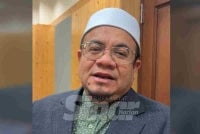
SHAH ALAM - The appointment of Kuala Perlis assemblyman from Bersatu, Abu Bakar Hamzah, as the new Perlis Menteri Besar (MB) marks more than a simple change of office.
It has opened a new phase of leadership challenges, with the decision prompting open reactions from Pas leaders and revealing tensions within Perikatan Nasional (PN).
Despite the swearing-in ceremony at Istana Arau on Sunday, the appointment immediately drew sharp remarks from Pas leaders on social media, raising questions about whether PN remains strong or is merely surviving on fragile support.
Pas deputy president Datuk Mohd Amar Nik Abdullah was among the most vocal, describing the coalition’s relationship as difficult to unite.
He wrote that “loyalty and friendship are two words that are not easily brought together.”
Pas elections director Datuk Seri Muhammad Sanusi Md Nor hinted at a political reassessment, urging the revival of Muafakat Nasional (MN) between Pas and Umno ahead of the 16th general election. This suggested that the coalition could not rely solely on Bersatu.
Political analyst from Universiti Sains Malaysia Professor Datuk Dr Sivamurugan Pandian said the appointment reflected the wisdom of the Raja of Perlis Tuanku Syed Sirajuddin Putra Jamalullail as guardian of the state constitution and a stabilising figure when the state assembly lacks a clear majority.
He explained that in such situations, appointing an assemblyman capable of securing majority support aligns with constitutional monarchy practice, prioritising governance over party interests.
“In cases where political parties fail to resolve internal conflicts maturely, the monarchy acts as a stabiliser,” he said.
Sivamurugan added that selecting Abu Bakar from Bersatu, rather than Pas, signalled a shift from party dominance to functional leadership, even though it created a challenging dynamic within PN.
“When the choice is not from the party holding the most seats, it indicates that the priority is given to administrative capability and ensuring the government continues to function.
“However, that mandate comes with significant challenges, as the new MB must prove political legitimacy through administrative performance, not just assembly numbers. He must quickly establish stable working relationships with civil servants to prevent prolonged crises,” he said.
He added that in the short term, the appointment could prevent the dissolution of the state assembly, a state election or political tension. In the long term, however, the state government remains vulnerable to new crises if assembly support is too thin or temporary.
“If left unchecked, internal bargaining politics could disrupt administrative focus and public welfare,” he said.
Commenting on Pas-Bersatu relations, Sivamurugan noted that the appointment triggered unease, as Pas, which holds nine assembly seats, suddenly lost its political advantage to Bersatu, which has only five.
“Pas suddenly lost political leverage, despite still holding more seats. This contradicts assurances previously expressed by Tan Sri Abdul Hadi Awang that the MB replacement would be from Pas,” he said, describing the development as self-defeating and opening the door to a loyalty crisis within PN.
The situation became more complicated after three state assembly seats, Chuping, Bintong and Guar Sanji were declared vacant and pending Election Commission decisions, with the possibility of by-elections or independent assemblymen altering the power balance and raising major questions over the MB’s position.
“Who will become MB after that? This shows the crisis is far from over,” he said.
UiTM Political Science Senior lecturer Dr Ariff Aizuddin Azlan added that Abu Bakar’s appointment does not close the door to conflict, but marks the early stage of larger challenges.
“If by-elections are held to fill the three vacant seats, it will be a test whether winning Pas candidates will support and cooperate with the MB or not,” he said.
Download Sinar Daily application.Click Here!