Malaysia's holistic terrorism rehabilitation approach proven effective - Ayob Khan
According to Ayob Khan, the Special Branch’s rehabilitation of militant detainees has been successful due to the existence of preventive laws such as the ISA.

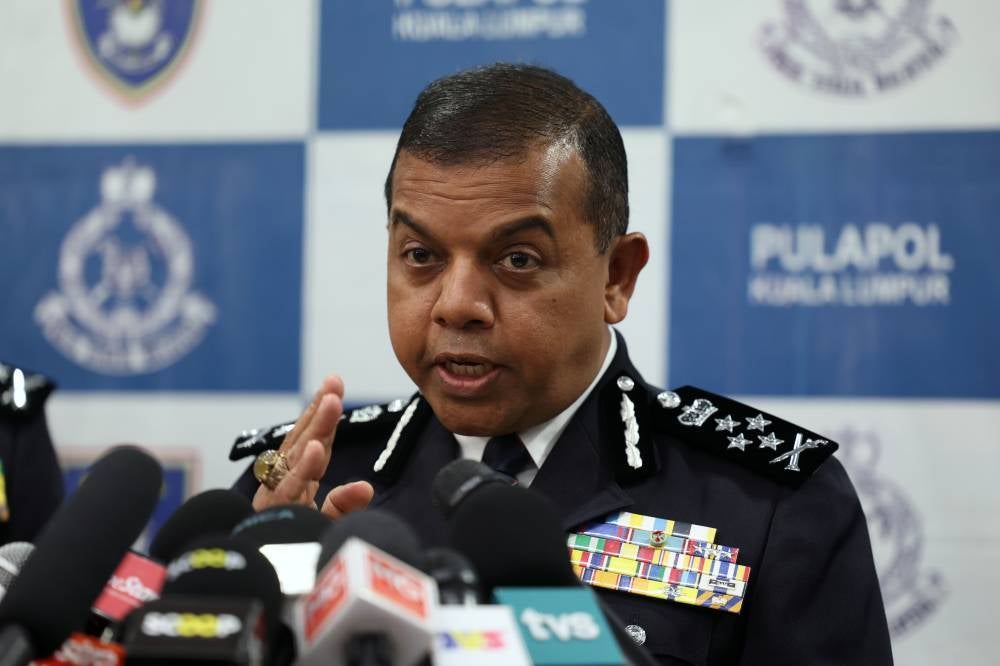
KUALA LUMPUR - The Royal Malaysia Police (PDRM) holistic rehabilitation approach to combating terrorism has proven effective, said Deputy Inspector-General of Police Tan Sri Ayob Khan Mydin Pitchay.
He said this was proven through an operation in 2003 with the return of 13 Malaysian teenagers linked to the Jemaah Islamiyah (JI) group from Pakistan.
In a Facebook post, he explained that although there was a request for the teenagers, aged 16 to 25, to be handed over to the United States for detention at Guantanamo Bay, Malaysia chose a different path.
He said the Special Branch (SB) worked to bring the teenagers back and detain them under the Internal Security Act (ISA), while providing rehabilitation programmes, including allowing them to continue their studies, demonstrating Malaysia’s holistic approach to addressing the threat of terrorism.
Ayob Khan recalled that in November 2003, Datuk Yusof Rahaman, then Director of the Special Branch, took the initiative to send a delegation consisting of himself, Dato' Anuar Basha (Deputy Director of the Special Branch), Dato' Aziz Hussin (ranked Supt at the time), and several other SB officers to Pakistan to negotiate and bring back the teenagers.
"After several rounds of discussions with Pakistani security forces in Islamabad, they finally agreed to hand over the 13 Malaysian citizens to be brought back to Malaysia,” he said, adding that the teenagers, who are the children of Malaysian JI members, were sent to Abu Bakar University in Karachi for further studies.
He explained that top JI leaders had a vision to ensure the continuity of the JI struggle.
Starting in the mid-1990s, children of JI members were sent to Pakistan for further studies there and during the semester breaks, they would sneak into Afghanistan for military training at Al-Qaeda and Lashkar-e-Taiba camps.
"This group, known as the Al-Ghuraba cell, was intended to serve as a backup line to lead JI upon returning to Malaysia,” he said, adding that the 13 teenagers returned on Dec 9, 2003, escorted by a Special Branch team on a special flight.
Upon their return, they were issued either Detention Orders, Restriction Orders, or released unconditionally. Those sitting for the Sijil Pelajaran Malaysia (SPM) were provided tutors to prepare them for the examination.
"Four of them excelled in the SPM and entered local public universities (IPTA), one continued at a private college, and the rest are engaged in various businesses or are self-employed,” he said.
According to Ayob Khan, the Special Branch’s rehabilitation of militant detainees has been successful due to the existence of preventive laws such as the ISA.
He added that the Special Branch’s rehabilitation programmes for terrorists and militant detainees are among the best regionally and globally, with many foreign enforcement agencies visiting Malaysia to learn from its methods and approaches. - BERNAMA
Download Sinar Daily application.Click Here!