'Hamzah might form new party' – Bersatu associate wing chief
As tensions between party president Tan Sri Muhyiddin Yassin and his deputy continue to draw attention, public discourse has shifted to broader questions.


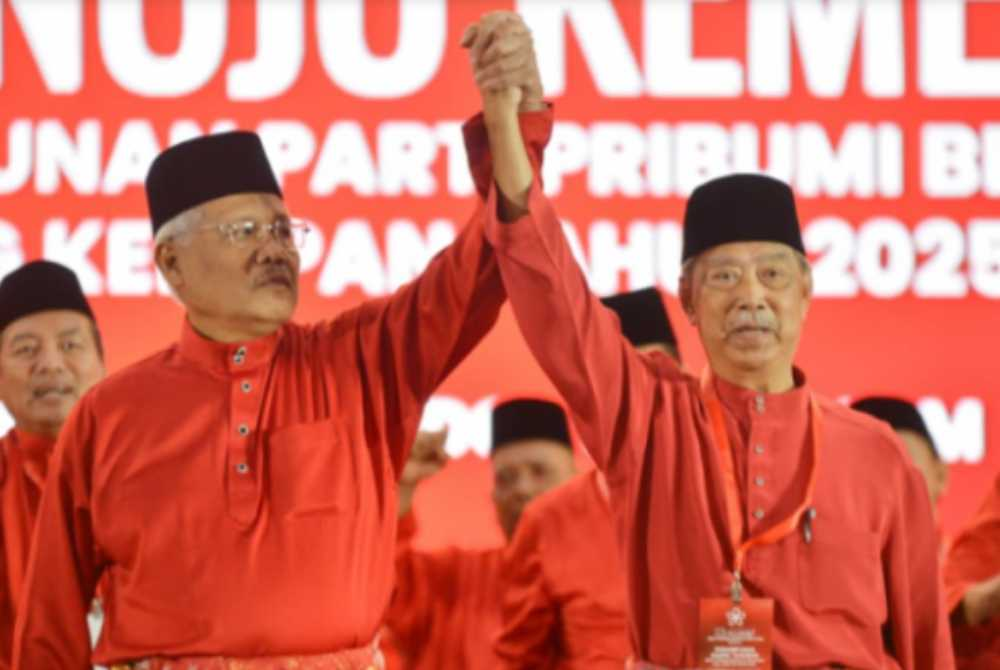
SHAH ALAM - Speculation that Opposition Leader Datuk Seri Hamzah Zainuddin may be expelled by the Disciplinary Board of Parti Pribumi Bersatu Malaysia (Bersatu) is not merely an internal party issue.
For the second time, Bersatu’s Disciplinary Board has summoned Hamzah, who is currently overseas, to attend a hearing scheduled last Thursday based on four separate complaints, three dated Feb 5 and one dated Sept 30, last year.
The development has the potential to trigger major repercussions for the opposition political landscape, particularly the future of Perikatan Nasional (PN) and the balance of checks and balances in Parliament.
As tensions between party president Tan Sri Muhyiddin Yassin and his deputy continue to draw attention, public discourse has shifted to broader questions.
What countermeasures might Hamzah take if the expulsion process against him materialises? What would be the key implications for Bersatu, PN and possibly a new national political landscape?
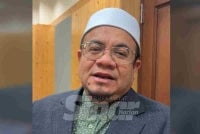
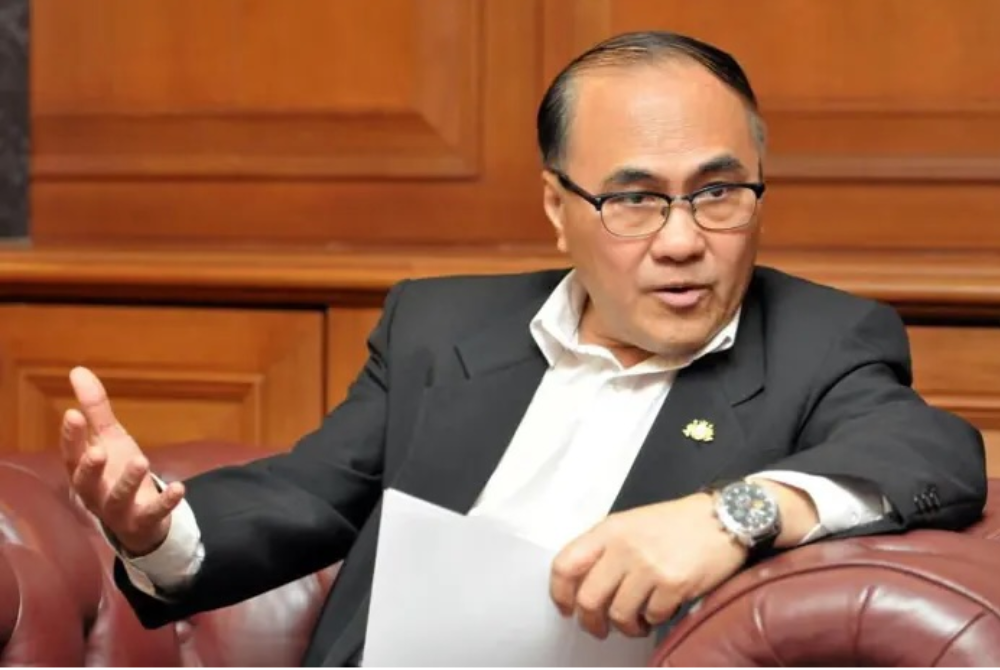
Bersatu associate wing chief Datuk Dr Chong Fatt Full acknowledged that narratives have been circulating at the grassroots level claiming that Hamzah should be expelled for allegedly wanting to bring Bersatu back to Umno, including stories of a meeting in Bangkok, Thailand, with Umno leaders.
He added that another narrative being spread alleges that Bersatu secretary-general Datuk Seri Mohamed Azmin Ali had met Prime Minister Datuk Seri Anwar Ibrahim and planned to persuade Muhyiddin to bring the party into the unity government.
Chong stressed that the spread of these two differing narratives is not new and has long been played up by camps aligned with Muhyiddin and Hamzah.
"Personally, I do not agree with making reckless assumptions. Assumptions can cause things that never happened to appear as though they are true.
"Sometimes, a person who has no intention of leaving a party is forced by circumstances until they eventually leave or are expelled. Such allegations and labels only worsen the situation," he told Sinar.
Chong admitted concerns that a radical expulsion process could spark a major split that would ultimately weaken the party itself.
He said removing Hamzah would have a much bigger impact compared to the earlier expulsion of Tasek Gelugor MP Datuk Wan Saiful Wan Jan and Indera Mahkota MP Datuk Saifuddin Abdullah, as well as the suspension of Machang MP Wan Ahmad Fayshal Wan Ahmad Kamal.
"At the same time, I believe that both Muhyiddin and Hamzah already have their own strategic plans in facing this internal clash," he said.
In politics, the expulsion of a senior figure is rarely the end. It often marks the beginning of a power realignment.
As such, Chong believes that if Hamzah is removed, at least four realistic counter-moves could take place. The first possibility is internal consolidation, where Hamzah may choose to rally supporters within the party to institutionally challenge the decision.
"This move risks prolonging the conflict, but it could help him maintain influence within Bersatu’s structure.
"Second, the formation of a new political axis. With his extensive network and experience, Hamzah could build a cross-party support bloc or even one within PN itself. This scenario could alter the internal balance of power within the coalition," he said.
Chong suggested that Hamzah might pursue a third counter-strategy, the establishment of an alternative political platform.
Although drastic, he noted that Malaysian political history shows that new parties often emerge from internal conflicts, with personality strength and supporter networks being key determinants of survival.
"Fourth, a renegotiation strategy. Expulsion could also become a catalyst for compromise, whether through internal mediation or political pressure that ultimately leads to a more pragmatic resolution," he added.
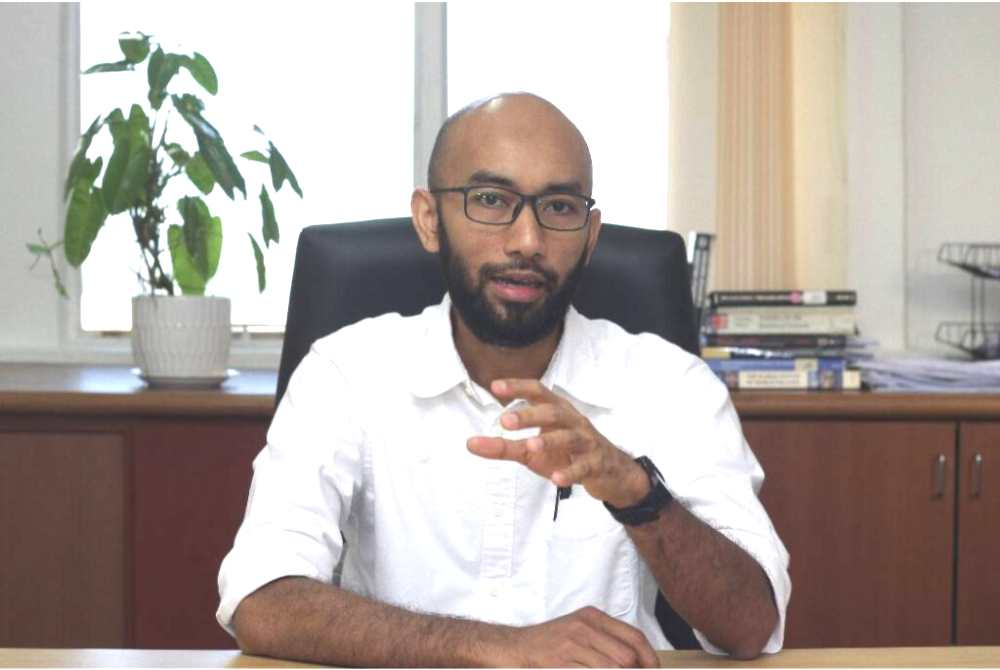
Meanwhile, Universiti Teknologi Mara (UiTM) senior lecturer in liberal communication Dr A Aziz Azizam described the crisis as an internal bleeding conflict that should not be taken lightly.
He said the weakening of the opposition due to internal strife would affect the democratic system’s checks and balances.
"In this context, Hamzah’s expulsion is not merely a personality issue but touches on the stability of political institutions as a whole, including the opposition bloc.
"Compared to previous episodes involving the removal of other figures, Hamzah’s position as a strategic player makes the impact more profound. Party morale, supporter confidence and public perception could suffer if the conflict is seen as being poorly managed.
"In reality, the expulsion of a senior figure opens the door to competition for opportunities and positions. Vacant seats and strategic roles are not merely symbolic but carry significant weight in political manoeuvring. This is where the risk of fragmentation becomes most apparent," he said.
Download Sinar Daily application.Click Here!