What happened this weekend in the Iran–Israel–US attacks
US President Donald Trump said the operation would continue "as long as necessary" to dismantle Iran’s missile industry, naval forces and nuclear capabilities.


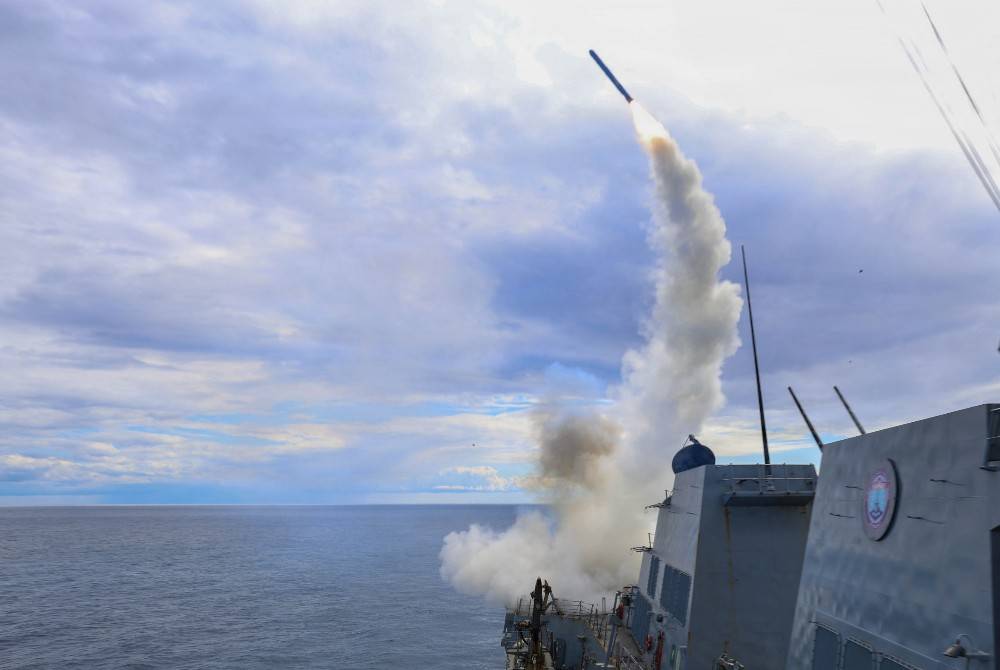
SHAH ALAM – The United States (US) and Israel launched a large‑scale joint military operation against Iran on Saturday, resulting in unprecedented violence across the Middle East and retaliation by Tehran that reverberated throughout the region and beyond.
The operation began early on Feb 28 with coordinated air and missile strikes targeting key military, defence and intelligence infrastructure in Tehran and other major cities including Isfahan, Qom, Kermanshah and Tabriz.
Explosions were reported across multiple provinces, with Iran’s air defence systems and ballistic missile arrays among the primary targets.
Iranian state media confirmed that Supreme Leader Ayatollah Ali Khamenei was killed in the initial assault, along with several senior military and security officials, including Defence Minister Aziz Nasirzadeh and Islamic Revolutionary Guard Corps (IRGC) commander Mohammad Pakpour.
Iran's Parliament Speaker Mohammad Bagher Ghalibaf stated that contingency plans had been prepared for leadership succession, while Ali Larijani, secretary of Iran’s Supreme National Security Council said an interim leadership council would oversee the selection of a new supreme leader.
The strikes reportedly hit sites linked to Iran’s missile programme and Revolutionary Guard command centres.
A missile attack also struck the Shajareh Tayyebeh girls’ elementary school in Minab province, killing scores of children, according to Iranian media.
The Iranian Red Crescent later reported that attacks across 24 provinces had killed 201 people and injured 747.
In response, Iran launched retaliatory missile and drone strikes against Israel and American military facilities across the Gulf, including in Bahrain, Kuwait, Qatar and the United Arab Emirates.
Explosions were reported in northern Israel, including Haifa, where civilians were ordered into shelters, while Iranian media claimed the destruction of a US radar installation in Qatar.
The IRGC said it fired four ballistic missiles at the USS Abraham Lincoln and targeted three oil tankers belonging to the US and Britain in the Gulf and Strait of Hormuz.
US President Donald Trump said the operation would continue "as long as necessary" to dismantle Iran’s missile industry, naval forces and nuclear capabilities.
Israeli Defence Minister Israel Katz confirmed a "preemptive" strike and declared a nationwide state of emergency, with air raid sirens sounding across the country.
International reactions were swift.
United Nations secretary‑general António Guterres called for an immediate halt to hostilities, warning that continued escalation could endanger civilians and destabilise global security.
Western governments urged restraint and condemned the attacks targeting schools and civilian infrastructure.
Download Sinar Daily application.Click Here!