Middle East crisis may shape GE narratives as parties quietly enter election mode, analysts say
Growing Middle East crisis could become a defining backdrop to the next general election, shaping how leaders position themselves on stability, leadership and public trust as parties quietly shift into election readiness mode.



SHAH ALAM – Political parties are preparing for more than just an election.
Political analysts said the growing Middle East crisis could become a defining backdrop to the next general election, shaping how leaders position themselves on stability, leadership and public trust as parties quietly shift into election readiness mode.
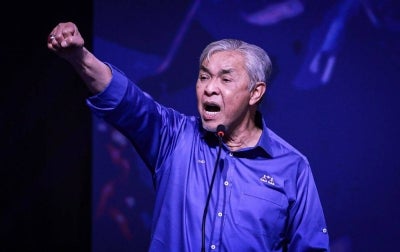
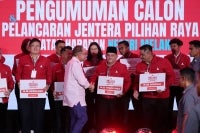
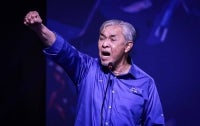
Universiti Teknologi Mara (UiTM) Faculty of Communication and Media Studies professor Datuk Dr Ismail Sualman said recent statements by Umno president Datuk Seri Ahmad Zahid Hamidi regarding election preparations, along with indications that DAP’s machinery was on standby, carried strong political significance.
He said such developments often reflected growing internal discussions surrounding election timing, even if they did not necessarily confirm that Parliament would be dissolved soon.
“Political parties typically activate machinery early to strengthen grassroots mobilisation, voter engagement, candidate selection and narrative management.
“These developments suggest political actors are increasingly entering election readiness mode,” he said.
Ismail added that the unity government was likely evaluating several factors before deciding on the most suitable timing for the next polls, including economic conditions, public sentiment, opposition strength and international developments.
He said the ongoing Middle East crisis could influence campaign narratives due to its emotional and political resonance among Malaysians, particularly on issues involving Palestine and humanitarian concerns.
“Political parties may emphasise humanitarian solidarity, Islamic diplomacy and Malaysia’s foreign policy stance.
“Leaders may also attempt to portray themselves as defenders of international justice and humanitarian values,” he said.
However, he stressed that while international issues could shape emotional sentiment and political discourse, Malaysian voters historically remained heavily influenced by domestic concerns such as cost of living, inflation, employment opportunities, governance and economic stability.
“As a result, the Middle East issue may become an important supplementary narrative during campaigns, but it is unlikely to completely overshadow bread-and-butter concerns affecting daily life,” he said.
Meanwhile, political analyst Dr Oh Ei Sun said all parties were naturally beginning to prepare for the next general election as the current administration had at most only around a year and a half remaining in its term.
He said the Middle East crisis could influence voter sentiment in multiple ways, particularly through public reactions towards the United States (US) and broader geopolitical tensions.
“The crisis provides the latest sociopolitical vent for the latent and locally omnipresent anti-American sentiments of both rightist conservatives and left-leaning reformers alike,” he said.
Oh said parties or political figures perceived as being too close to the US, or insufficiently critical of it, could face pushback from segments of voters.
“There is competition towards distancing themselves away from America or things American,” he added.
Beyond foreign policy narratives, he said the economic pressures triggered by global instability could also affect perceptions towards the current government.
“The economic difficulties induced by the crisis will inexplicably be blamed on Anwar and his team,” he said.
Oh noted that if Prime Minister Datuk Seri Anwar Ibrahim delayed the general election until later in the government’s term, it could either allow the administration enough time to ride out the crisis or risk being overtaken by worsening public dissatisfaction.
Meanwhile, Ismail said parties within the unity government currently held some strategic advantage as they could campaign on themes of stability, moderation and continuity amid global uncertainty.
He said Umno may attempt to reposition itself as a stabilising Malay political force, while Pakatan Harapan parties such as DAP and PKR were expected to emphasise governance reform, institutional stability and economic resilience.
At the same time, he said Perikatan Nasional would likely continue leveraging issues surrounding identity politics, public dissatisfaction over economic pressures and governance concerns.
“Their ability to mobilise grassroots sentiment, especially through digital platforms and younger voters, remains an important factor,” he said.
Ismail added that global crises often pushed voters to evaluate whether existing leadership was capable of managing external shocks while protecting domestic economic interests.
“In such an environment, voters may increasingly prioritise political stability, inflation management, food and energy security, diplomatic credibility and national unity,” he said.
He stressed that while no clear indication had emerged that a general election was imminent, current political movements strongly suggested that major parties were actively preparing for that possibility.
Zahid has previously indicated that the party is prepared for upcoming state elections, while DAP leaders have also signalled that their election machinery is on standby. These remarks have fuelled public discussion that preparations for the next general election may already be underway behind the scenes.
The developments come against the backdrop of Malaysia’s current unity government, formed after the 15th General Election in November 2022, which brought together Pakatan Harapan, Barisan Nasional and other coalition partners under the leadership of Prime Minister Datuk Seri Anwar Ibrahim.
Since then, political focus has largely centred on stabilising governance, managing cost-of-living pressures and navigating global uncertainties.
Download Sinar Daily application.Click Here!