Forgotten no more: Artists and artisans breathe new life into Tekat heritage
But at a cosy arts space in Petaling Jaya, a group of artists, artisans and cultural advocates are trying to change that, one gold thread at a time.



SHAH ALAM - TEKAT is a forgotten art, one that many young Malaysians today may not even recognise, let alone understand the painstaking craftsmanship behind it.
But at a cosy arts space in Petaling Jaya, a group of artists, artisans and cultural advocates are trying to change that, one gold thread at a time.
At Temu House, the 'Inspired by Tekat' exhibition is giving the centuries-old Malay embroidery tradition a fresh, contemporary glow-up, blending heritage with modern creativity in hopes of keeping the craft alive for future generations.
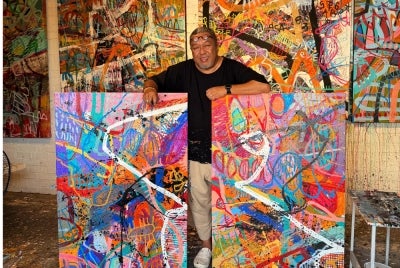
The showcase, which runs until May 31, features nine contemporary artists and seven fashion and design students reinterpreting tekat through textile and non-textile works, while still preserving the essence of the traditional craft.
Project director Lina Tan said the exhibition was designed to make heritage art forms feel more accessible and relevant to wider audiences today.

“Temu House is our private arts and community space where we do anything arts related and also knowledge building and this time our exhibition is inspired by Tekat.
"What’s interesting is that people are learning the traditional art of tekat, but when they look at the walls, they will also see contemporary artists creating their own interpretations after studying the craft," she told Sinar Daily.
The exhibition is also part of 3R Media’s inaugural Arts Heritage Artists (Aha) programme, aimed at sustaining Malaysia’s artistic heritage through collaborations between traditional artisans and contemporary creatives.
Tekat itself dates back to the 15th-century Malacca Sultanate and is traditionally associated with royalty and aristocratic households.
The embroidery technique involves layering gold or silver thread over a raised foundation to create elaborate motifs often seen in ceremonial garments and wedding decorations.
But despite its rich history, tekat artisans say the craft is slowly fading.
Tekat artisan Nor Faizatol Fazleha Mohd Rasdi, who has been involved in the craft for almost 23 years, said younger generations are becoming increasingly unfamiliar with the art form.

“Tekat craft is very important for the younger generation because it is becoming a dying craft as not many people are still practising it," she said.
Nor Faizatol, who is from Kuala Kangsar, Perak, explained that many people also mistakenly think tekat is the same as embroidery or 'sulam', when the techniques are actually very different.
“If it’s embroidery, the gold thread goes over and under the fabric. But with tekat, the gold thread stays only on the surface,” she said, while demonstrating how gold threads are carefully tied onto velvet fabric using traditional methods.
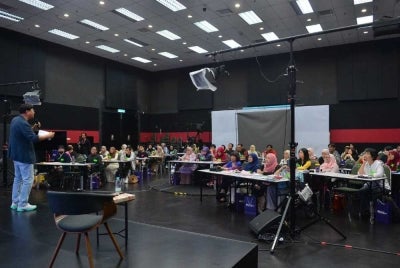
She said initiatives like the exhibition and the 'Coba-coba Tekat' hands-on workshops are important in exposing young people to the craft before it disappears completely.
Beyond preserving tradition, organisers and artists are also exploring how tekat can evolve into something more commercially and culturally relevant for modern audiences.
Tekat advisor Wan Intan Bahiyah Wan Suffian said the idea for the exhibition came after she became concerned that the sewing methods and interest in tekat were slowly dying out.
The exhibition was partly inspired by her family’s heirloom tekat pieces, some believed to be nearly 70 years old and once used during weddings.

“My late grandmother made these pieces herself. Back then, women would sew their own wedding items.
"I got worried because there’s not many people doing this anymore, so I thought we should start and do something," she said.
Wan Intan believes the industry still has untapped economic potential, especially in tourism, fashion and luxury handcrafted products.
“There are a lot of opportunities. I think it’s untapped. We can modernise it, make it more appealing to youngsters, create gifts, bags, contemporary items and even export it as a Malaysian heritage product to the world," she added.
She also called for greater support from ministries, tourism agencies and the private sector to help artisans grow sustainable businesses.
Meanwhile, contemporary textile artist Noorazah Hanim Mohd Noor, better known as Xeem Noor, said learning tekat from master artisans completely changed her perspective on the craft.

For the exhibition, she created a conceptual artwork titled “Tekad”, inspired by the determination needed to preserve traditional art forms.
“I want people to reflect on the importance of valuing our master artisans. One letter in my artwork took me eight hours to complete," she said.
She added that younger Malaysians often take handmade traditional crafts for granted without realising the years of skill and dedication behind them.
The 'Inspired by Tekat' exhibition is currently open Fridays to Sundays at Temu House in Petaling Jaya and includes artist sharing sessions, talks and public tekat try-out workshops.
Download Sinar Daily application.Click Here!