Hong Kong courts global founders with Gateway-to-China pitch
HKSTP says entrepreneurs of any nationality can tap its funding, research and incubation ecosystem by establishing a Hong Kong company.
TASNIM LOKMAN
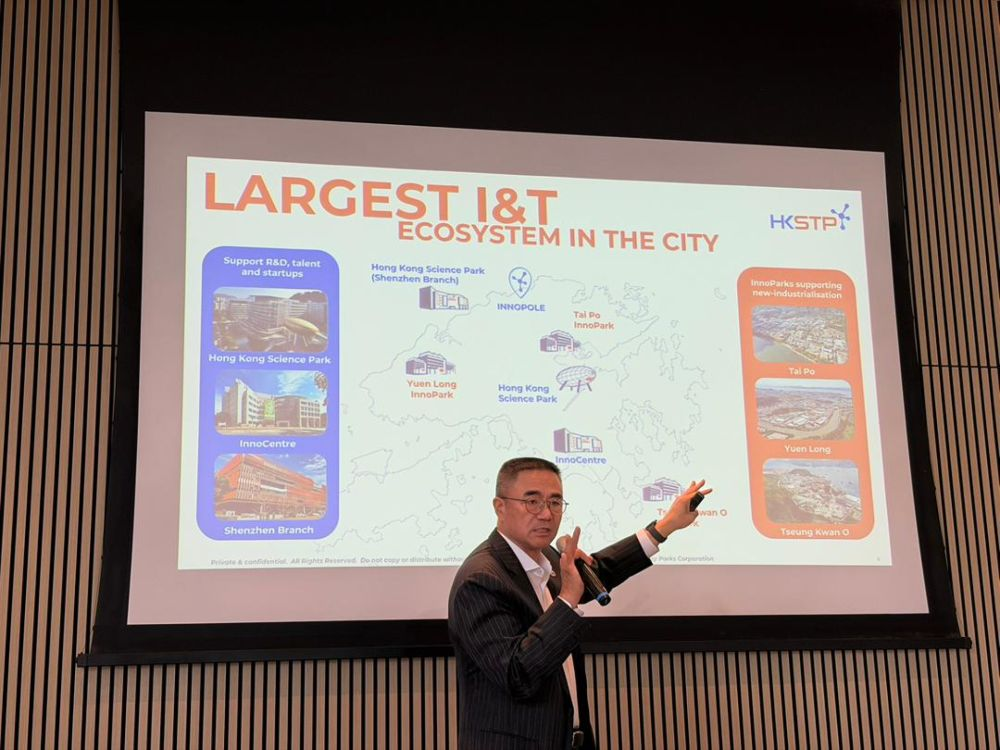
HONG KONG - As Asian cities compete aggressively for startup founders, investment and high-skilled talent, Hong Kong is making a simple pitch to entrepreneurs: you do not need to be local to build a company there.
The Hong Kong Science and Technology Parks Corporation (HKSTP) is actively courting international founders, arguing that the city's greatest strength lies not in producing homegrown startups alone but in attracting talent from around the world and positioning Hong Kong as a gateway between China and global markets.
“The only thing they need to do is register a Hong Kong company. Once you're a Hong Kong company, we will support you,” Chief Ecosystem Development Officer HKSTP Eric Or said during a media briefing on Monday.
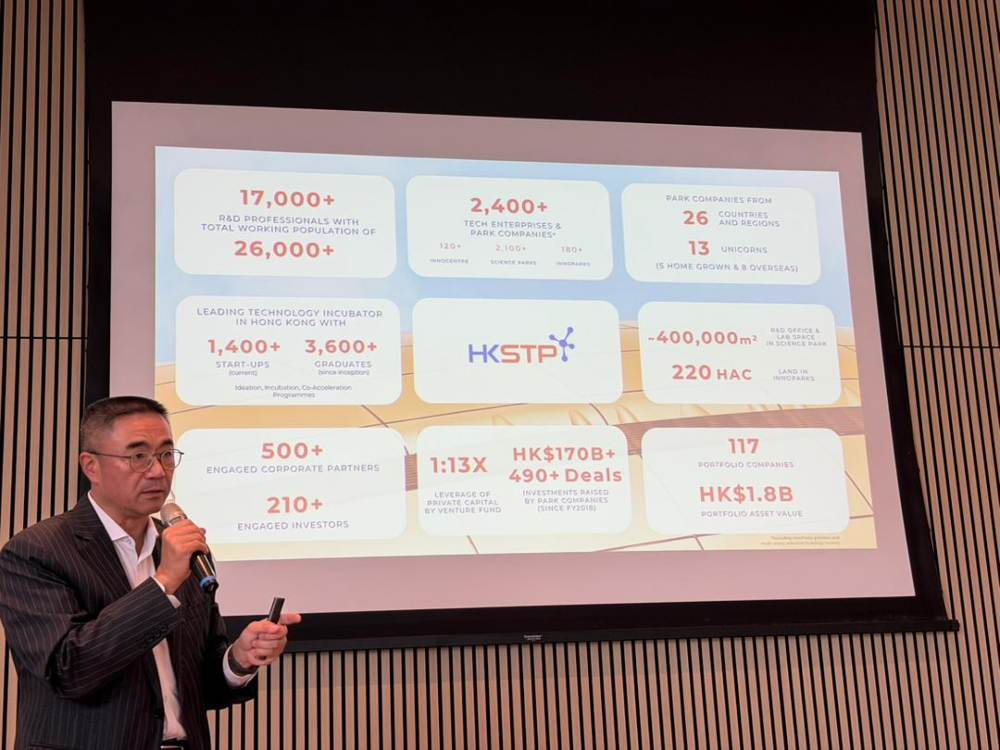
According to Or, entrepreneurs can establish a company in Hong Kong in as little as three days before gaining access to HKSTP's network of funding, incubation programmes, research facilities and commercialisation support.
The strategy reflects Hong Kong's efforts to strengthen its position in an increasingly competitive regional innovation landscape, where cities such as Singapore have emerged as major hubs for technology startups and venture capital.
For Or, diversity is not simply a by-product of the ecosystem but one of its defining characteristics.
He pointed to a startup currently operating within HKSTP whose founders come from Africa, Australia, Germany and the United States, while its newest employee was recruited from the Netherlands.
“Nobody in that company is from Hong Kong,” he said. “That's the kind of diversity we want.” The same trend is visible among larger technology companies operating in the city.
Or cited Huawei's Hong Kong research centre, saying around 70 per cent of its 800 engineers were hired internationally rather than locally.
“They want international talent because they want diversity in thinking and innovation,” he said.
The comments offer a glimpse into how Hong Kong is trying to differentiate itself at a time when governments across Asia are rolling out incentives, visas and funding schemes to attract technology companies and skilled workers.
While comparisons between Hong Kong and Singapore are common, Or rejected the notion that the two cities are locked in direct competition.
Instead, he described the relationship as increasingly collaborative.
HKSTP has been working with Singapore's Home Team Science and Technology Agency under a memorandum of understanding for the past two and a half years. What began as knowledge sharing has evolved into joint research initiatives, with Singapore expected to send personnel from agencies including the police and correctional services to Hong Kong in the coming months.
“People like to compare us with Singapore, but we work very closely together,” he said.
A key advantage, Or argued, is HKSTP's integrated structure. Unlike ecosystems where funding, incubation and research support are spread across multiple organisations, HKSTP houses those functions under a single umbrella.
“Everything is end-to-end. We can decide which companies we support, how much support they receive and how we help them throughout the journey,” he said.
Talent also remains central to that vision.
Hong Kong's universities continue to attract top students from across Asia, supported by strong international rankings and growing research capabilities. The challenge, Or said, is persuading graduates to see entrepreneurship as a viable alternative to traditional professions.
“Our job is to tell them they don't need to become bankers or doctors,” he said. “There is a future in technology.” Many of HKSTP's most successful companies, including several technology unicorns, were founded by graduates who chose to stay in Hong Kong after completing their studies.
Yet Or acknowledged that startup building remains a high-risk endeavour. Between 80 and 90 per cent of startups ultimately fail, he said, a rate broadly consistent with global industry trends.
Even so, HKSTP continues to invest heavily in entrepreneurs, convinced that attracting more international founders will strengthen Hong Kong's long-term position as an innovation hub.
“We have to stay international,” Or said. “We want international talent and international companies to come here. Hong Kong plays a very important role as the bridge into China and also for Chinese companies going global.”
Download Sinar Daily application.Click Here!