From Doubt to Growth: How four Malaysian entrepreneurs built their brands the hard way
Behind every growing Malaysian brand are stories of rejection, wrong turns, burnout and self-doubt, and the decisions that turned those struggles into success.
SINAR DAILY REPORTER

SUCCESSS stories often come packaged neatly - a good idea, a bold decision, rapid growth and eventually, a thriving business.
But for four Malaysian entrepreneurs behind MILK, Russell Taylors, Love Earth and Kita Shop Sabah, the reality was far messier.
Their journeys involved rejection, wrong assumptions, expensive mistakes, financial pressure, exhaustion and moments when they questioned whether they were doing the right thing.
What connected them was not that everything went according to plan, but that they learned to change direction when it did not. These four businesses shared their journey with Sinar Daily.
MILK: When ‘Maybe I’m Wrong’ Became a Better Business
For Datuk Kamaruddin Meranun, chairman and co-founder of MILK, the business did not begin with an elaborate masterplan.
Four old schoolmates who had known each other for more than 50 years simply wanted to build something together. They initially considered adult diapers, but after studying the market, realised the opportunity was limited.
So they changed direction to baby diapers.
The bigger challenge came after they had a product.
“We thought we had developed a very good product. Then you go to retailers and realise nobody knows who you are,” he said.
Some retailers wanted consignment arrangements while others wanted listing fees. Instead of treating the rejection as the end of the road, MILK went online.
That decision became one of its biggest turning points.
E-commerce gave the Malaysian brand a way to reach parents nationwide without first securing nationwide retail distribution. More importantly, it allowed consumers to judge the product themselves.
But earning that first purchase was not enough.
“Trust,” Kamaruddin said when asked about the biggest challenge in the early years.
"For a baby-care product, trust is everything. The company invested in product development, testing and certifications from reputable international laboratories because we wanted the product to do the talking," he said.
The experience also reinforced a lesson that has shaped his approach to entrepreneurship: never become too attached to your own assumptions.
“I’ve made enough mistakes in business over the years to know that the biggest mistake is believing too strongly in your own assumptions,” he said.
His advice is simple, entrepreneurs have to be willing to admit, “Maybe I’m wrong.”
Today, MILK is no longer simply trying to establish itself. It is expanding beyond diapers into water wipes and other baby-care products, with ambitions to enter international markets.
Yet Kamaruddin sees growth itself as another challenge. “Growth is good. Bad growth isn’t.”
For him, being Malaysian should not mean asking consumers for special treatment.
“I don’t want people to buy MILK just because it’s Malaysian. I want them to buy it because it’s good.”
That, he believes, is how Malaysian brands should earn their place alongside international names.
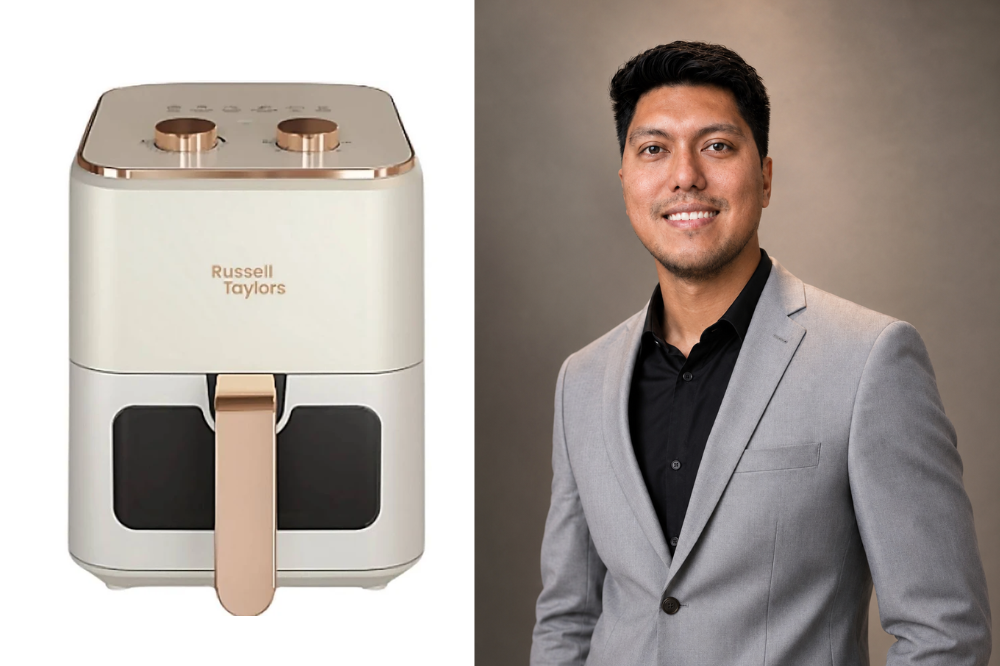
Russell Taylors: From a Room at Home to a Southeast Asian Ambition
Satish Kumar Raguchandran did something many young professionals hesitate to do - he walked away from a conventional engineering career.
After studying chemical engineering and working in oil and gas, he decided to try building something of his own.
The first product was a waffle maker.
There was no grand plan to create an appliance brand. The business evolved by listening to customers, experimenting and learning. In 2016, it was rebranded as Russell Taylors, marking the shift from simply selling products to building a brand.
The early days were anything but glamorous.
“Everything was my job,” Satish recalled. “Sourcing, replying to customers, checking stock, packing boxes, chasing suppliers, marketing. All of it done from my room in my parents’ house.”
Like MILK, Russell Taylors also faced the problem of trust.
The company had to prove itself “one customer at a time”, including honouring warranties even when doing so meant taking a loss.
Then came one of its most painful lessons.
During the early months of Covid-19, the company was selling more than 500 ovens a month. Assuming the demand would continue, it ordered between 4,000 and 5,000 units.
By the time the stock arrived, demand had collapsed as life began returning to normal.
The stock sat for two years.
“It taught me that demand doesn’t move in a straight line,” Satish said.
Today, the lesson has become part of the company’s discipline, with greater attention paid to stock turnover, forecasting and cash flow.
The real confirmation that Russell Taylors had become a serious brand came when customers returned for more.
“About 30 per cent of our customers now own more than one Russell Taylors product,” he said.
The company has also grown into a Malaysian employer, with more than 70 Malaysians on its team.
Its ambition is no longer simply to become a bigger Malaysian company, but a Southeast Asian one.
“First it was, can we survive. Then it was, can we grow. Now it’s, can we get bigger without losing what made us work," he said.

Love Earth: Turning Personal Loss Into Purpose
For Samantha and Natasha Mah of Love Earth, entrepreneurship began with something far more personal.
The Mah sisters lost her mother to nose cancer when they were young, followed by two aunts who also died from chronic disease. The experience shaped their belief that while people cannot always control when disease strikes, they can make healthier choices.
When an uncle suggested entering the organic industry around 15 years ago, the market was still niche.
They saw an opportunity - and a calling - to educate people about healthy eating. But they entered the business with virtually no fast-moving consumer goods (FMCG) experience.
“We ask, we do and we learn along the way,” they said.
The founders were, at different points, packers, drivers, salespeople, merchandisers and promoters. Their philosophy was summed up in a simple tagline: “Ask until we get it!”
The difficult transition came when they had to stop doing everything themselves and learn how to lead a team.
At one point, the entire team resigned within a short period, leaving Samantha questioning her ability to lead the company.
“Yes. At a point when I have self doubt on my own capability,” she said when asked whether she had considered giving up.
Love Earth also made an expensive product mistake, investing heavily in a product range that turned out to be wrong for its target market.
Instead of continuing to throw money at it, the founders cut their losses.
The turning point came when three directors - Samantha, Natasha and Jason Leong - decided to attend courses to improve their business knowledge.
Their mindset changed. They began hiring, and the business doubled in three years.
Six years ago, engaging a Chief Financial Officer (CFO) consultant brought another major shift, now the decisions were no longer based largely on instinct.
“Now we will always use numbers to analyse and make decisions,” they said.
From a niche organic business, Love Earth now wants to bring its Malaysian brand to more than 30 countries, while continuing to develop products with Malaysian flavours such as soup tulang, curry, gula Melaka and pandan coconut.
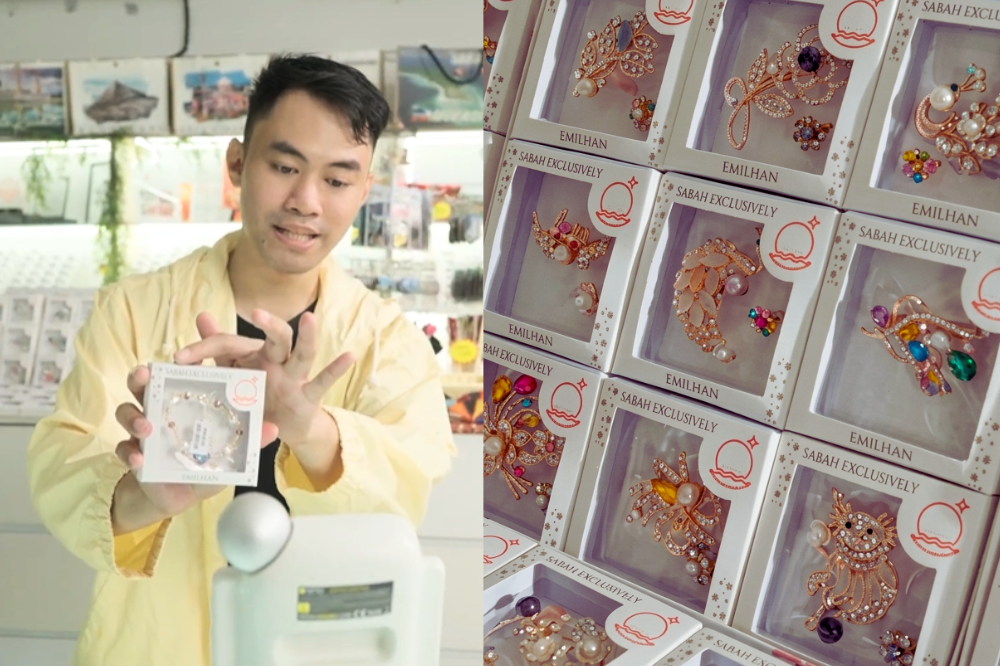
Kita Shop Sabah: From RM2,000 and Burnout to Building Something Bigger
For Emilhan Mokhtar, founder of Kita Shop Sabah, entrepreneurship began not with a carefully identified market gap, but with the very practical problem of having no job.
After graduating from International Islamic University Malaysia, he returned to Kota Kinabalu to care for his parents just before the Covid-19 pandemic made employment even harder to find.
Instead of waiting, he turned to Shopee in June 2020.
He started selling pearls — a product he already understood because his parents had sold them at night markets, namely the famous Gaya Street Sunday Market and Pasar Malam Sinsuran.
With little savings, Emilhan borrowed RM2,000 from his younger sister to start.
The early days were intense. He learned through Shopee University, webinars and seller communities, while sometimes listing products before purchasing stock only after an order was confirmed.
During busy campaigns, he worked more than 14 hours a day. Eventually, the pressure became too much.
His days stretched to 12 to 16 hours of packing, shipping, production and restocking.
Friends told him he might be experiencing burnout and encouraged him to hire help.
Looking back, he identifies taking on everything himself as one of his biggest mistakes.
“Staying a one-man show for too long taught me that I cannot grow the business alone,” he said.
Hiring staff and outsourcing bookkeeping and marketing changed the business, and his experience of running it. With more support, he could finally focus on strategy, campaigns, branding and growth.
The online model also took his family’s traditional night-market business beyond Sabah, reaching customers across Malaysia as well as Singapore and Brunei.
For Emilhan, success is now bigger than personal income. He wants to help more Sabahan entrepreneurs overcome the barriers to going online, creating jobs and opportunities along the way.
The Common Thread: They Learned to Change
The four businesses may operate in completely different industries, but their journeys share the same underlying pattern.
Struggle. Doubt. Mistakes. Adaptation. Growth. Confidence.
MILK learned that retailer rejection could become an e-commerce opportunity. Russell Taylors learned that rising sales did not automatically justify buying ten times more stock. Love Earth learned that passion needed to be supported by knowledge, leadership and numbers. Kita Shop Sabah learned that determination could become a weakness if everything remained dependent on one person.
None of them succeeded because they got everything right the first time. They succeeded because they were willing to change.
Perhaps that is where their Malaysian identity becomes most apparent.
They describe Malaysian entrepreneurs as resourceful, adaptable and accustomed to working within limitations and whether those limitations are market size, capital, competition, geography or access to customers.
But their ambitions are no longer limited by those constraints.
From baby-care products and kitchen appliances to healthy food and Sabah pearls, these businesses are looking beyond Malaysia while carrying the lessons they learned here.
The story is therefore not simply about four entrepreneurs who built successful companies.
It is about four entrepreneurs who learned how to become better business owners by surviving the parts of entrepreneurship that nobody puts on the success poster.
Through Shopee Juara Lokal, Shopee celebrates the stories, resilience and achievements of Malaysian entrepreneurs who have turned challenges into opportunities and local ideas into growing businesses.
Their journeys show that success is not simply about getting everything right from the start. It is about learning from mistakes, adapting when things do not go as planned and having the courage to keep building.
The journey did not necessarily become easier. They simply became better at navigating it.
Download Sinar Daily application.Click Here!