Study urges end to death penalty for drug offences
The publication, titled "Rethinking Capital Punishment for Drug Offences in Malaysia," highlights how exposure to lived experiences, social media coverage and regional cases is actively driving this change in public attitudes.
YASMIN ROSLI
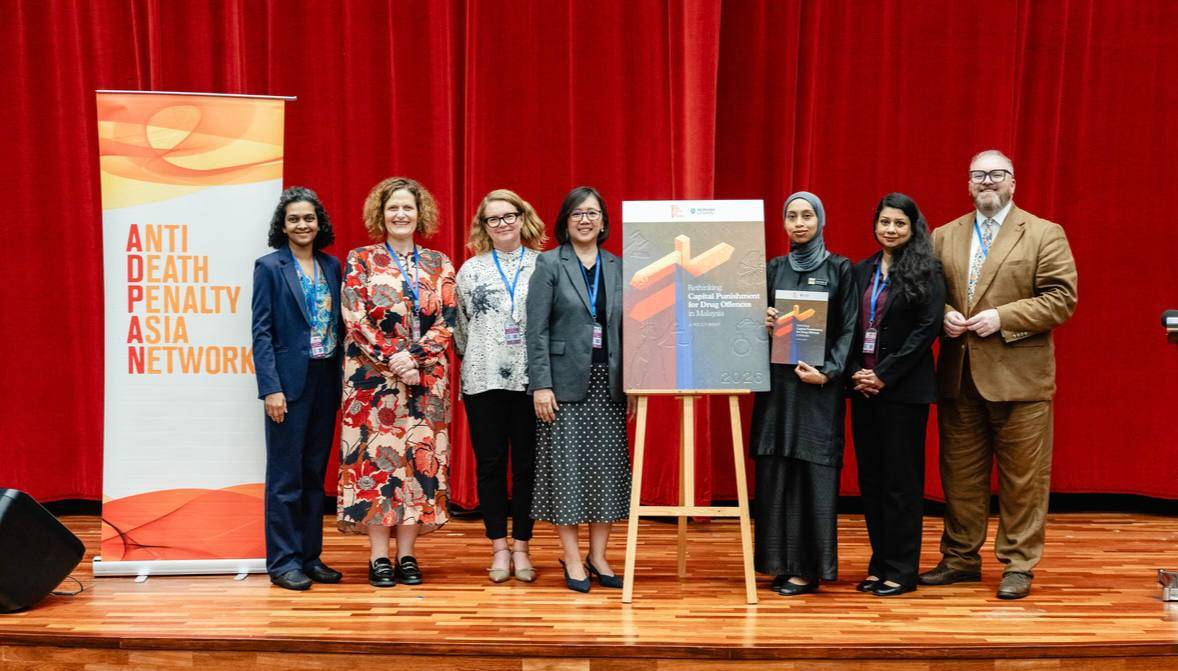
SHAH ALAM - Public perceptions of the death penalty for drug trafficking are rapidly shifting away from official state narratives towards support for abolition and non-capital alternatives, according to a new policy brief launched in Parliament, yesterday.
The publication, titled "Rethinking Capital Punishment for Drug Offences in Malaysia," highlights how exposure to lived experiences, social media coverage and regional cases is actively driving this change in public attitudes.
Jointly published by the Anti-Death Penalty Asia Network (ADPAN), the School of Arts and Social Sciences at Monash University Malaysia (SASS) and Eleos Justice at Monash Law (EJ), the policy brief specifically addresses capital punishment for drug-related offences.
In addition to analysing changing public sentiments, the document outlines recommendations for fair, transparent and accountable reform within the criminal justice system.
The publication highlights major shifts following the Abolition of Mandatory Death Penalty Act 2023, which established discretionary capital punishment for 27 offences, including drug trafficking under Section 39B of the Dangerous Drugs Act 1952.
Driven by a historic resentencing framework and judicial discretion, Malaysia’s death row population dropped sharply from 1,275 in 2023 to 140 by January 2025, reaching 97 in November 2025. Individuals convicted of drug offences accounted for 21 per cent of the remaining death row population in 2025.
EJ director, ADPAN deputy co-convenor and co-author of the policy brief Sara Kowal commended the country's progress in reforming its death penalty laws.
"Ending the mandatory death penalty and resentencing those on death row has dramatically reduced the number of people facing execution.
"But we know that in practice, the death penalty falls on the most vulnerable: people living in poverty, people from marginalised communities and people living with disabilities.
"Abolishing the death penalty for drug offences is a pragmatic next step and one that recognises that executing people for drug offences breaches international human rights law," she said.
The study drew on five ethics-approved focus group discussions between May and July, 2026, involving 31 key stakeholders including youth, civil society representatives, professionals, entrepreneurs and leaders across five major religious groups (Islam, Buddhism, Hinduism, Christianity and Sikhism) to explore public views on the death penalty for drug trafficking.
It also examined the beliefs shaping these opinions and identified what participants consider fair and effective drug policies.
The report reveals deep public distrust towards the institutions administering capital punishment. Participants in the study pointed to four key structural failures that undermine the integrity of the system: corruption within the justice system; unequal access to justice; inconsistent application of judicial discretion in death sentencing and discriminatory enforcement of drug laws.
Participants also described how poverty, marginalisation and deception draw people into low-level courier roles, including the B40 group, women facing economic insecurity and ethnic minorities.
They also questioned whether those who organise and profit from drug trafficking were being held accountable, as drug kingpins rarely face arrest and likely protected by corruption and wealth.
Based on the participants' observation, public support for the death penalty for drug offences has long been shaped by government narratives and media coverage that present drugs as a threat serious enough to justify execution.
Their views on capital punishment were changing as they encountered different perspectives through social media, personal experiences and cases in Singapore and neighbouring countries.
Deputy Head of School (Research), EJ co-director and co-author of the policy brief Dr Thaatchaayini Kananatu said public sentiment was no longer a legal or political barrier to abolishing the death penalty for drug trafficking.
She said to turn this evidence into actionable reform, the policy brief proposes recommendations for each of Malaysia’s three branches of government: the executive, the legislature and the judiciary.
"Ultimately, our main recommendation is to abolish the death penalty, starting with drug crimes," she said.
Download Sinar Daily application.Click Here!