Better perception on TVET, applications increase fourfold
Some of these programmes offer international career opportunities, as well as potential for entrepreneurship.

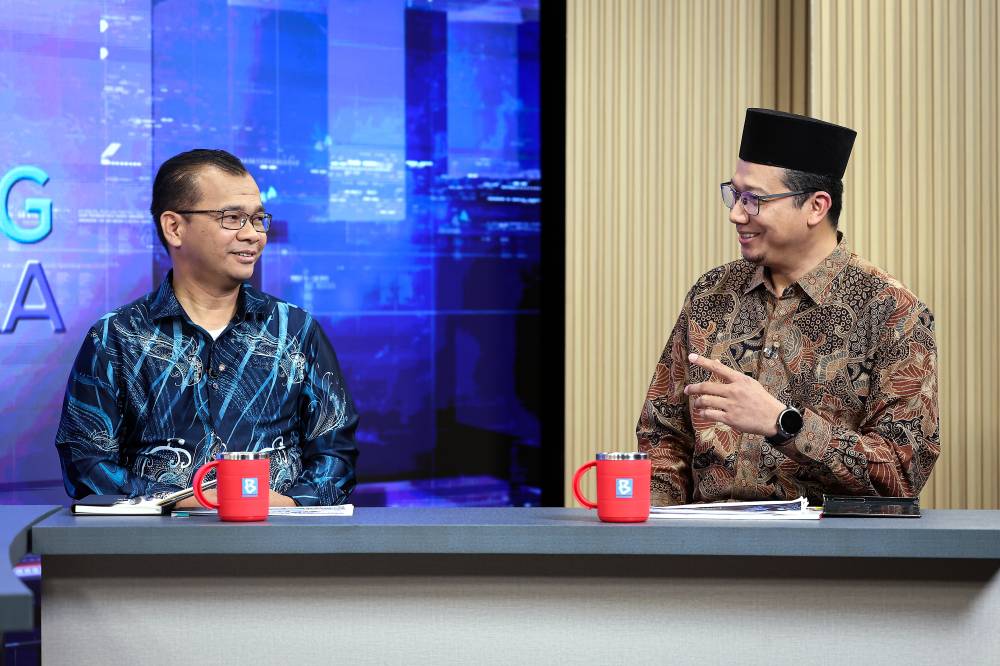
KUALA LUMPUR - The perception of Technical and Vocational Education and Training (TVET) has shifted significantly compared to a decade ago, driven by a growing awareness of its potential for future careers.
Head of the National TVET Council (MTVET) secretariat Ts Dr Azmir Mohd Yunus, said the rising interest in such programmes is evidenced by the number of applications for admission to vocational institutions, starting as early as age 16.
"If we look at the statistics, there has been a significant surge in admission applications. For instance, vocational colleges typically intake 17,000 new students annually.
"However, upon checking with the Education Ministry, I found that there are approximately 60,000 applicants, an increase of nearly fourfold," he said when appearing as a guest on Bernama TV programme Ruang Bicara, titled 'TVET 2.0: Between Competency and Talent Development,' last night.
He noted that while public acceptance is improving, efforts to foster a deeper understanding of the direction of TVET programmes must continue; some of these programmes offer international career opportunities, as well as potential for entrepreneurship.
"Much can be achieved through TVET if we truly grasp its objectives and while young people from age 16 may struggle to choose a specific programme, we can encourage them to explore short courses offered at Community Colleges to discover where their interests lie," he said.
He explained that TVET 2.0 is a government initiative designed to cultivate highly skilled talent in line with Malaysia’s aspirations to advance economic activities that demand a skilled workforce such as in the electric vehicle, robotics and new energy sectors thereby meeting labour market needs while creating higher-quality job opportunities for the youth.
Meanwhile, Dr Muhammad Faizal Tahiruddin, an Executive Council member for Social Mobility and Inclusive Participation in TVET (MTVET), said admission requirements have been adjusted under TVET 2.0 to ensure that individuals from diverse backgrounds can participate in the skills sector.
"For example, the Sijil Pelajaran Malaysia (SPM) requirements for tahfiz (Quranic memorization) students seeking entry into public skills training institutes have been relaxed.
"In fact, generally speaking, for programmes under the department dedicated to skills training, there is no requirement for an SPM certificate except for specific professional or specialised programmes, though these are very few in number," he said.
According to him, efforts to reach out to vulnerable groups are being carried out through collaborations with agencies such as the Department of Orang Asli Development (JAKOA), tahfiz institutions, and the Ministry of Youth and Sports, with the aim of raising awareness about the benefits of pursuing a path in TVET.
"Sometimes, they are unaware that such opportunities exist for them. For instance, youths who have been left behind may view the 'gig economy' as their only option, whereas they could actually have the chance to contribute to the nation's development.
"Orang Asli have great potential in agricultural skills, they also possess traditional crafting skills such as weaving and this is where TVET can play a role for them," he said. - BERNAMA
Download Sinar Daily application.Click Here!