Same floods, same excuses, same government response
Malaysia must stop treating recurring floods as seasonal misfortunes and tackle the planning failures behind them, while ensuring every ringgit spent on mitigation delivers results.


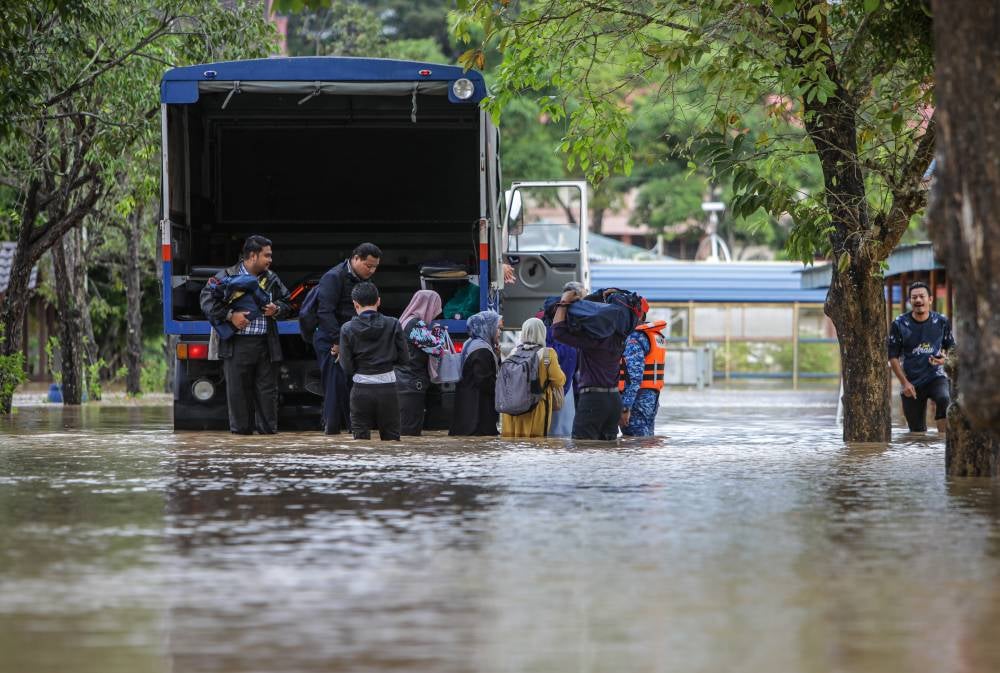
HOW many times must Malaysians watch floodwater enter their homes, destroy their belongings and disrupt their lives before the government admits that something is not working?
Every time floods hit, we hear the familiar responses. Money will be allocated. A committee will be set up. Agencies will be told to look into the problem. Ministers will visit affected areas and assure residents that something will be done.
But what happens when the rain comes again?
We live in a tropical country, and heavy downpours are part of our lives. But surely we can do better than watching the same neighbourhoods go underwater time and again.
In Shah Alam, residents have had to deal with four floods in a single month. Imagine cleaning up your house, throwing away damaged belongings and trying to get life back to normal, only to face another round of flooding days or weeks later.
How long are people expected to live like this?
When the same places flood repeatedly, we have to look beyond the weather.
Are the drains big enough? Are rivers and retention ponds properly maintained? Has development outpaced the infrastructure needed to support it? Have flood mitigation projects actually made a difference?
These questions need answers because people are losing their homes and livelihoods.
The government should start by taking a hard look at the country's flood management efforts.
The Department of Irrigation and Drainage (JPS), the National Disaster Management Agency (Nadma), local councils, state governments and relevant ministries must work together to identify failures in planning, implementation and coordination.
The findings should be made public. Malaysians deserve to know which areas remain vulnerable, where drainage systems are inadequate and which projects have been delayed or failed to deliver.
Every mitigation project should have a clear budget, completion date and measurable targets. If a project is delayed, explain why.
If it has been completed but the area continues to flood, tell us what went wrong.
The government cannot use the billions allocated or the number of projects announced as proof of progress. Residents want to know why their homes are still flooding.
The Klang Valley deserves particular attention. Repeated flooding in Shah Alam, Klang, Subang Jaya and other urban areas calls for a coordinated response between federal and state authorities.
The Selangor Menteri Besar and local authorities must work closely with federal agencies. There is little point arguing over who is responsible when residents are standing in floodwater in their own homes.
People do not care whether a drain comes under the local council, state government or a federal agency. They want it cleared, repaired or upgraded. They want someone to take responsibility instead of passing the problem around.
Development is another issue that cannot be ignored. We are quick to celebrate new housing projects, commercial centres and investments, but are we asking whether existing infrastructure can cope.
A new development may look impressive on paper, but what happens to surrounding neighbourhoods when drains, roads and waterways are already struggling?
Approvals must be based on proper assessments of flood risks and drainage capacity. Developers should demonstrate how their projects will affect surrounding areas and what they will do to prevent additional flooding.
The public should not be left to pay for poorly planned development.
Then there is the money. Billions of ringgit have been allocated for flood mitigation over the years. Malaysians have every right to ask where it has gone and what has been achieved.
Which projects have been completed? Which are still pending? Have they reduced flooding in the areas they were meant to protect?
Allocations, contracts, progress reports and completion dates should be publicly accessible. Taxpayers should not have to rely on occasional ministerial announcements to find out how their money is being spent.
Flood management must also go beyond building drains and sending rescue teams when disaster strikes. Residents need timely warnings, clear evacuation routes and accessible relief centres. Particular attention must be given to the elderly, persons with disabilities and families without transport.
When the water recedes, assistance should not become another struggle. Families who have lost furniture, electrical appliances and other essentials should not have to spend days moving between government offices to obtain help. The process must be simpler and faster.
Ministers must also understand that their responsibility does not end with visiting flood victims or announcing another allocation. They must ensure that promised measures are implemented and that the results are there for the public to see.
Residents who complain about flooded roads, blocked drains and poor infrastructure are not being difficult. They are pointing out problems that need attention.
The government should listen rather than dismiss criticism as an attack.
No government can promise that the country will never experience floods. Heavy rainfall and extreme weather are realities we must prepare for.
But accepting that floods will happen does not mean accepting that the same families must suffer repeatedly because known problems remain unresolved.
We have seen the pattern too many times. A flood happens, meetings are held, committees are formed and money is announced.
Then the next heavy rain comes, and residents are back where they started.
At some point, the government must answer.
Flood management is not just an engineering issue. It is about urban planning, public spending and the government's duty to protect its citizens.
Ministers should be judged not by how many flood-hit areas they visit or how much money they announce, but by whether their actions make a difference.
When projects fail, deadlines are missed and public money does not deliver, those responsible must answer for it.
Malaysians cannot be expected to keep paying the price for failures that go unaddressed.
The next downpour should not bring the same old promises. It should show that the government has finally done its job.
Download Sinar Daily application.Click Here!